Review by Gordon Minto - Elvis: The Man And His Music
I liked Welcome Home Elvis a lot, commending the idea behind its inception, the author’s labour of love and his dedication to original research, but I was critical, deservedly, I believe, about some of its production values: namely, there being very little evidence of it having been rigorously proofread. Most of the errors were crass and wholly avoidable. Happily this volume, while not being entirely error-free, is considerably better in terms of quality control.
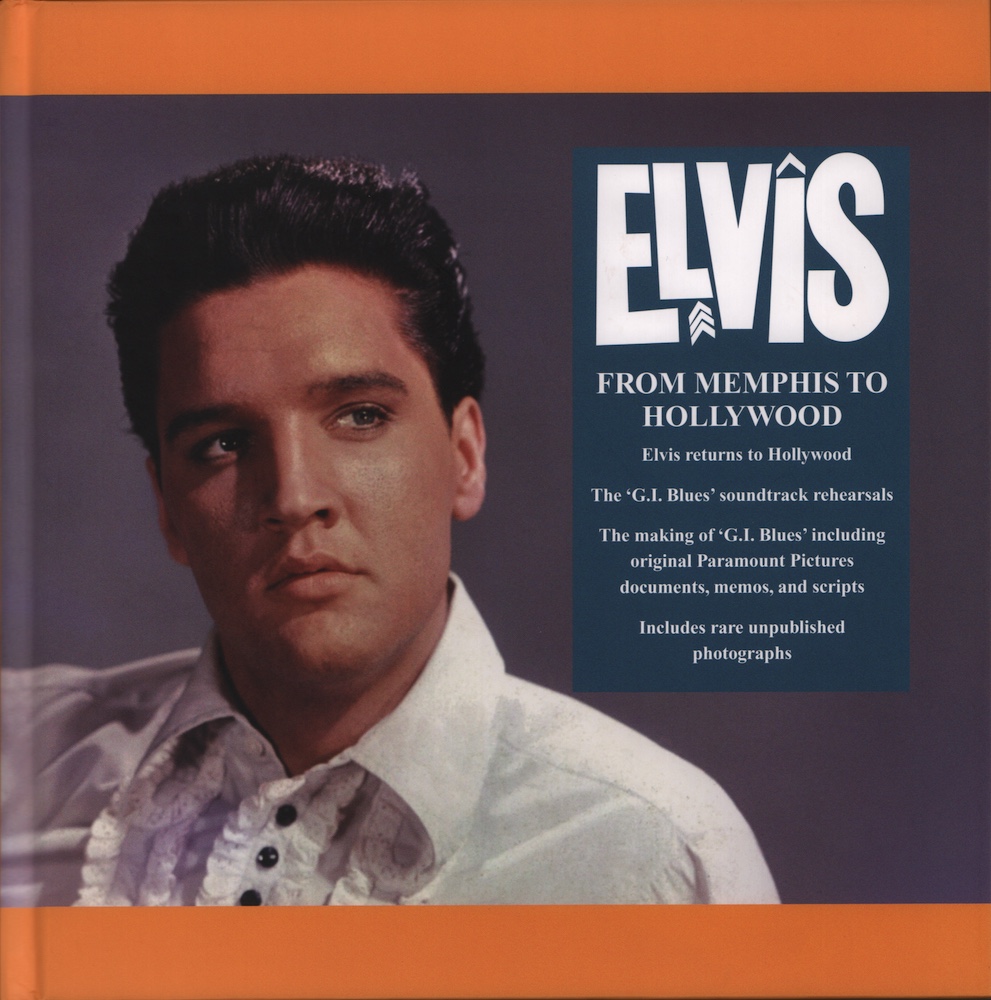
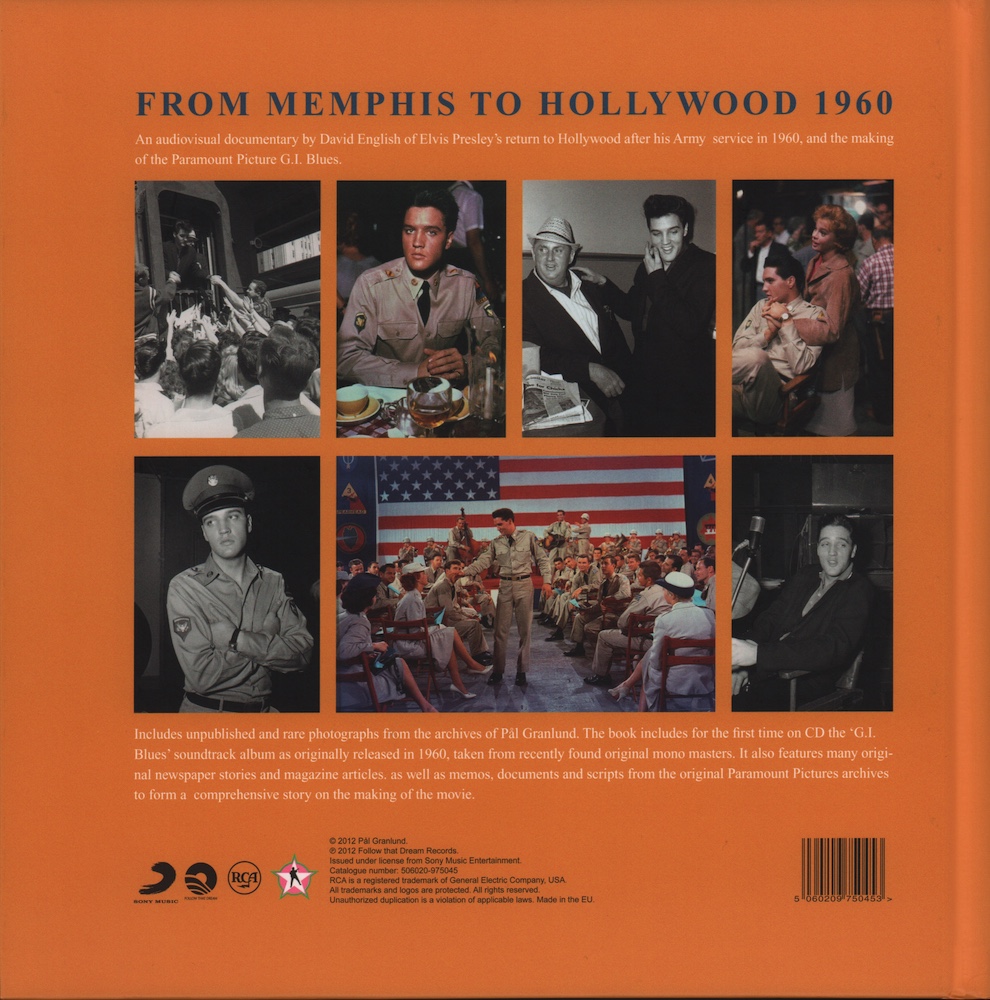
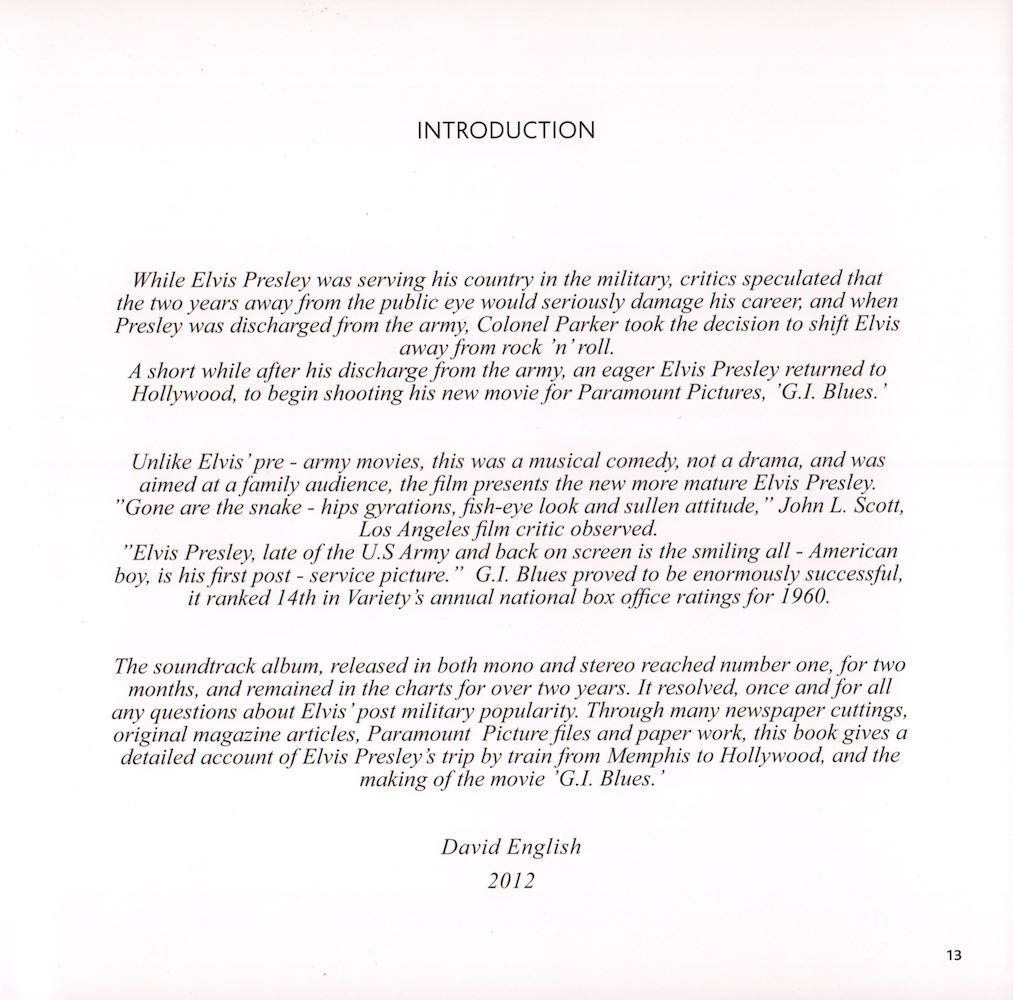
From Memphis To Hollywood covers the April - May 1960 period, during the preparation for and filming of G.l. Blues. It opens with some newly-found photos that actually belong in Welcome Home Elvis. Author David English, conflicted by this dilemma, debated whether or not to include them in this volume. Ultimately, he decided they were too good to omit. Good call, in my view, as these rare shots provide a tangible link between both books. Recently returned from Germany, Elvis had been attending recording sessions and taping the Sinatra TV special, before launching into the opportunistic G.I. Blues, capitalising on his army duty.
What makes this book (like its predecessor) stand out though is the degree of research that David English has undertaken and the level of detail the photos and accompanying text offers to fans. I'd be surprised if there wasn't something that evoked a “Well, I never knew that” response from you. Take the scene where someone falls against a jukebox and it blasts out ‘Blue Suede Shoes‘. Elvis‘ choice for that slot had been ‘I Got A Woman’. However, it would have cost $2,000 to feature the Ray Charles song so they went with the former, copyrighted to Hill and Range. Planned as early as January 1959, one of the many titles under consideration for the film was Holiday In Berlin. The search for a suitable foreign actress proved difficult until Juliet Prowse (who wasn't first choice), on loan from Twentieth Century Fox, was cast. And, incredibly, parts of the storyline - guys betting on who can get to stay over at Lili‘s place, and the illegitimate baby thread - caused some censorship concerns. Yet, it was hardly Lady Chatterley’s Lover!
Spanning almost 350 pages, this hard-backed book features oodles of fabulous photographs (candids, on and off-set shots, etc.), many of them previously unseen; letters, internal memos, press cuttings, plus many personal recollections from those present. Many shots are stunning, but I especially love the ones on pages 51 - 54 and 81 - they are so evocative and natural. This book is fascinating and absorbing and, happily, less afflicted by scores of silly errors. But, regrettably, some still eluded detection. Here's a sample to consider. The apostrophe is a repeat victim - “it's” instead of “its” and plurals such as “cameras”, “visitors”, “studios” appear as “camera’s”, “visitor's”, “studio's”. Advice about the apostrophe is simple: when in doubt, leave it out! Also, there are some general slip-ups: “you plans” (p. 43); “dosen’t” (p. 200), “pictue” (p. 316) and a real beauty, “dereliciction” on page 318. People’s names are misspelt too: music director Joseph Lilley is shown as “Lilly” (pages 136, 253); while on page 257 the cast list shows “Elvis presley”, but lists him as ‘'Tulsa McCauley” (page 340). Tiny Timbrell becomes “Tumbrell” (p. 131), and actor Roger Smith appears as “Rodger” Smith (p. 342), while the article on page 142 appears on the opposite page, too. More time and a fresh pair of eyes could have eradicated most, if not all, of these gaffes.
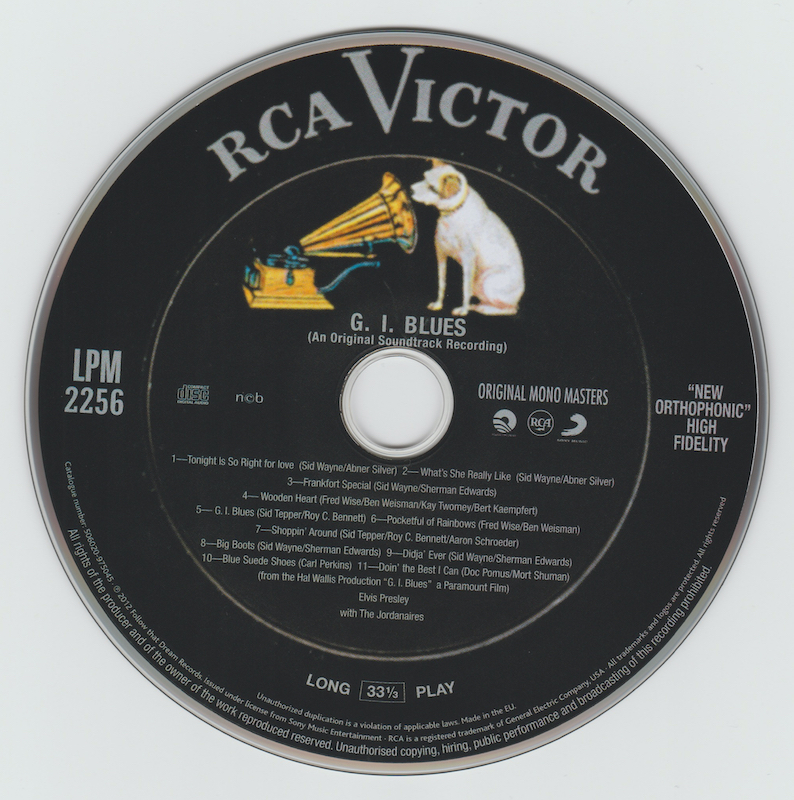
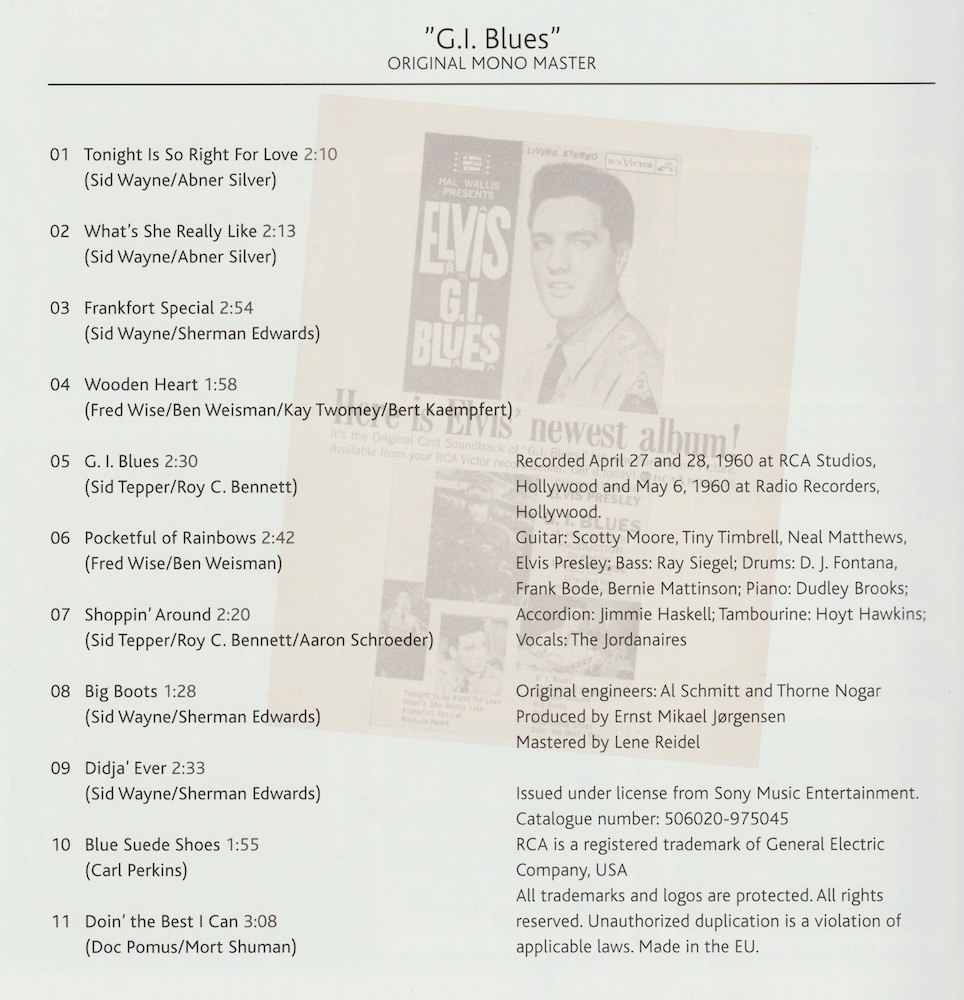
The accompanying CD claims to be a “newly-found” mono mix of the original 1960 album. I understand the rationale behind including audio content, but in this case I struggle to see the point of having the original mono mix when the stereo one is fine. ‘Fess-up time, folks: I've not played this nor will I. I fail to see what the mono version would offer me that is different enough to warrant my playing it.
Notwithstanding my reservations, I would recommend this book to you. It is a genuinely valuable piece of research. Yes, some of the gossipy press stories are trivial and trite, but others manage to be both interesting and revealing. David English has made a major contribution to our knowledge and understanding of this short time period and I applaud his efforts overall.