Review by Piers Beagley - Elvis Information Network
G.I. Blues was an extremely significant album in Elvis’ legacy. Recorded less than four weeks after the stunningly creative Elvis Is Back! sessions, and featuring fairly bland soundtrack material, the album would become Elvis’ biggest-selling so far and stay in the US album charts for over two years. The financial success of this movie / soundtrack album combination would unfortunately then see Elvis’ creative instincts stymied by the Colonel’s enthusiasm for easy profit and the near endless treadmill of uninspired travelogue nonsense.
But even if Elvis was somewhat frustrated by the quality of his first sixties‘ lightweight recordings, he also showed himself to be a true professional as he tried to inject some inspiration into the sub-standard material. At times, he joined in with the band on guitar and worked hard on his vocals, several songs taking twenty attempts to complete a master.
While Elvis was in the army RCA had made a deal with the Musicians Union that RCA records had to be recorded at RCA studios. This meant that the G.I. Blues sessions were scheduled at RCA Studios Hollywood, rather than Radio Recorders. The new deal also demanded that the musicians had a set break every few hours that could only disrupt Elvis’ spontaneous approach to recording. An obviously frustrated Elvis even noted, “These damn unions”.
We are lucky enough to have almost all the G.I. Blues session tapes preserved from both the first RCA Studios Hollywood session and the following Radio Recorders session, nearly all of which are featured across the two FTD releases.
The first FTD G.I. Blues classic soundtrack album focused on the initial RCA studio sessions of April 27-28 1960, where Elvis and the band had recorded an unbelievable one hundred and thirty takes over two days. Despite all this activity, disappointingly they still only finalized seven masters for the album, including the all-too-easy ‘Blue Suede Shoes’.
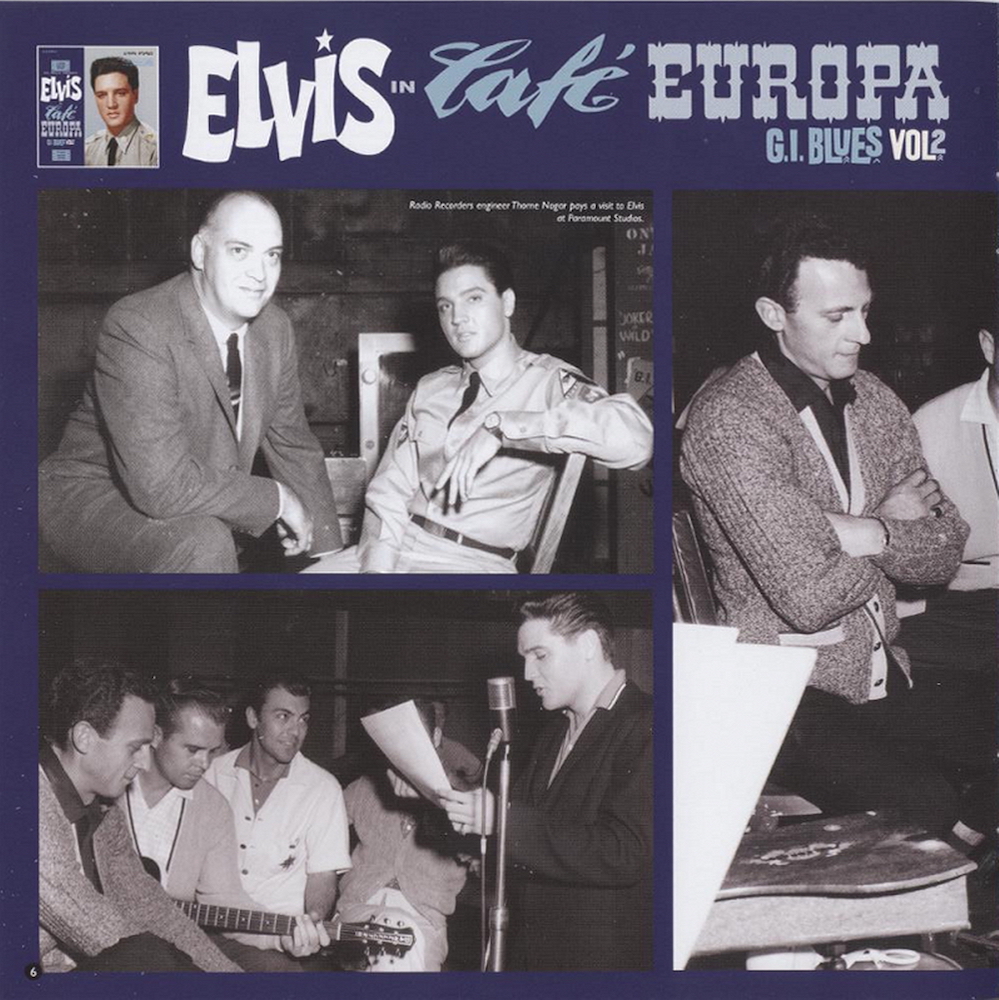
Something major needed to be done and the obvious answer was to move studios and to ignore the supposedly binding Union deal. So one week later, on May 6, Elvis and the band returned to the preferred Radio Recorders with favourite engineer Thorne Nogar running the boards. On these recordings it is very noticeable that the flat sound of the RCA studio has been replaced by a more intimate and dynamic feel. The group would be the same, except that Bernie Mattinson would the additional drummer.
During the one-day Radio Recorders marathon session the band would record over fifty takes to complete the required five remaining songs. The vast majority of these Radio Recorders attempts from May 6 are featured on Disc 2 of this release.
FTD’s G.I. Blues (Volume 1) did not have space for all the takes from the earlier first session, so the remaining ones are also included here and help add some variety and interest.
The Booklet
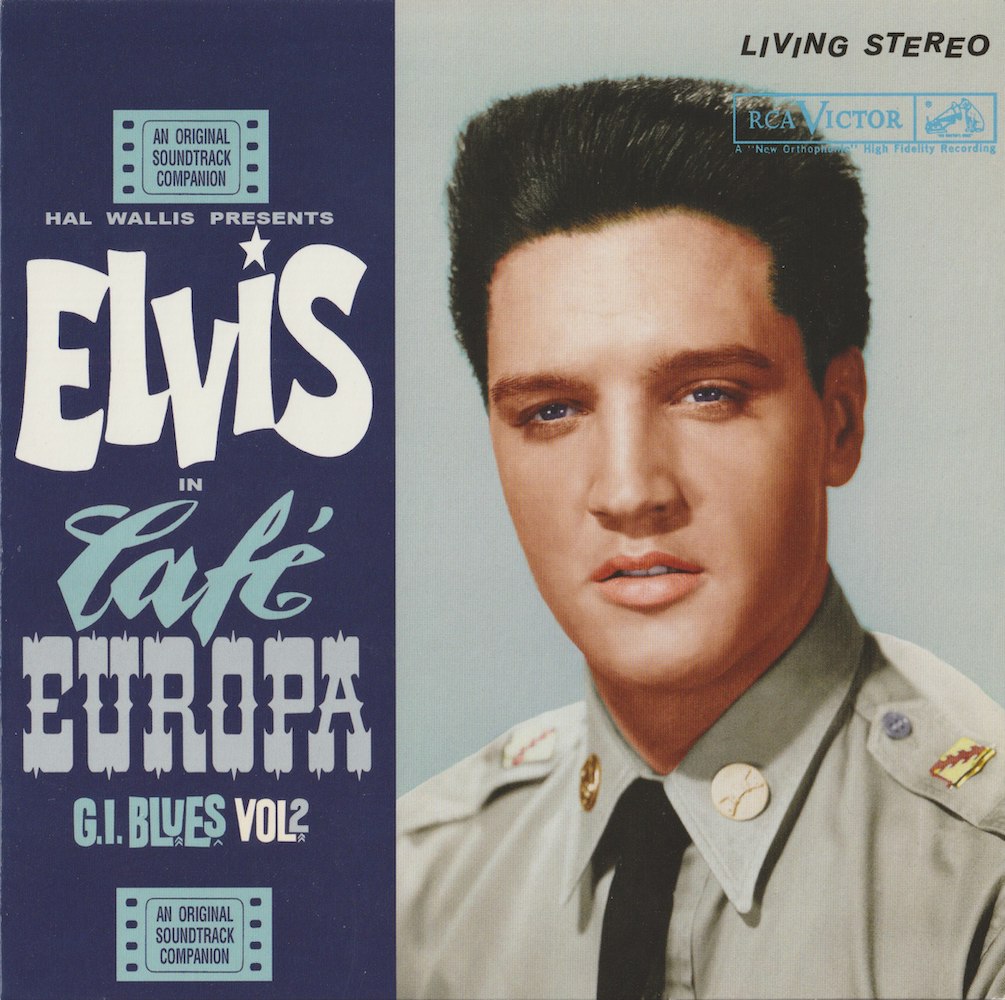
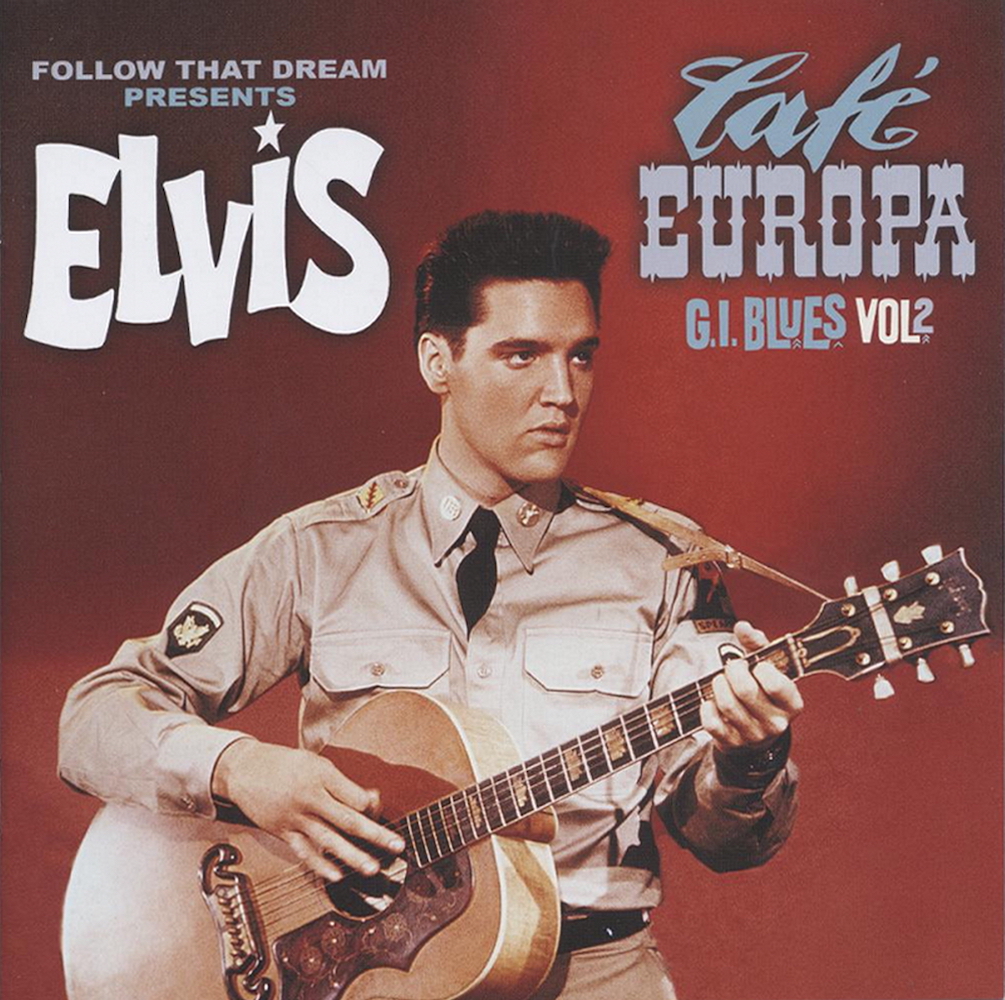
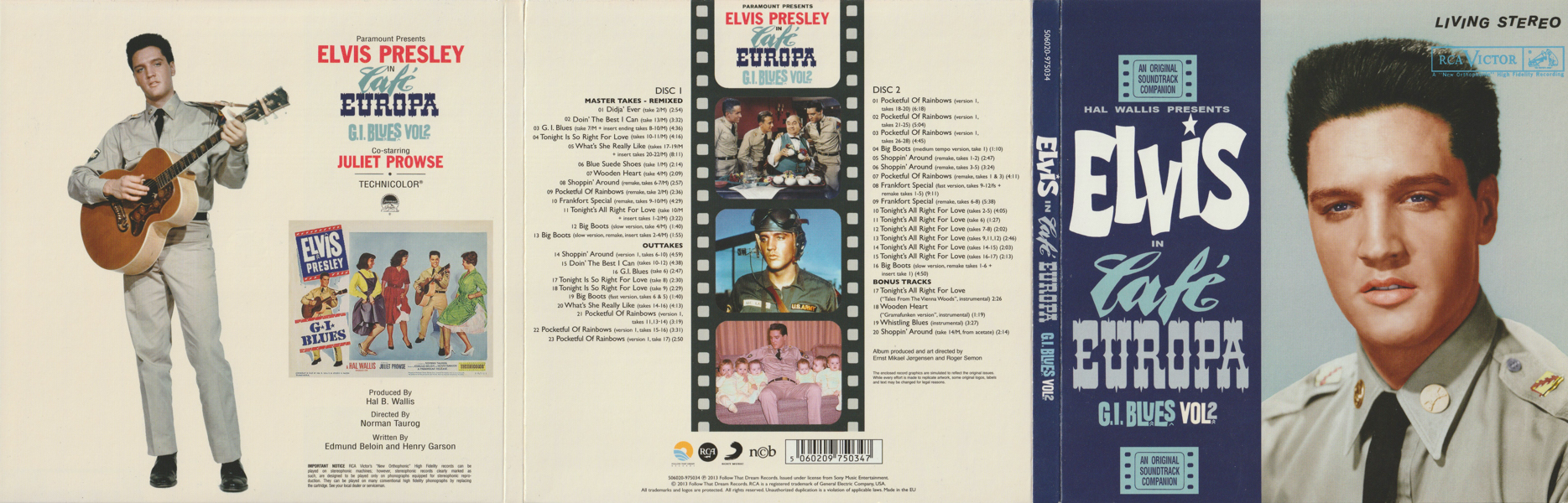
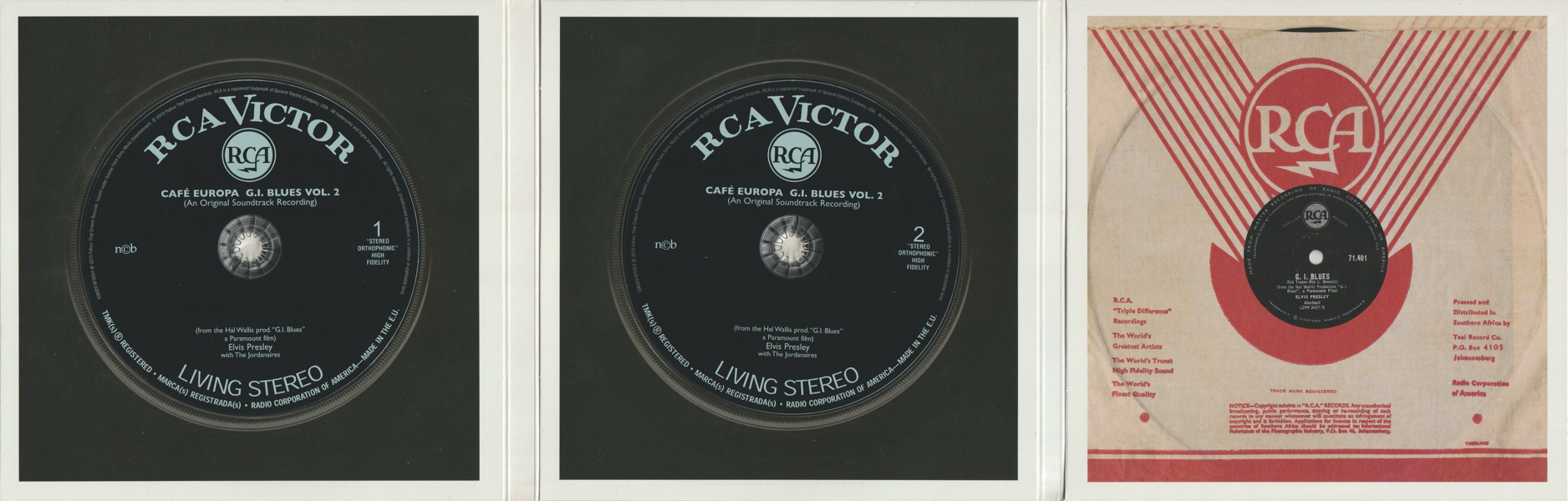
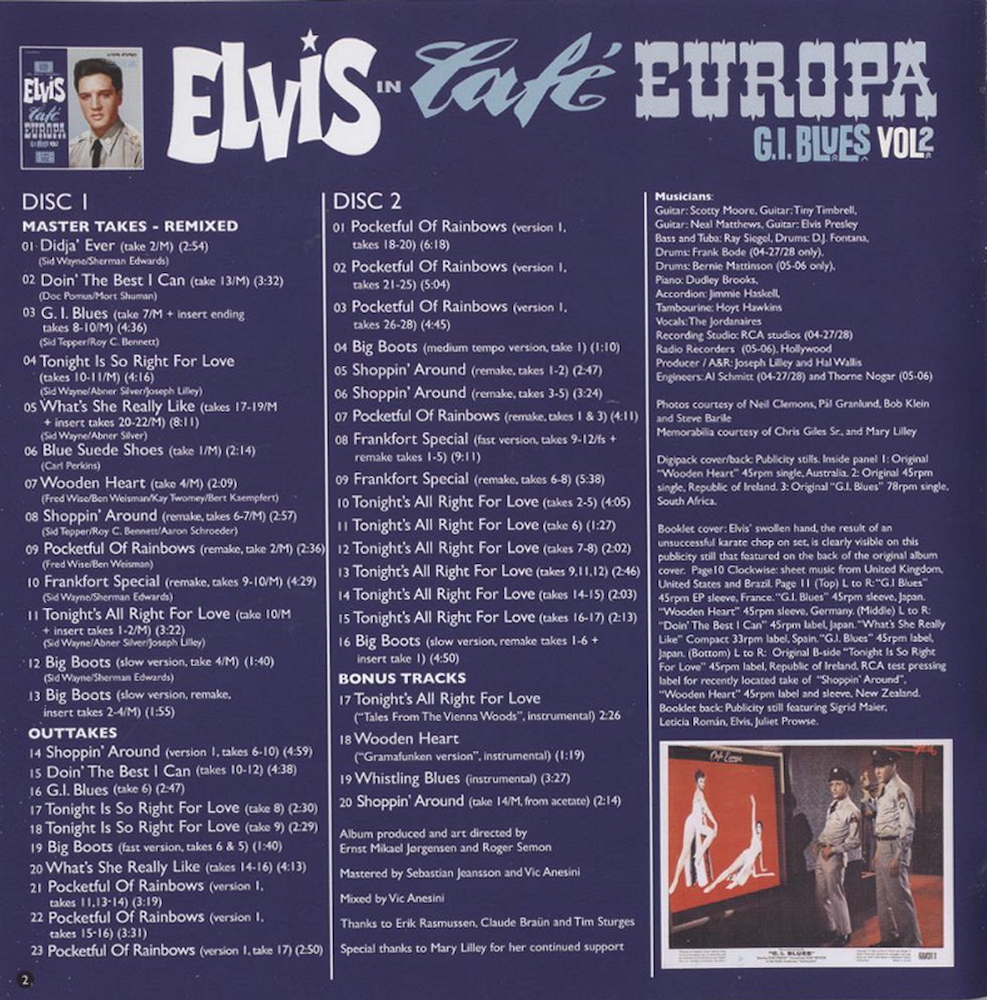
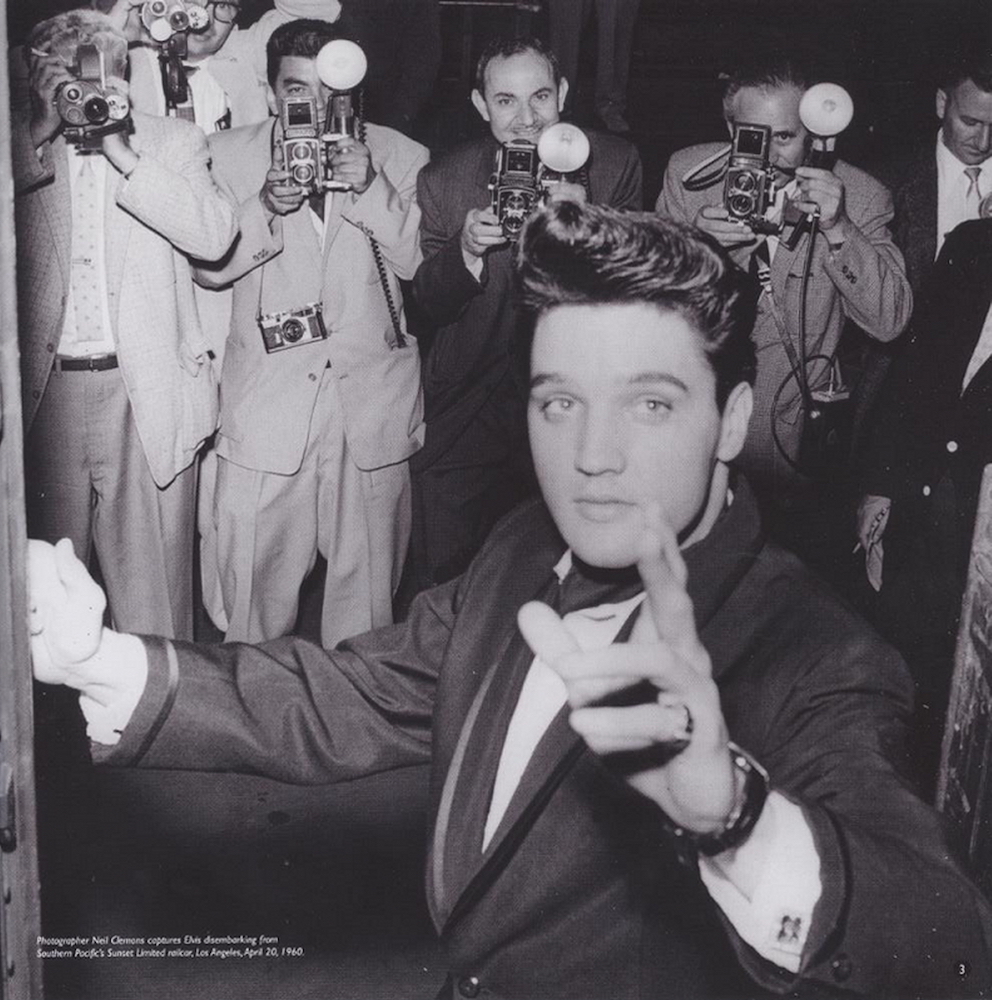
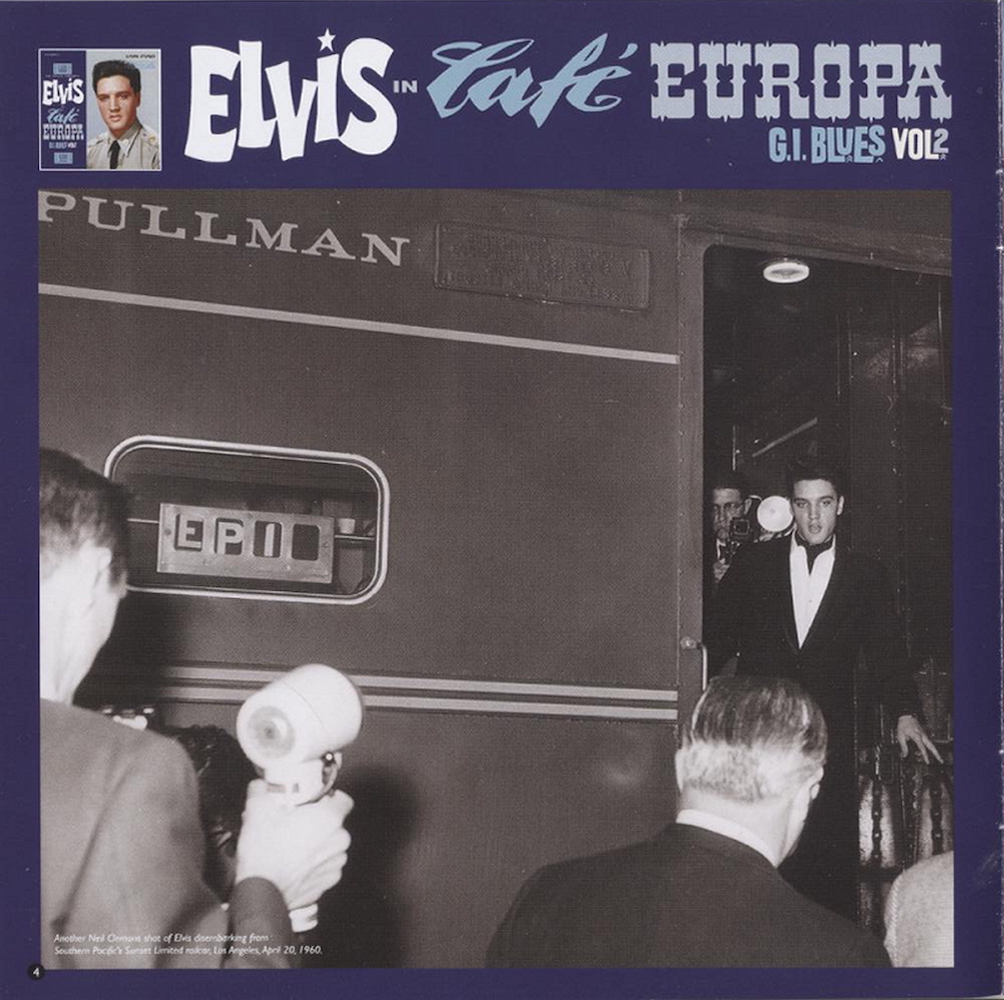
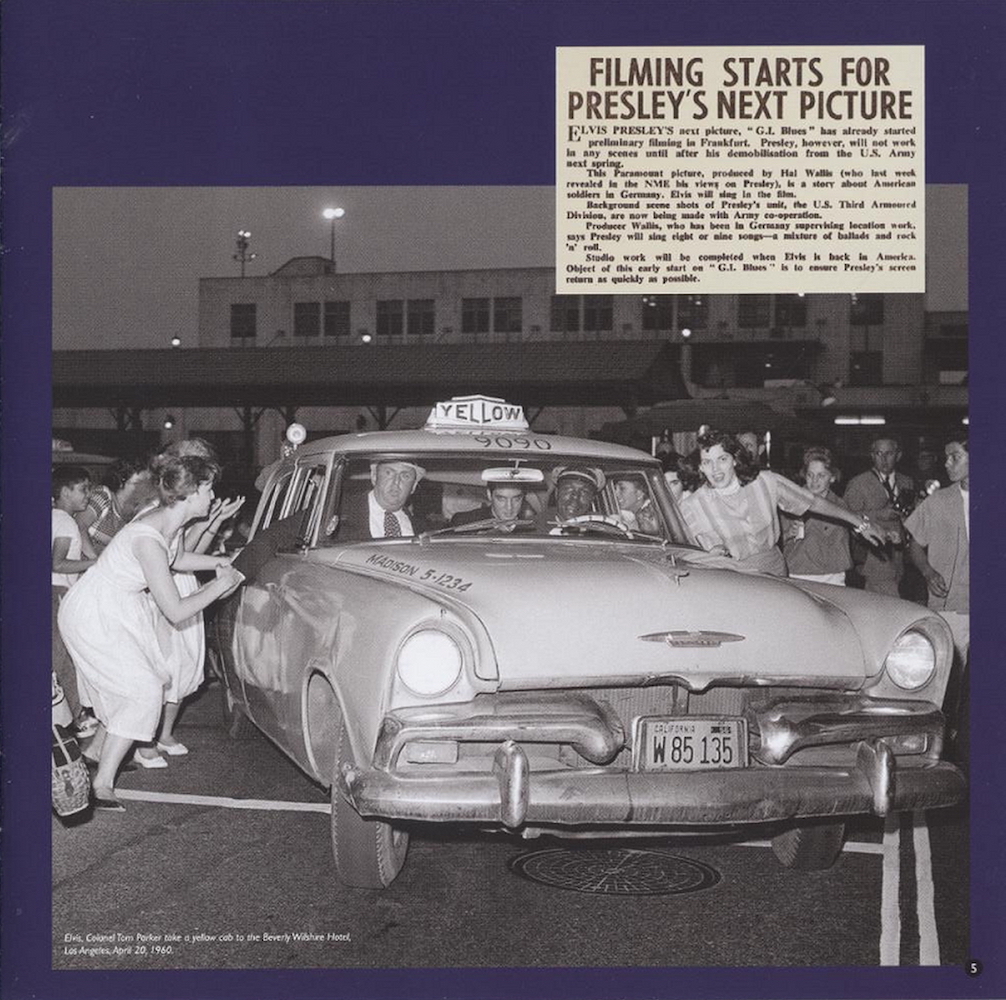
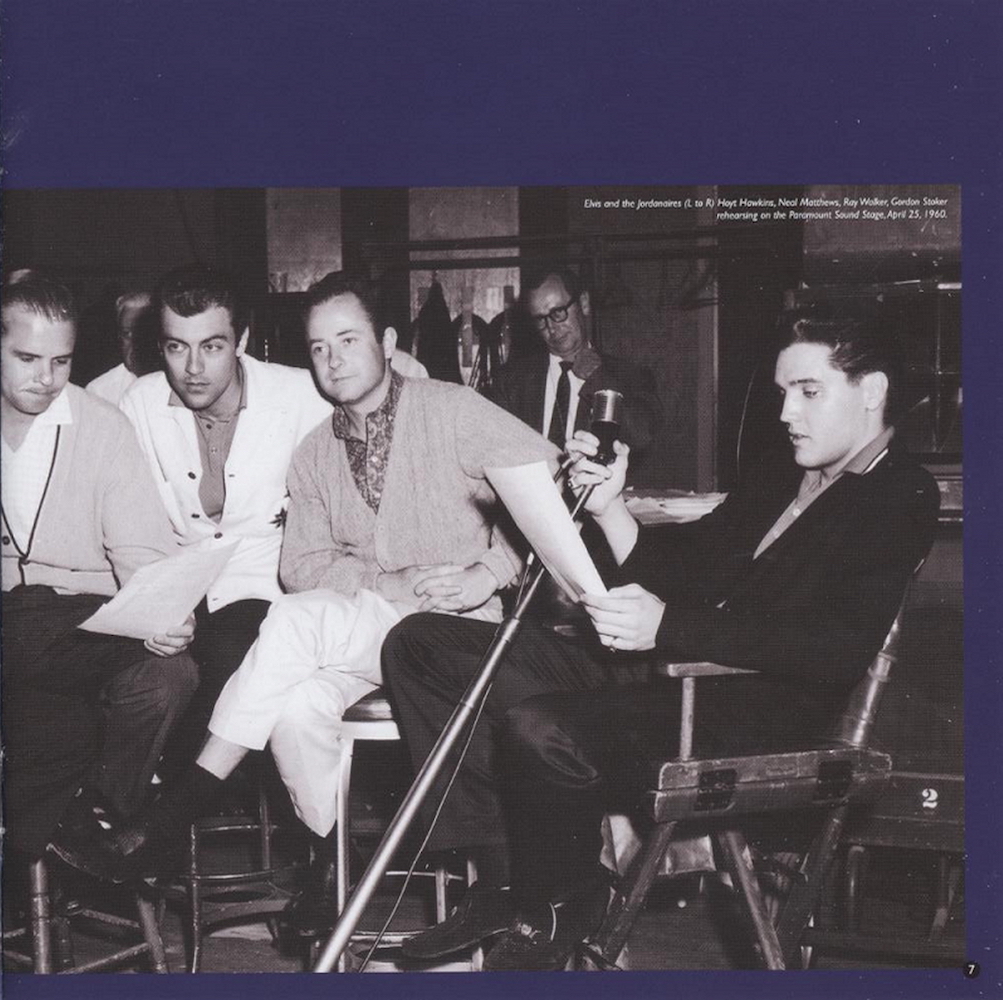
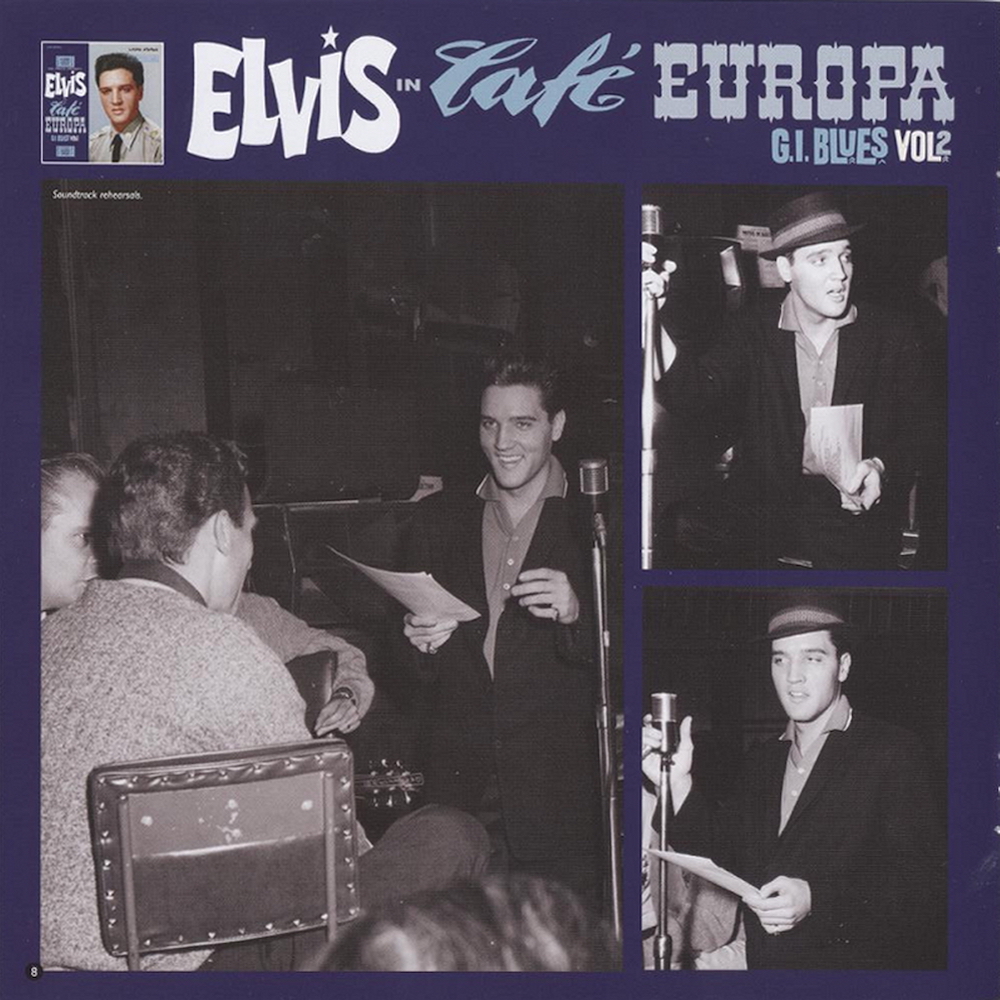
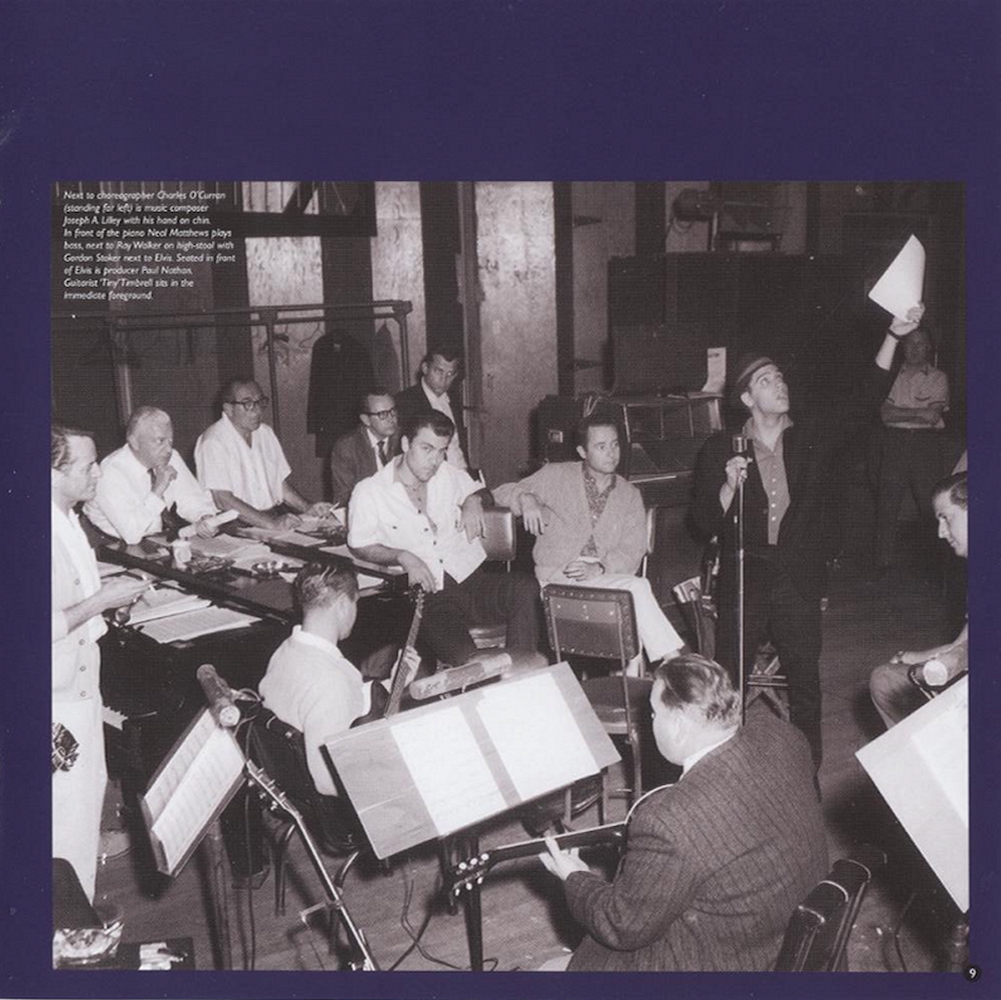
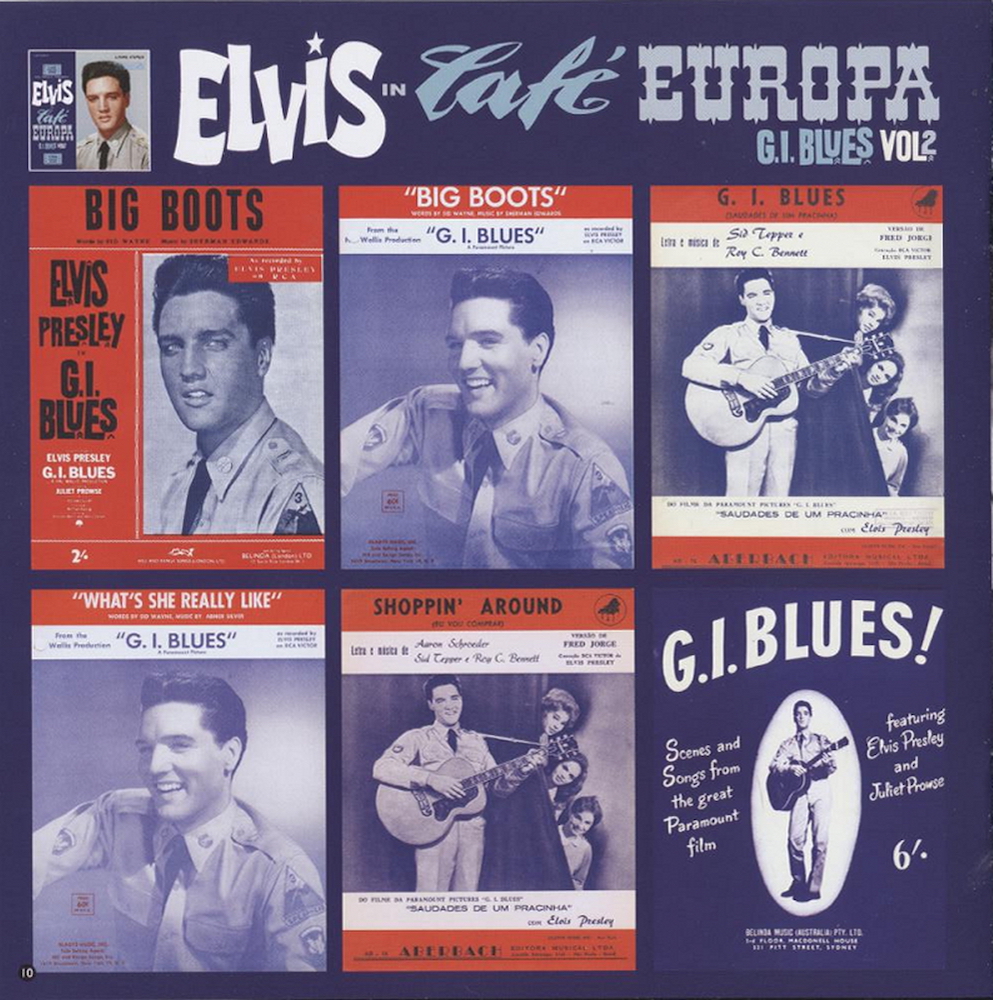
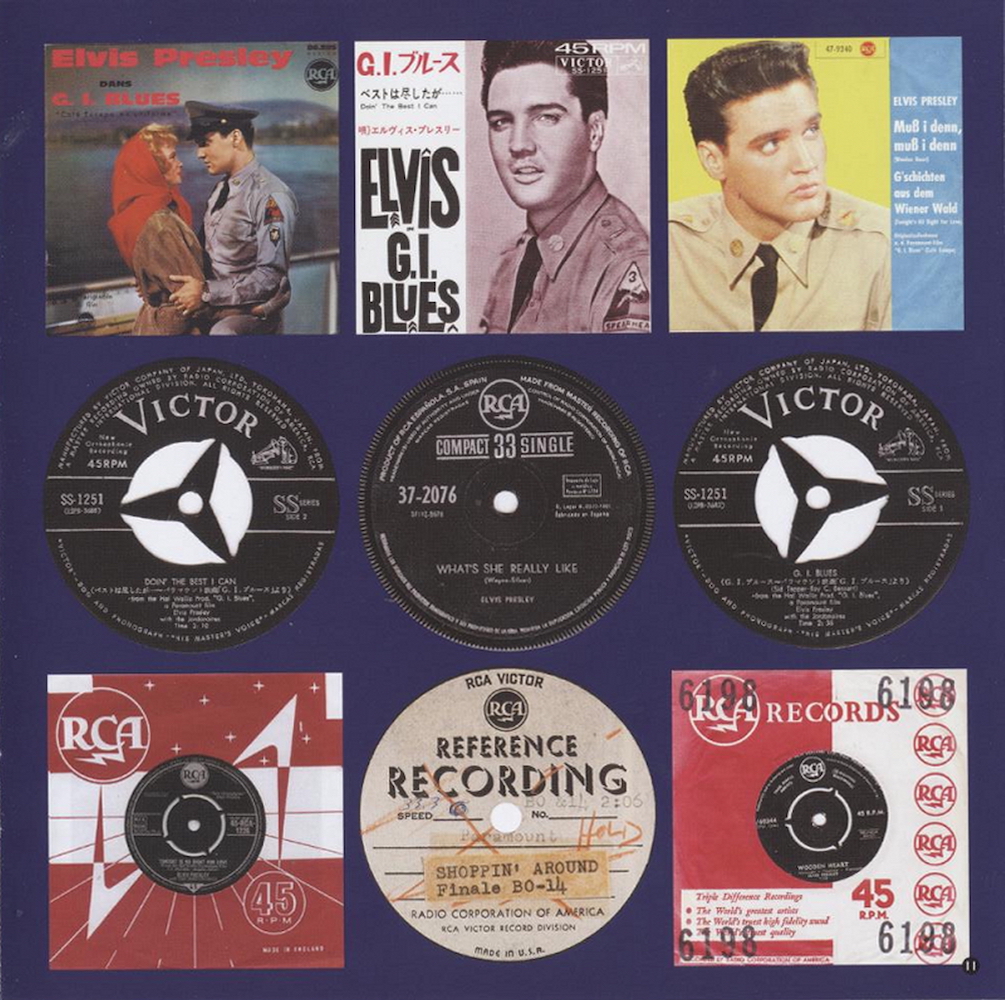
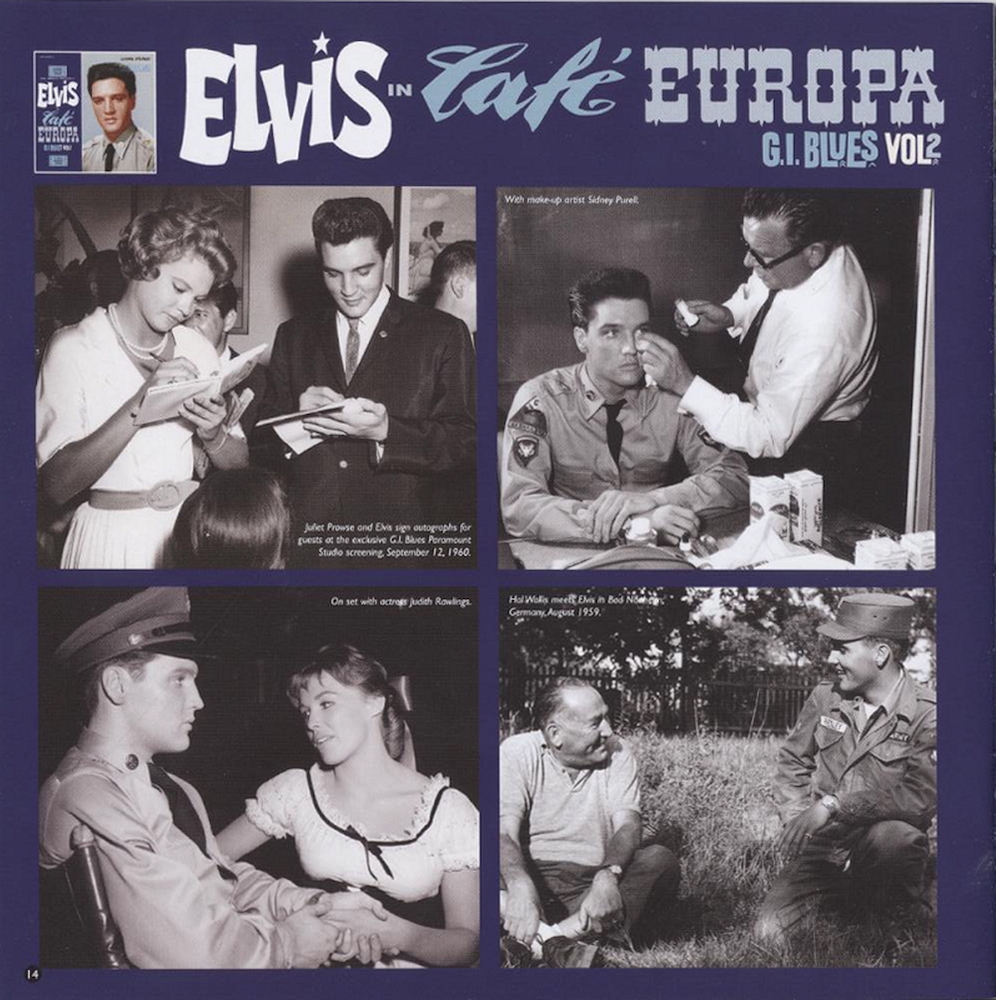
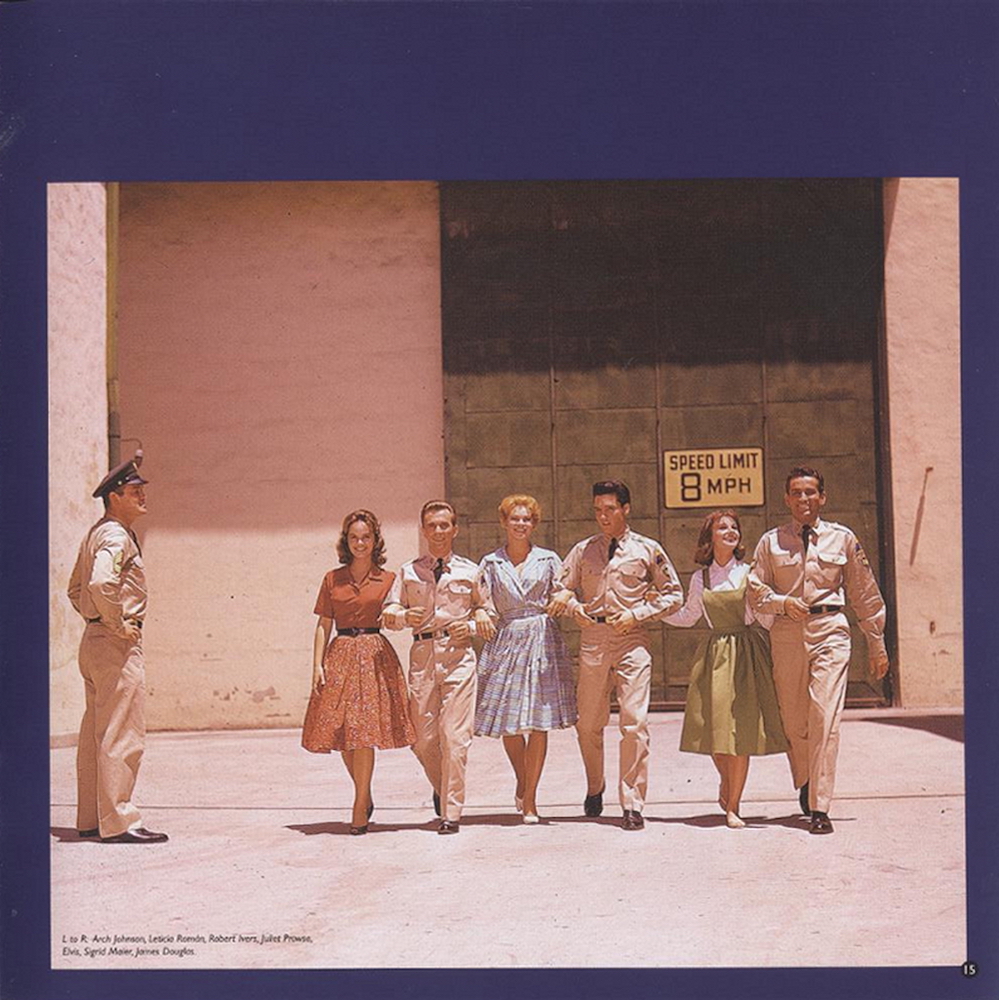
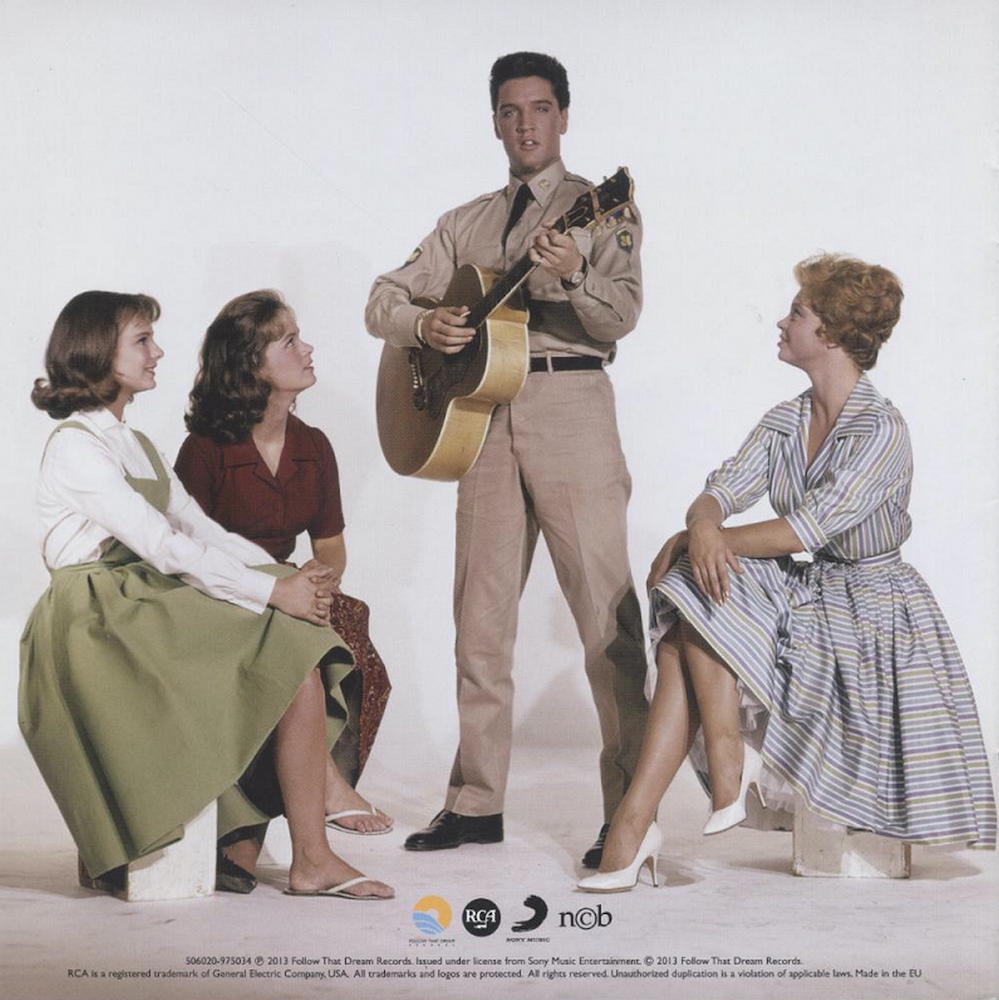
This second FTD volume is called Elvis in Cafe Europa and features a nice alternate cover shot along with a selection of movie stills. The 16-page booklet includes G.I. Blues sheet music, some interesting world-wide vinyl releases plus plenty of photographs of Elvis and the band rehearsing at Paramount.
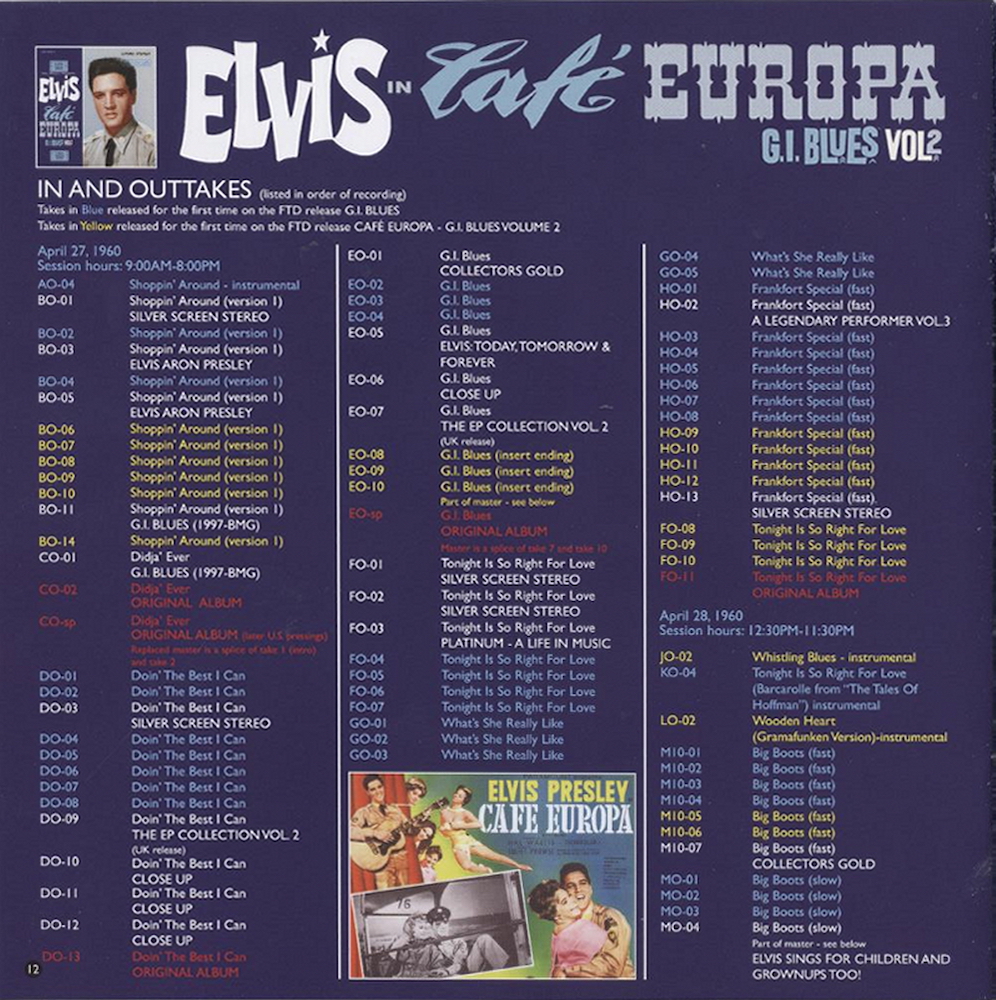
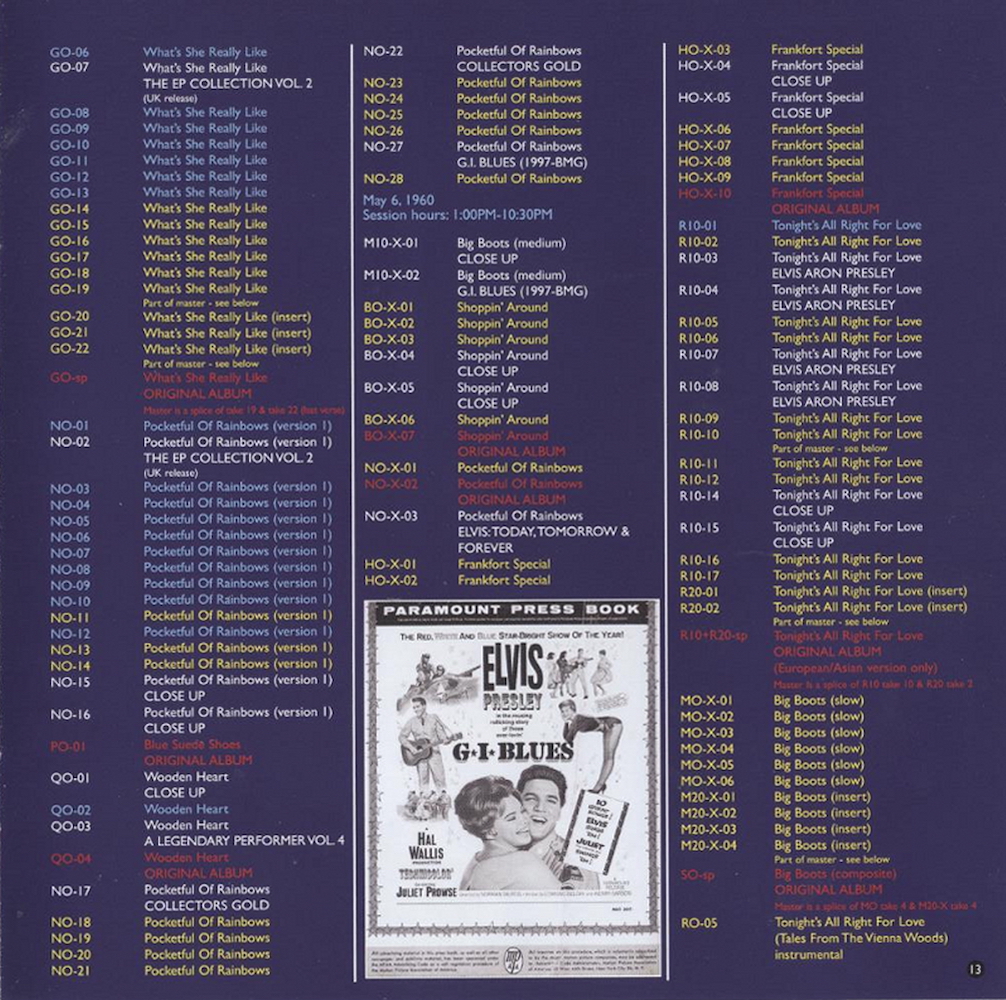
More importantly, this booklet features the essential “In and Outtakes” section which details how all the different takes are spread across the two FTD releases. The decision of how the various takes from each session were chosen for each FTD album is an interesting question to ponder.
The Music
It is obvious that a lot of time has gone in to improving the original audio and all the takes here sound sublime, thanks to the usual team of Sebastian Jeannson and Vic Anesini.
Luckily for us, these 1960 soundtrack recordings were of a much higher standard than the ones from later in the mid-sixties and have a beautiful clean edge to them and wonderful dynamic. On headphones you get the feeling of listening to the original studio reel-to-reel tapes as they glide by.
The first half of Disc 1 presents all the album masters, but this time remixed from the original studio tapes. This means that they include the engineer’s count in, some studio interaction, as well as the various inserts and remakes that were required.
They are presented in the order the masters were finished, rather than in the original LP sequence. FTD presented the “First Takes” in album order on G.I. Blues (Volume 1) and I wish they had done the same sequencing here. Starting with ‘Didja’ Ever’ over ‘Tonight Is So Right For Love’ just seems wrong.
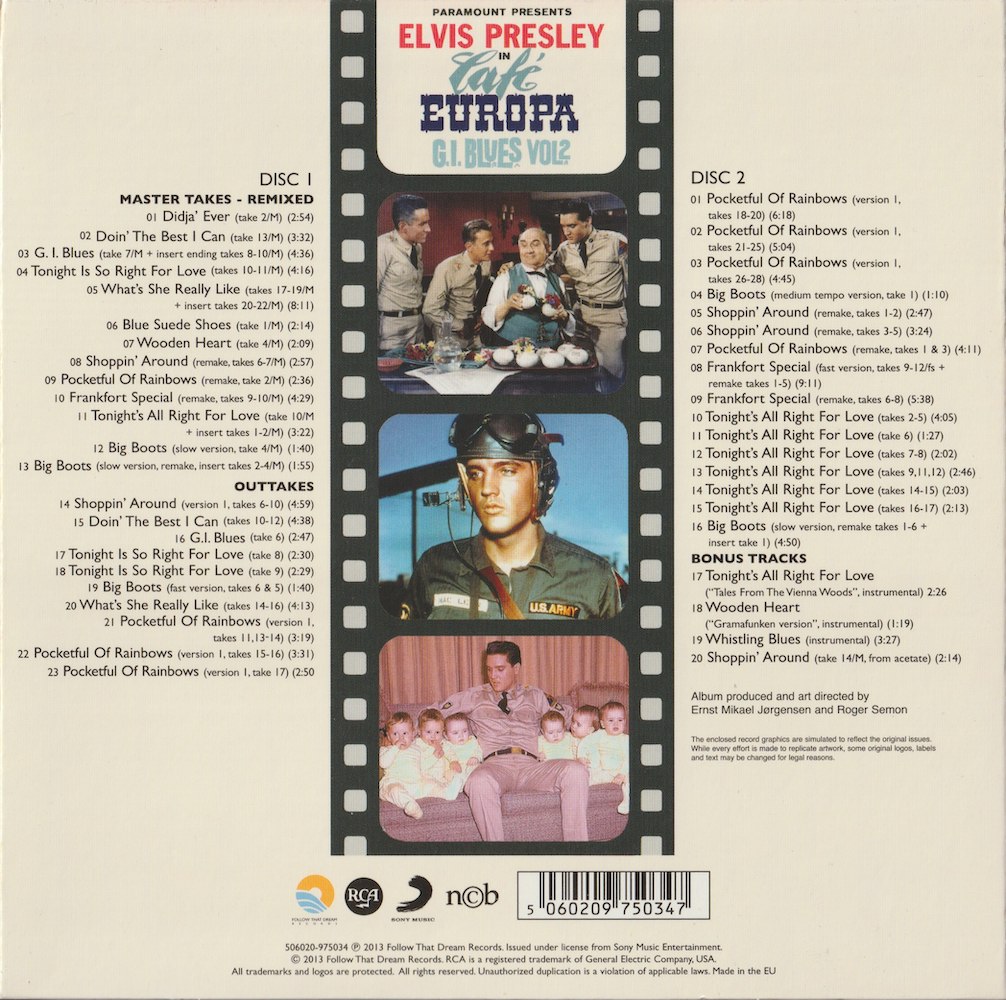
Disc 1 (23 tracks, 78 minutes)
‘Didja’ Ever’ kicks off the disc with the musicians rehearsing the song’s final notes before Elvis remarks, “They’re rolling”, with the master, Take 2, following. This sets the pattern of what follows.
Tracks worth mentioning are ‘G.I Blues’, ‘What's She Really Like’, ‘Tonight’s All Right For Love’ and perhaps ‘Big Boots’, all of which needed additional inserts to complete imperfect masters and help explain the recording process.
For instance, on ‘G.I Blues’, although Take 7 was going extremely well, the band again failed to get the timing of the end correct. Elvis then explains, “Mr. Wallis, the ending was messed up anyway, so I didn't bother to say it.” Elvis and the band then worked through three “pick-ups” to achieve the final section. Elvis commented, “It’s pretty hard to start on that damn thing" as they tried to get going mid-song. The album master would be a splice of Take 7 and “Insert” Take 10 for the ending.
On ‘What's She Really Like’ Take 17, Elvis and the band moved to a faster tempo as well as changing to a higher key. After the sixteen previous takes this was a radical variation but this time it felt right. Take 17 again worked nearly to the end but was let down at the final moment by Elvis going off-key. After a false start on Take 18, the next attempt would be the near perfect master until the band lose a bit of impetus and miss their timing.
On the first required new ending insert, Take 20, an alternate explosive drum finale is tried out before they go back to the original quieter arrangement. Take 21 is worse as the band slip off tempo, before the rousing final Take 22 which would end up being spliced to Take 19.
On ‘Tonight’s All Right For Love’, when Freddy “the freeloader” Bienstock suggests “That was a pretty good take” Elvis' responds, “Well, let's do one more and make it an even better take”! The inserts here are fascinating as you can hear Thorne playing back the original tape in the background to make sure the band get to the correct tempo. The second “insert” would work fine with Elvis at last holding the final note. The European album master would be created from a splice of Take 10 with “insert” Take 2 for the ending.
Other tracks feature some interesting studio banter such as on ‘Frankfort Special’ when Elvis fluffs the lyric and sounds angry with himself, “Hell, son-of-a-bitch. Let’s go again before this train runs out of juice”, or on ‘Shoppin’ Around’ when Radio Recorders’ engineer Thorne suggests drummer Bernie Mattinson backed off a bit, “I want you to shine D.J!” and Elvis requests bass-singer Ray Walker lean in closer for the song’s finale - “He’s going to do that with us. I just thought I’d warn ya’” he jokes.
Outtakes - Disc 1
More outtakes from seven RCA Studio session songs round off the first disc, allowing us yet more eavesdropping on Elvis’ first post-army soundtrack session.
‘Shoppin’ Around‘ (RCA studio Takes 6-10) The RCA studio sessions early takes - as featured on the first G.I. Blues FTD - have a lovely "unplugged" feel with Ray Siegel plucking the double-bass and sound more like a rehearsal-jam, but these later attempts are a real joy as Elvis then decides to join in and play guitar.
Before Take 6 Elvis asks, “Will that cord on that guitar reach over here? I think I’ll play rhythm”. These few takes are all the more fascinating even if most are false starts, as with Elvis playing guitar he is no longer concentrating on the lyrics and starts to slip-up. The next few takes would then be short false starts, “Hell no, cut it. Start again”. Take 10 is a delight, while Take 11 (on FTD Volume 1) would be selected as a possible master, although in the end it would not be used. The band would return to finish the song a week later.
‘Doin' The Best I Can’ (Takes 10-12). This was the most creative song on the album, a beautiful doo-wop style ballad from Doc Pomus and Mort Shuman. The earlier takes (as on G.I. Blues Volume 1) were a little slower, featuring a lighter arrangement and with Elvis’ prominent vocal showing off his silky, sexy new “post-army” voice. Here we get the final takes from the RCA session.
Take 10 stops because of his noisy chair with Elvis commenting, "Hold it. Hold it. The chair squeaked. Anyone got any oil?!" Take 12 is complete and perfect except for the lyric slip-up of, "I guess I was the only one who didn’t care at all"! Take 13 was chosen as the album master.
‘Tonight Is So Right For Love’ (Takes 8-9)
It was at the very end of the first day’s session that Elvis returned to the earlier attempted ‘Tonight Is So Right For Love’. Taken at a slightly faster tempo, Elvis sounded more enthused and definitely had more “ooze”.
On Take 8 Elvis they get right to the end when Elvis messes up the lyrics missing the final chorus on “Hold me tight..”. Take 9 was close to perfect and features a marvelous build up to the stunning finale.
‘What's She Really Like’ (Takes 14-16). The initial takes (as on G.I. Blues Volume 1) were troublesome, with Elvis soon taking on a very smooth, crooner style. By Take 15, however, Elvis was having issues with his voice cracking and stopped the session saying somewhat despondently, “Charlie, hold it man. We’re just wasting tape, that’s all.” Take 16 wouldn’t be much better, still sounding a little stilted, even though they make it through to the final two lines. After discussion with musical director Charles O’Curran, Elvis and the band would then move on to a faster tempo, as well as changing to a higher key.
‘Pocketful Of Rainbows’ (RCA Takes 11, 13-16) This delightful ballad tested Elvis’ vocal range as he soared through the scales. On the earlier RCA session you can sense that the studio was not working for Elvis as he tried again and again with no real success. Take 12 (on G.I. Blues Volume 1) was the first real winner and was saved as an “Alternate” master.
Taken at the faster tempo, Takes 14 and 16 are both complete - sounding very similar to Take 12 - but both sound vocally mannered without that final sweetness.
After Take 16 Elvis decided to move on to something vocally less challenging and would quickly polish off the “Un-plugged” ‘Blue Suede Shoes’ and ‘Wooden Heart’ in quick succession.
Take 17 was the first attempt after the break and, given a chance to relax his voice and with a renewed enthusiasm, it was close to perfect. Elvis stated at the end, “Let’s do one more before we stop - and that’s it.” Little did he know that he was only half-way through!
Disc 2 – Outtakes (71 minutes)
The second disc mainly features outtakes from the May 6 Radio Recorders’ sessions but starts with the remaining twelve takes of ‘Pocketful Of Rainbows’ from the RCA Studio session.
‘Pocketful Of Rainbows‘ (RCA Takes 18-28) After a beautiful Take 17, it then all started going wrong again. On Take 19 his voice cracked at the second high note, with Elvis delightfully laughing, “Hold it man, I cracked. Let’s start it again kinda’ schnell-like.” Charles O’Curran rightly questioned whether this was a good idea. Elvis was in fact right, as Take 20 was perfect through to the very end, but for some reason Elvis was looking for something even better. By Take 22, Elvis’ voice cracked on the very first note to everyone’s amusement and from then on Elvis’ voice sounds plain worn-out, with Elvis even commenting, “I got a whisky throat.”
Amusingly, just before Take 28 Elvis sang a line from ‘Doin’ the Best I Can’ telling everyone, “My throat has had it Charlie. No kidding. ‘I’ve tried so hard, so hard to please”. Elvis, for some reason, then suggested it was worth trying it one more time, remarking “I did sixty (takes) one time, and the record never came out!” Take 28 is complete, but Elvis’ voice sounds too tired and they finally called a halt. The RCA Studio sessions were over.
Radio Recorders, Hollywood - May 6 1960
‘Big Boots’ (medium tempo). Back at his favoured Radio Recorders for some reason first on the agenda was to polish off this simple, obligatory soundtrack song. Even with this slight composition you can hear the improvement in ambience now that Elvis and the band are back in their favoured studio. On Take 1 you can hear Elvis’ finger-snaps and by Take 2 they had what they needed.
‘Shoppin’ Around‘ (remake). The fantastic studio ambience is again immediately obvious and the band sounded fresh, tight and rocking. Take 2 was complete but more of a rehearsal, with Elvis notably happy to be back where he felt at ease. The new tempo was slightly slower than the previous week, you can hear Elvis’ finger-snaps and he also throws in some cool groans. Elvis was clearly in good humour telling everyone, "I’m hot, hot!" Nice as well to hear Elvis giving suggestions to the ever–faithful Scotty Moore. Take 5 is complete and very close to the album version.
‘Pocketful Of Rainbows’ (remake). Once again this problematic song proved that Radio Recorders was the place to be, as it would be finally finished by the very first complete take. The song’s arrangement returned to the initial slower tempo of the very first takes from the previous week. This time, however,, it sounded far cooler since it now featured a delightful walking bass-line.
With Thorne using a little echo and with Elvis sounding more relaxed, these takes shine. Listen out for the pure openness of the studio’s ambience when Elvis sings his solo line, “for a lonely night, ey, ey, ey..ight”.
Take 1 soon faltered but on their very first complete run-through they had success. Elvis couldn’t believe that after all the troubles at the RCA studio they already had achieved perfection because he then pushed for yet one more shot. And while Take 3 is very similar, it would be Take 2 that Elvis was more satisfied with.
‘Frankfort Special’. Four left-over “fast” outtakes from the RCA session are tacked on here at the start, but they all lead nowhere with Elvis obviously exasperated, “These sudden stops going to tire this train out. This’ll never be right”.
‘Frankfort Special’ (Remake - Takes 1-8)
At Radio Recorders the song was rearranged, with the tempo slowed down to more of a ‘Mystery Train’ feeling. With its smooth bass-line and fabulous echoing guitar, it has a much better vibe. The first couple of takes were once again more of a rehearsal, “Let’s do it, even if it’s wrong!” joked Elvis, with Take 2 particularly capturing the fun.
Another slight re-arrangement before Take 3 had Elvis straining his voice. He stopped the song stating, "There’s no way in hell I can hold that thing up!". Elvis, Dudley Brooks and director Charles O’Curran then discussed the melody before the new version finally took shape.
On a wonderfully spontaneous Take 5, Scotty Moore and D.J. Fontana delightfully injected the early feel and groove of 1955’s ‘Mystery Train’ into the rhythm, and at the end you can almost hear that quintessential Elvis shriek of delight coming back from five years earlier. It was only the looseness of Elvis’ performance that would stop this being the master.
Incredibly in just one quick morning’s session of nineteen takes at Radio Recorders, Elvis and the band had achieved three final masters. This must be compared to the disillusionment of the previous week’s session at the RCA studio where nothing satisfactory was reached even after fifty five attempts on the very same songs.
‘Tonight's All Right For Love’ - Unfortunately for Elvis, the song-publishers had discovered that the tune on which ‘Tonight Is So Right For Love’ was based, was only in the Public Domain in the US. Therefore, the song needed to be re-arranged for European release. This time Johann Strauss’ 1868 tune ‘Tales From The Vienna Woods’ was utilised, hence the working title, ‘Vienna Woods Rock and Roll’. When the Elvis Aron Presley box-set was released in 1980, one of the real delights was the compilation of funny outtakes from this little known number.
Take 3 is a classic outtake as, when The Jordanaires sing “right up to the sky”, Elvis breaks up laughing, “That right up to the sky shocked me! We lost an engine on take-off.” And it went downhill from there. Even though they had moved to Radio Recorders, the union breaks were still being enforced, Elvis noted, “We should have never broke for lunch. I was in good spirits before”. On each Take they seem to get very close, but all too often the complicated mandolin lines or accordion falter. After Take 11 Elvis notes, “You guys hold the tempo back, you don’t get paid any more”. Before Take 14, interestingly Elvis sang a line from ‘Loving You’ stating, “That was back in the good old days”. He had obviously forgotten the interminable mess that the Loving You sessions actually were.
The complete Take 15 nicely demonstrated the difficulty they were having when, just before the ending, Elvis started singing “Tonight is so right for love” but then got mad at himself, crying out, “Shit! Hell! Damn, I thought I was doing the other one!” Never has so much time been spent over a simple ninety second soundtrack song. As Elvis fittingly jokes, “They got a new law in the Union. You quit at ten whether you’re through or not”!
Take 17 was complete and featured a punchier drum finale, but in the end they opted for using earlier Take 10 with an “insert” ending.
‘Big Boots’ (slow tempo - remake) - For some reason Elvis decided he wasn’t happy with the earlier RCA studio version of this inconsequential tune. But even stranger was the fact that the final release would be a splice of the RCA studio beginning and the Radio Recorders ending! On headphones you can hear the change of studio ambience, from the RCA sound to Radio Recorders, at the edit point. Perhaps due to the number of people in the studio and only being accompanied with a celeste, Elvis struggles with this simple song. He has to tell cousin Gene Smith, “Gene, go back over in the corner somewhere. Every time I look at you I laugh”. Take 6 gets close to the ending before Elvis’ voice faltered. At this point they decided to record only the final ending, from, “So sleep little soldier..”.
Bonus Tracks
A couple of instrumentals were required for the movie with their session outtakes previously featured on bootlegs such as the Cafe Europa Sessions. Since Elvis was not involved, FTD have only included the masters. ‘Tonight's All Right For Love’ (‘Tales From The Vienna Woods’) was recorded on May 6 while ‘Wooden Heart’ (Gramafunken Version) and ‘Whistling Blues’ - a rather nice blues work-out - were both recorded on April 28.
‘Shoppin’ Around’ (Finale) (RCA Take 14) is the final track and taken from a recently discovered acetate. While the audio quality is pretty poor, it is a fascinating insight into the end of the first attempt at the RCA Studios. Take 11 had been selected as an alternate master yet the band obviously pushed on to a new arrangement, speeding up the tempo yet again, adding a completely different “twist” vibe to the whole recording. It’s a great addition to our collections.
Listening to these lengthy sessions it’s intriguing to know that at the time Elvis was concerned about whether a soundtrack album compiling such mediocre material should even be released. Priscilla states that Elvis said, “I just finished looping the goddamn picture and I hate it. They have about twelve songs in it that aren’t worth a cat’s ass. I just had a meeting with Colonel Parker about it. I want half of them out. I feel like a goddamn idiot breaking into a song while I’m talking to some chick in on a train. But I’m locked into this thing. They all seemed to think it is wonderful. But I’m goddamn miserable.” Little did Elvis know that the G.I. Blues soundtrack would become the biggest selling album of his career so far - and spawn one of his biggest million-selling singles.
Overall Verdict
Surely every FTD collector who bought the first G.I Blues volume would want to complete their collection with this second set. Personally I had my doubts that FTD would be able to compile a CD with as good and varied selection as the stunning first disc of G.I. Blues (Volume 1), but they have done it again with the “Remixed Masters” and outtakes on CD1 being just as enjoyable. Even if the material is of a lesser calibre, Elvis collectors can rejoice in the fact that they are able to experience such a fabulous fly-on-the-wall look at how Elvis' sessions worked, and how he continued to plough through so many takes searching for that elusive perfection.
Best of all is that these sessions are in such pristine audio quality. There is so much studio interaction to listen to and enjoy. If you are an Elvis recording sessions fan, what more could you ask for?