Review by Gordon Minto & Keith Flynn
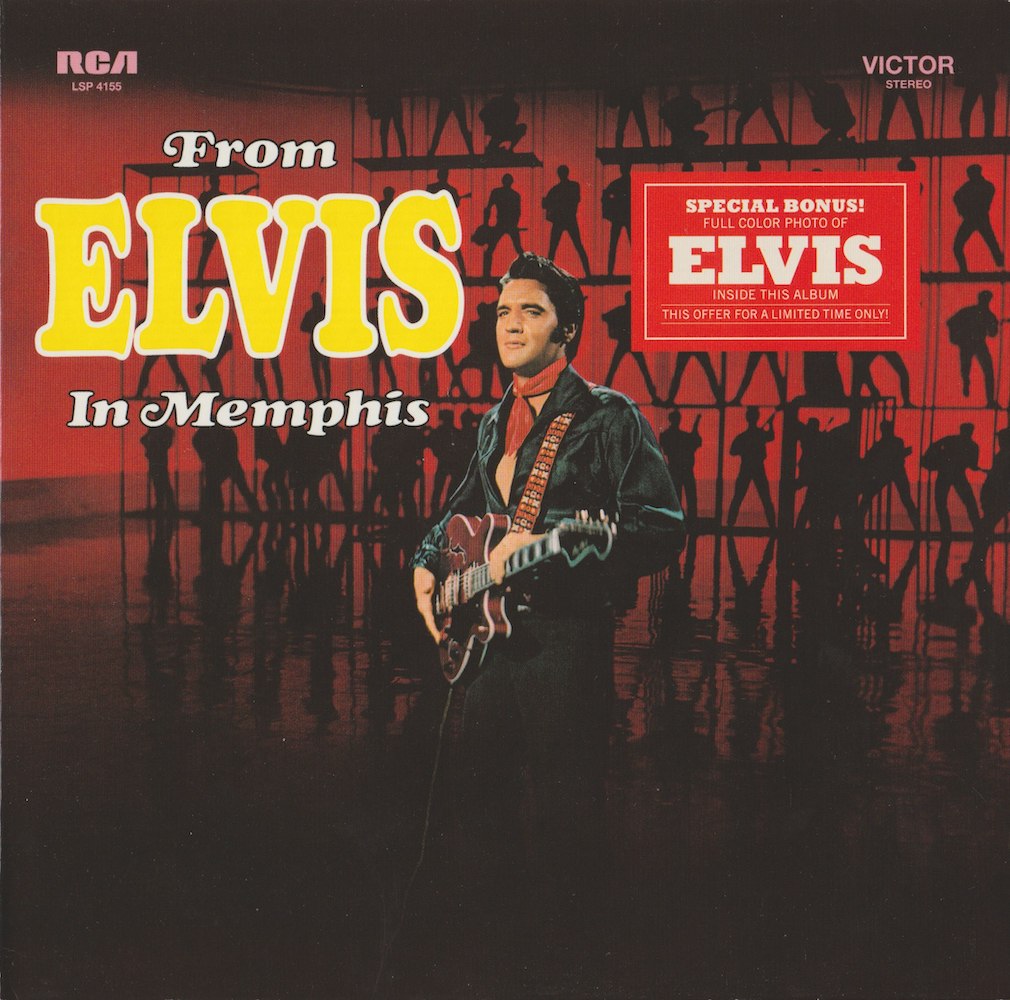
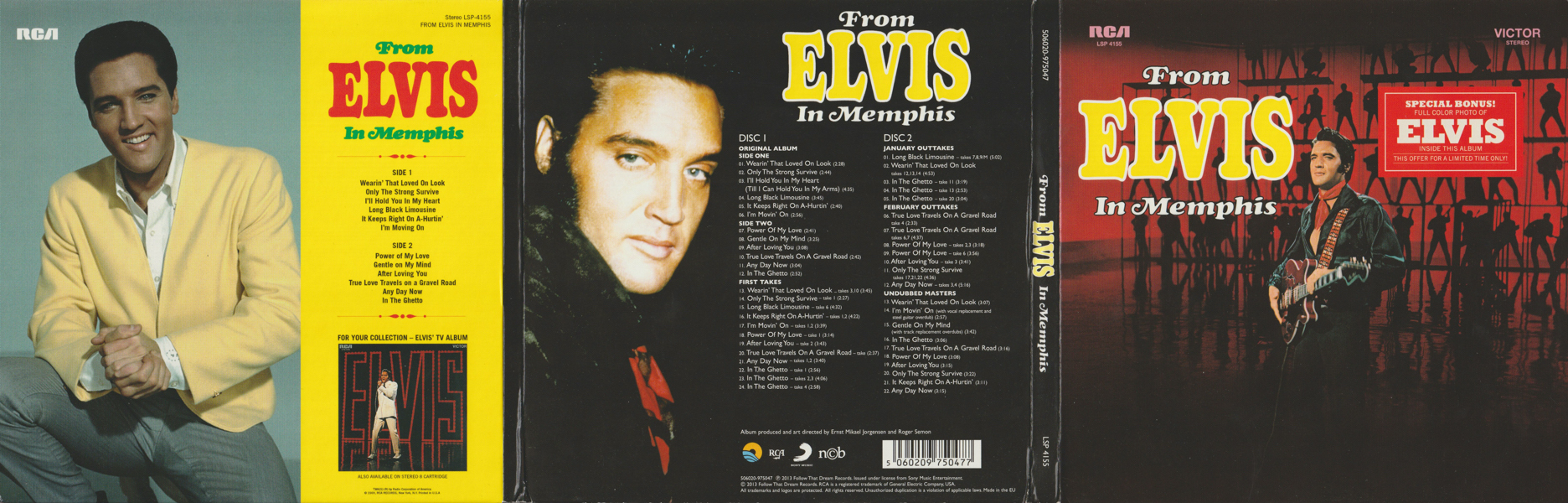
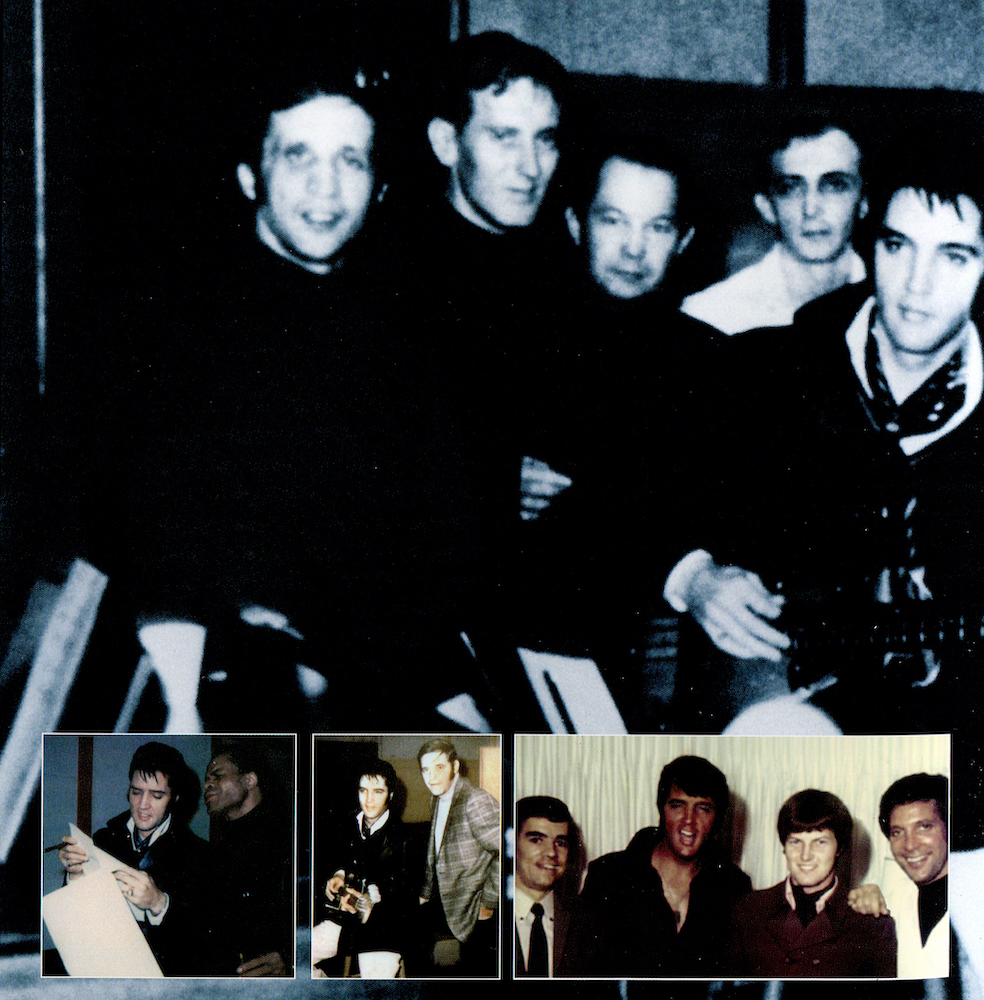
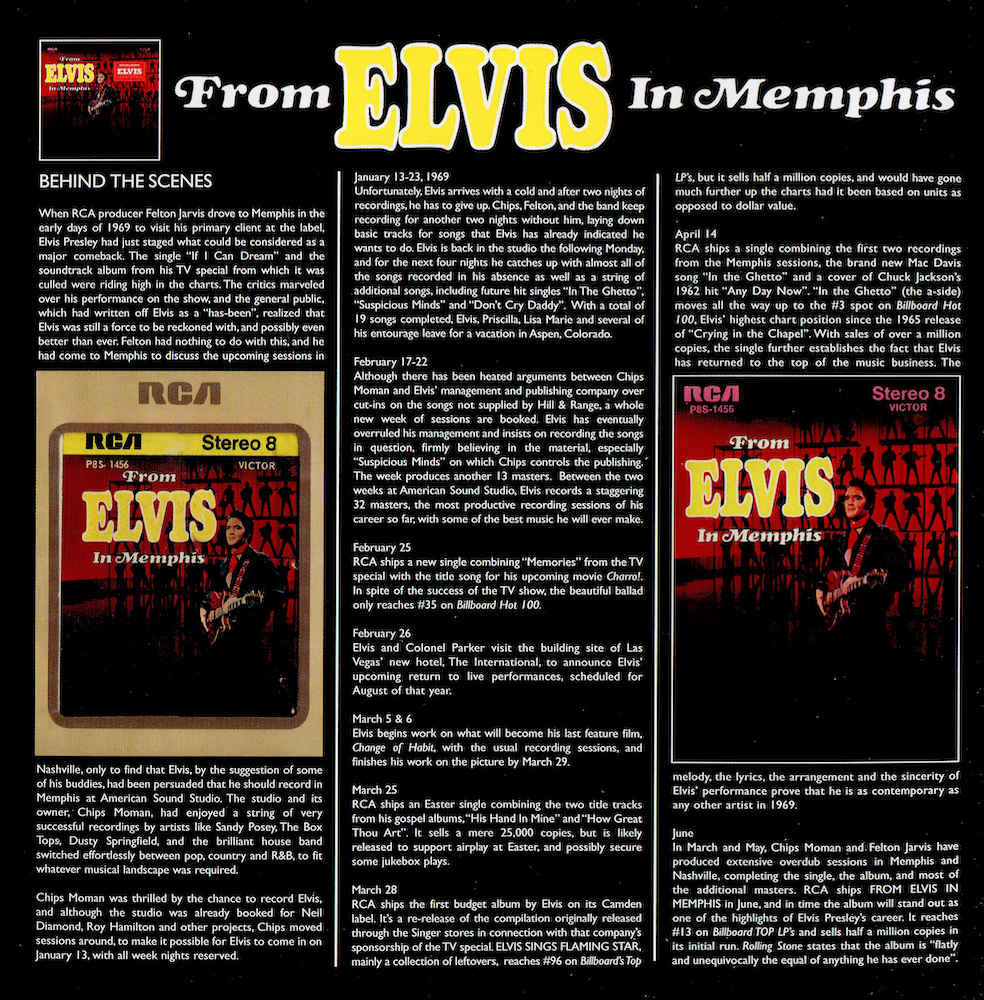
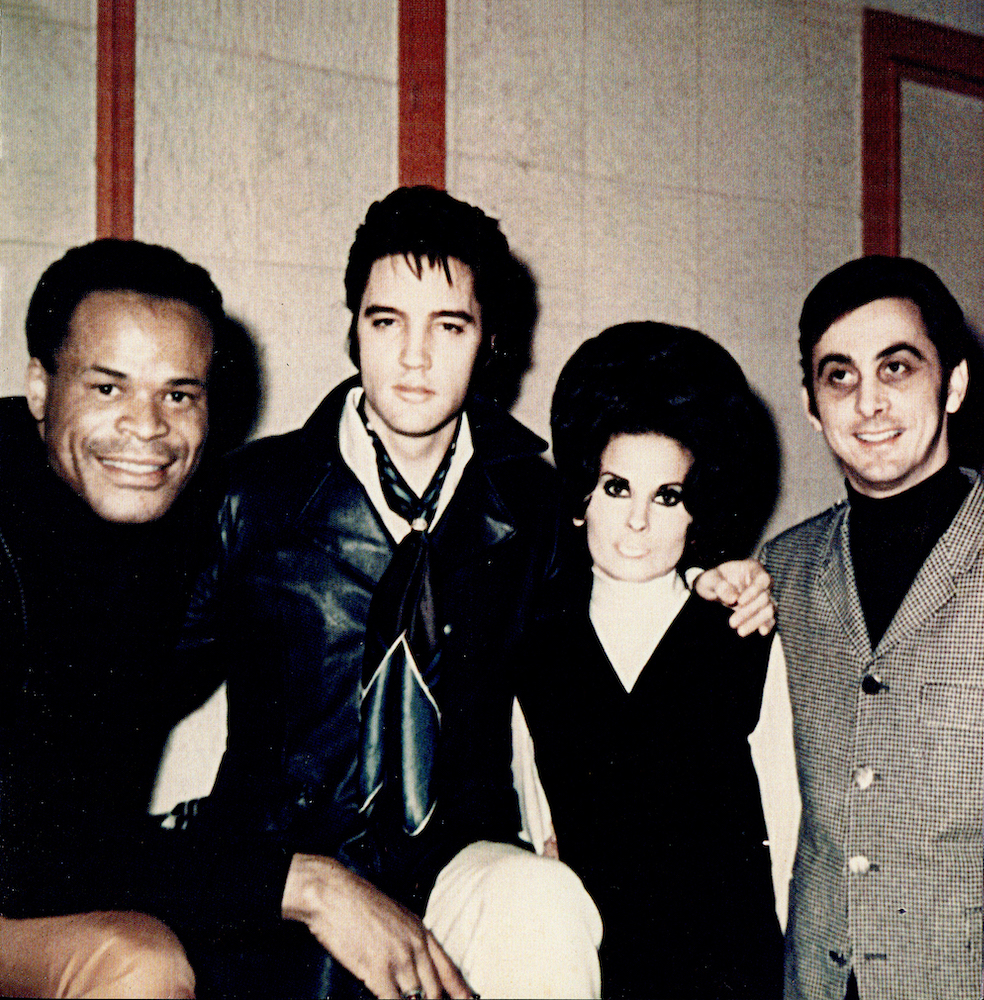
Although it may have been regarded as being inauspicious at the outset, it proved to be the ultimate musical homecoming. Almost fourteen years after he left Sun Records and signed for RCA, Elvis decided - for whatever reason (and opinion remains divided on quite how this happened and who initiated it) - that he wanted to record in his hometown once again. Not at Sun, of course, but at American Sound Studio, a highly innovative and successful enterprise right on his doorstep in Memphis, and one that had quickly built a reputation for producing quality material with a diverse range of artists.
That it almost didn't happen is a story that's been recounted so many times that it needs no repetition here. Suffice it to say that, whatever transpired, or whoever managed to persuade him to break with tradition and try out this local studio (and it's a subject of sharply differing views), he did so and we, as fans, must surely be eternally grateful that he did.
The resulting recordings provided him not only with several major hits but also allowed him to explore his musical development in yet more diverse ways and reassert his stamp on the ever-changing world of pop music. Not surprisingly, the main album from these historic sessions features among fans' favourites, but more significantly, received critical acclaim too - something many (including Elvis himself, I dare say) thought would never happen again.
Some may claim that it's pointless trying to analyse why it worked so well - arguing the case, why not just enjoy it? And while I can see their point, I wouldn't necessarily agree, for examining why it was successful helps us understand why most of his subsequent albums were neither as productive, satisfying or artistically credible. I believe there were several key reasons why it worked.
First of all, on the back of the sensationally successful NBC television show, broadcast on December 3, and an experience that had reinvigorated Elvis, he was keen to continue this creative drive forward. Secondly, none of his recent recordings had fared well at all - even though some of them (’Guitar Man’, ‘Big Boss Man’, ‘U.S. Male’) were really good songs and had been blessed by the presence of the eccentric, but brilliant, Jerry Reed playing guitar, his recording career was in the doldrums. Thirdly, his movie career, which had all but eclipsed his role as a recording artist, was drawing to a close - his contracts were expiring and there seemed no chance that they would be renewed. And perhaps, finally, he was probably just ready and ripe for a change. And what a change it turned out to be!
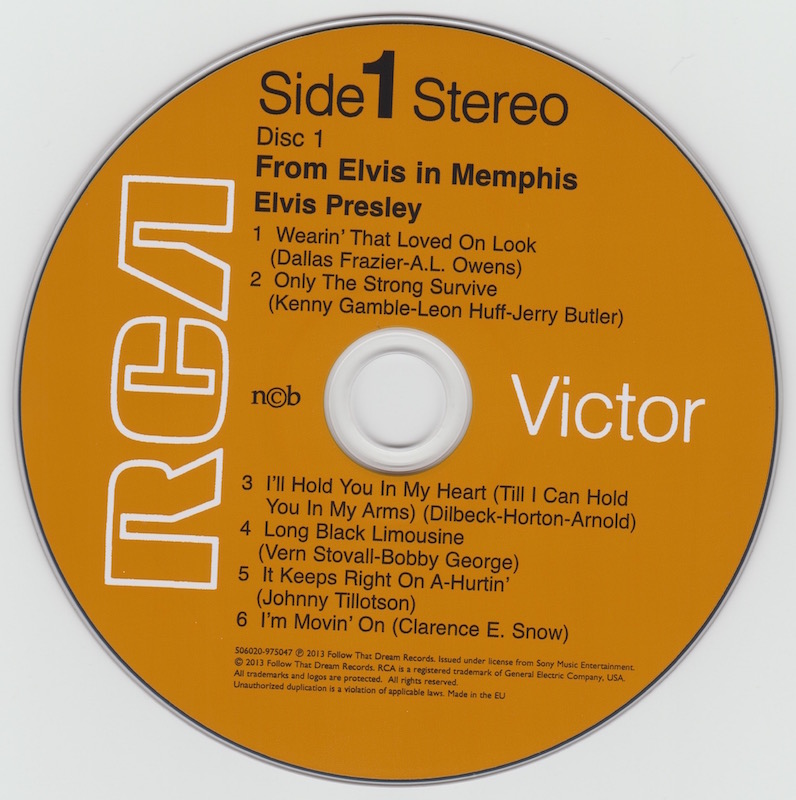
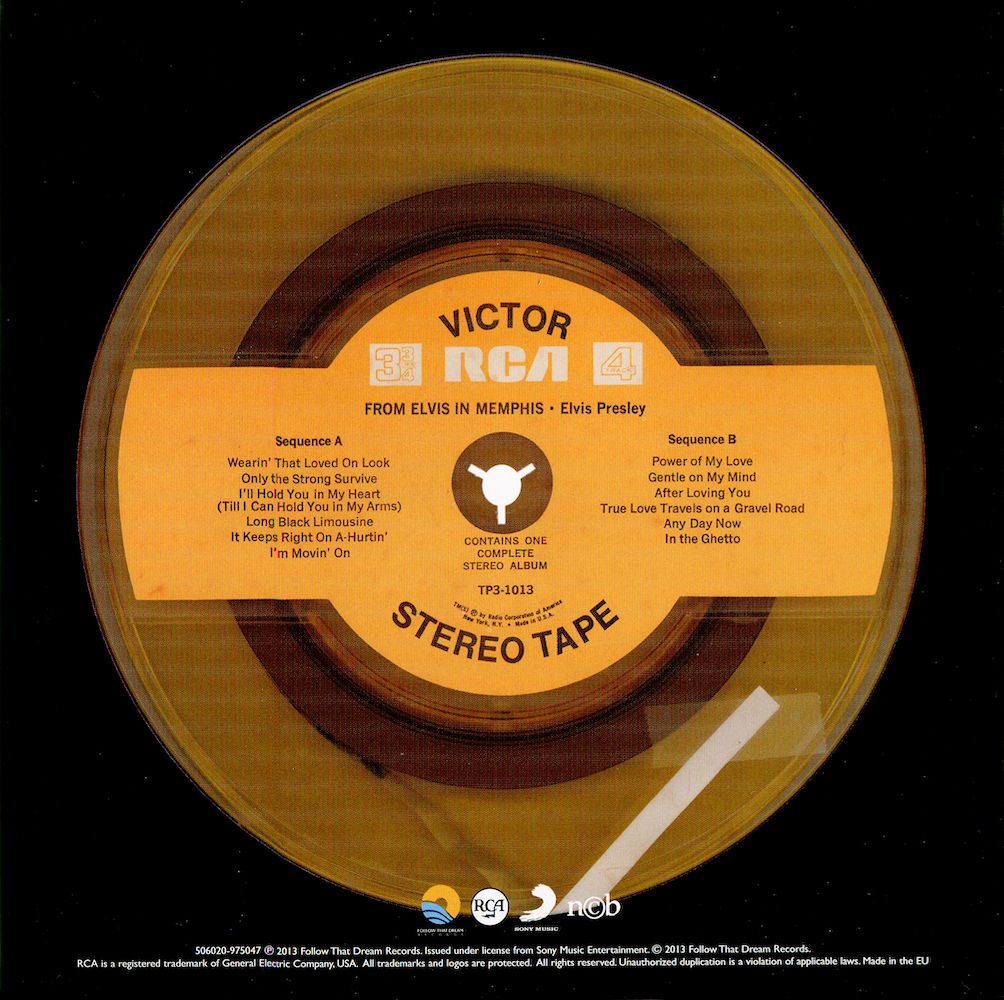
From Elvis In Memphis opened with the brilliant, funky and soulful ‘Wearin’ That Loved On Look’, a song co-written by Dallas Frazier (writer of ‘There Goes My Everything’ and ‘Where Did They Go, Lord’). With its tough lyrics about infidelity, combined with Elvis’ raucous delivery, it represented a world a million miles away from the crass movie soundtrack material he had been churning out for so many years. This song was contemporary and grabbed your attention from the get-go, with the master being a composite of original and replaced vocals.
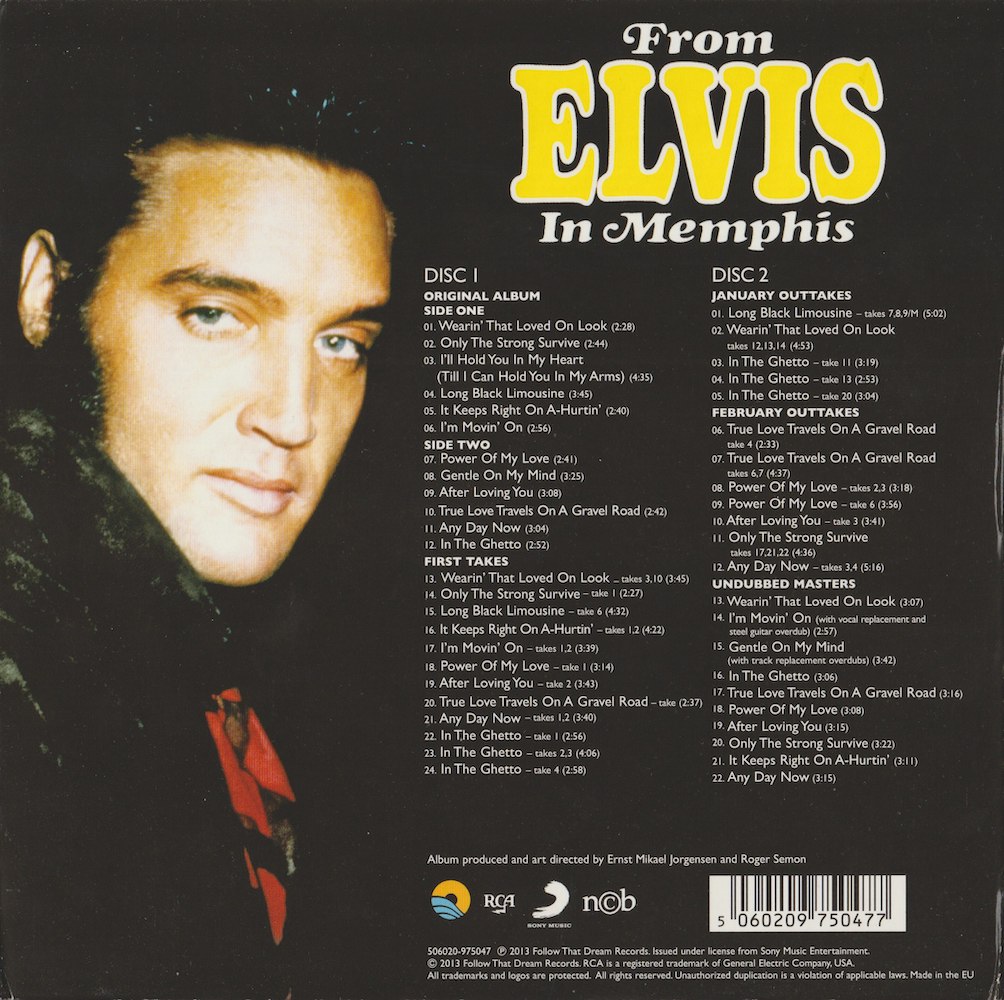
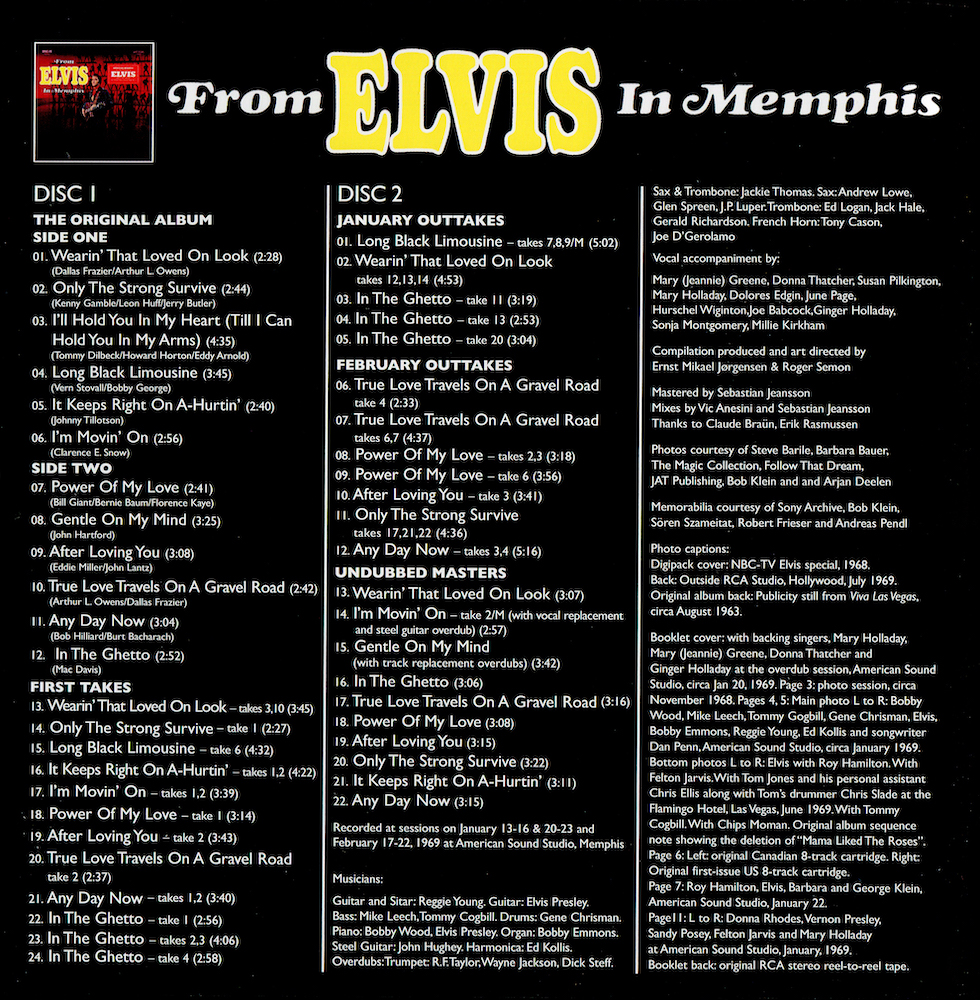
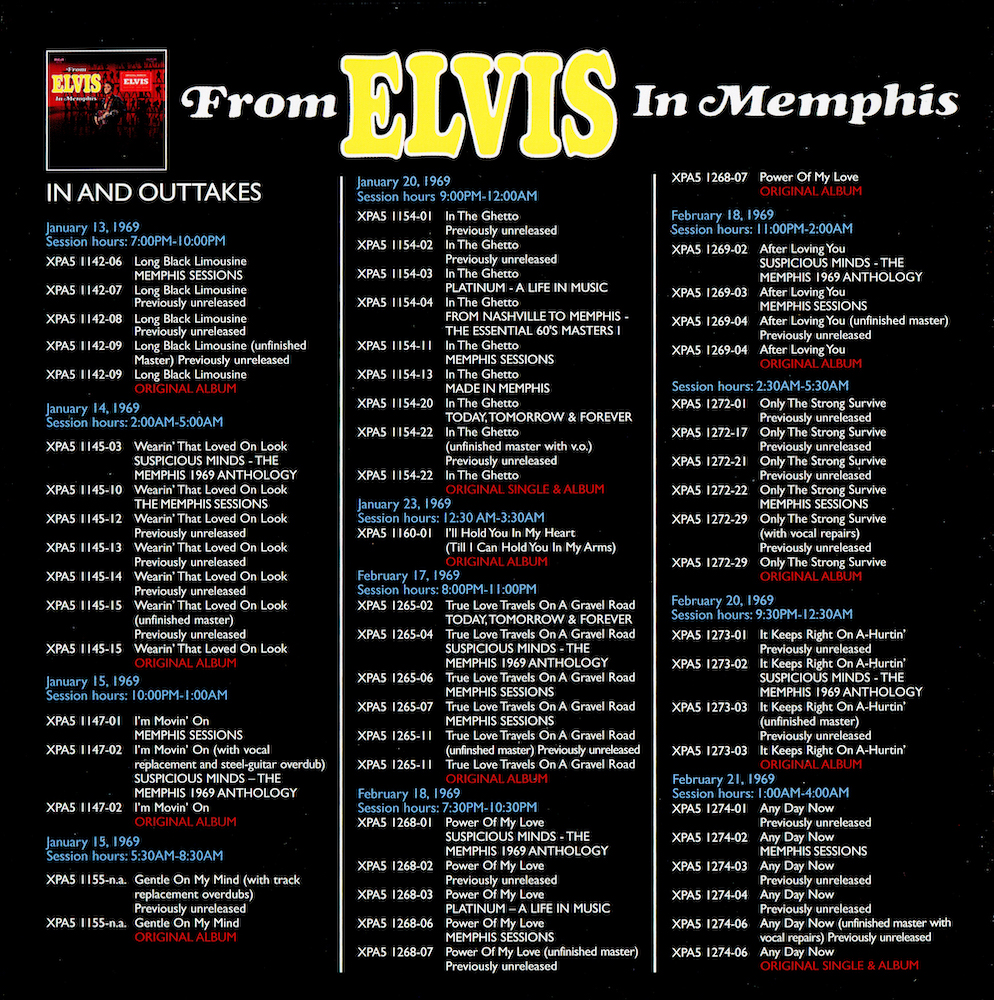
On the FTD Classic Album of From Elvis In Memphis we get some outtakes of ‘Wearin’ That Loved On Look’ starting with Takes 3 and 10. Take 3 breaks down pretty quickly with Elvis exclaiming “God damn!” and actually breaks out into a line of ‘A Little Less Conversation’! Take 10 is the first complete take of the song recorded and is released for the first time here.
Next up on the FTD are Takes 12, 13 and 14, where Take 12 is a couple of false starts, Take 13 is a long false start and Take 14 is the only other complete take of the song apart from Take 15, which was used, in part, for the master. Take 14 incidently, was first released on FTD’s Memphis Sessions where it was incorrectly listed as being Take 10.
Take 15 was dubbed down to a rhythm track and Elvis recorded new lead vocals to this backing track, and it is this complete vocal replacement we get in the “Undubbed Masters” section of the FTD set. It would have been nice for them to include the complete unrepaired Take 15 too, if space had permitted, but alas it remains unreleased.
‘Only The Strong Survive’ continued the soulful theme of the album but evoked a more gentle, wistful feeling, about a young man reflecting on the folly of not following his mama’s advice. While vocally challenging, it ended up being just perfect.
Take 1 is presented on the FTD and is an incomplete take with Elvis exclaiming “Oh shit!” at the end. Takes 17 and 21 both break down, but Take 22 is another complete take first heard on FTD’s Memphis Sessions.
We also get Take 29, containing Elvis’ unedited vocal repair, of which the middle section was cut on the final master.
‘I’ll Hold You In My Heart (Till I Can Hold You In My Arms)’ also mined Elvis’ love of bluesy items. Nailed in one long take (including some false starts), Elvis accompanied himself on the piano and and hammered away in his own distinctive style, as well as singing his heart out.
But for me, even more heart breaking was the next track, the bleak and chilling ‘Long Black Limousine’, (a tale of someone making a return to their home town, but in a hearse) where Elvis’ emotional pain is almost palpable and real. It’s one of the most moving songs he ever recorded and he invested it with passion and raw emotion. I’m sure Elvis felt emotionally drained when he finished the track, and this heartfelt angst is communicated to, and felt by, the listeners also. It’s the sort of song that makes you feel exhausted but in a wonderful way.
It was the first song recorded at the January 1969 American Sound sessions, and the first complete take is Take 6, first heard on FTD’s Memphis Sessions, but containing more dialogue here now on the Classic Album.
Takes 7 and 8 are both false starts, but Take 9 is the original master take without Elvis’ repaired vocals (from "through tear filled eyes I watch..." to end of the song), which would eventually become the master.
Incidently, the complete unedited vocal repair of ‘Long Black Limousine’ can be found on FTD’s From Elvis At American Sound Studio, which basically mops up the remaining songs recorded at American Sound, but not featured on the Back In Memphis or From Elvis In Memphis Classic Albums.
‘It Keeps Right On A Hurtin’’, the Johnny Tillotson country classic, allowed the listener to gather their thoughts and regroup emotionally. Truth be told, it was a cakewalk for Elvis. It’s a pleasant, but essentially plodding, song that made no great demands on anyone and required little more from Elvis than to sing the lyrics. Nonetheless, Elvis did a good job on it and convinced the listeners that he was indeed, “a hurtin’’.
Take 1 is a false start and a long false start with Elvis breaking down singing a line of ‘Only The Lonely’ at the end, heard for the first time here.
Take 2 is a false start and a complete take, first heard on BMG’s Suspicious Minds - The Memphis 1969 Anthology CD set back in 1999, and Take 3 is the undubbed master, presented here with the two false starts preceding the take.
Side one draws to a close with his exuberant and almost scatological treatment of Hank Snow’s ‘I’m Movin’ On’, including its great “busy” bass playing and prominent steel guitar. I just love this track as, for me, apart from his beautifully assured and confident vocal (so southern!), it gives lie to the accusation that Elvis merely copied other people’s songs. And if you’re not convinced, then just listen to Snow’s rather sedate original and marvel at the contrast. It’s the recorded equivalent of a high-energy drink!
Take 2 was the original master take which was dubbed down to a rhythm track, and Elvis recorded new lead vocals to that backing track, and the released master was a composite of original and re-recorded vocals.
On the Classic Album we get Takes 1 and 2, with Elvis’ original vocals intact, but we also get Elvis’ complete vocal replacement too in the “Undubbed Masters” section of the set.
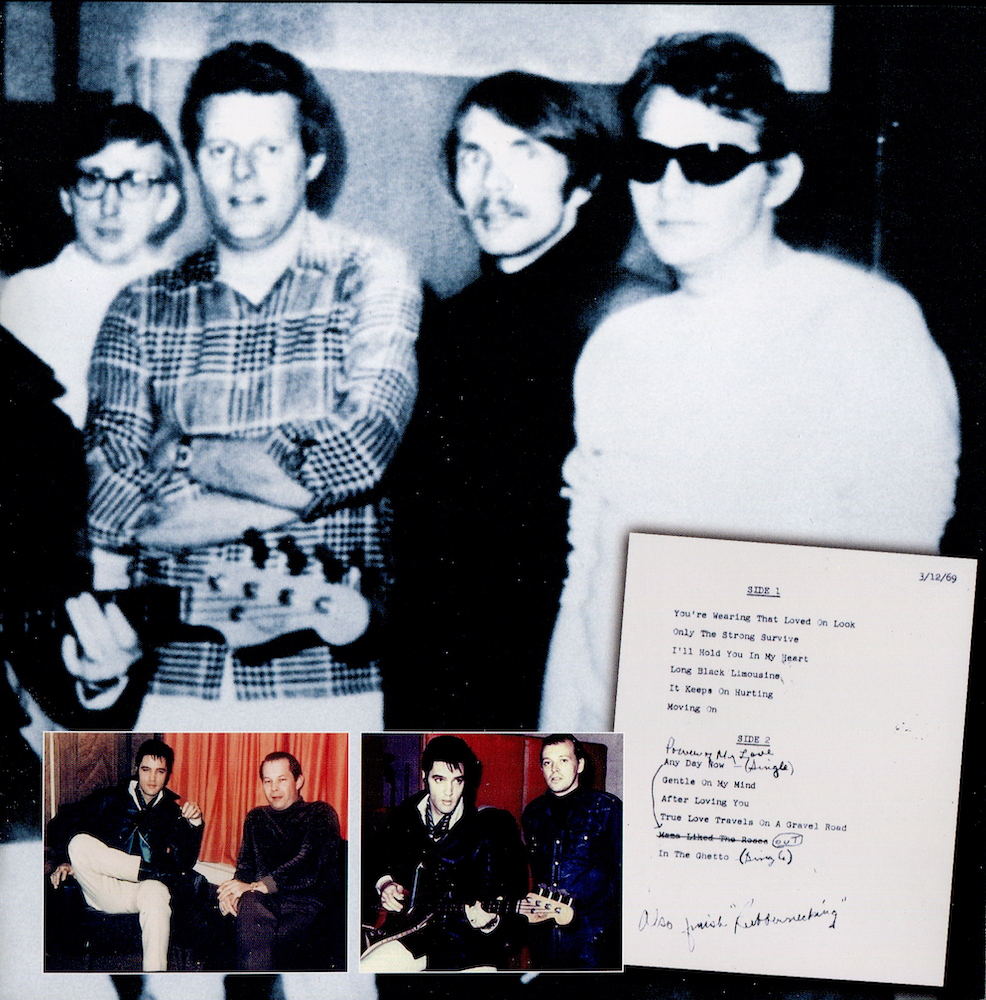
Side two opens up with a song that was a bit of a revelation: ‘Power Of My Love’. It was written by Giant, Baum and Kaye, a team of writers who’d submitted - and had accepted - innumerable other songs for Elvis’ movie soundtrack sessions, most of them lightweight and marked by blandness. Their only other major success with Elvis had been with the quirky ‘(You’re The) Devil In Disguise’, a song of some quality, and a big hit back in 1963. Admittedly, ‘Power Of My Love’ was by no means a great song but it exuded a playful sexual innuendo and was performed with great gusto by Elvis, complemented, of course, by some inspired playing on the part of the American Sound house band.
Take 1 is a short false start and a complete take first heard on BMG’s Suspicious Minds - The Memphis 1969 Anthology CD set back in 1999. Takes 2 and 3 are a false start and a complete take heard for the first time her. Take 6b is a complete take, first heard on FTD’s Memphis Sessions, and which was actually announced as “seven”, but here it has the one-liner of ‘Are You Waiting Just For Me’ edited in from Take 4, before the take.
In the “Undubbed Masters” section of the Classic Album we get the real Take 7, the undubbed master take without Elvis’ harmony vocal overdub, which is very prominent on the released master.
I’ve always loved the song ‘Gentle On My Mind’ but, much as I enjoyed Dean Martin’s “easy-listening” version, once again, I believe Elvis took it to a higher level and demonstrated great originality in his treatment of this song, with its highly unusual rhythmic patterns.
The master take is unknown but it contains a track replacement overdub, with is what we get in the “Undubbed Masters” section of the Classic Album, without Elvis’ harmony vocal overdub, which is prominent on the released master.
However, much as I liked this song and his treatment of it, I simply adore the next track, the sublime ‘After Loving You’ - a pounding fifties’ throwback if ever there was - not least for the ferocity and abandon with which he delivered his vocals, but because of the way the instrumental accompaniment perfectly complemented him, too. If you’re not convinced, just check it out again and listen to how he performs the lines “Your precious love, your precious love, cannot be replaced…” Using many of the vocal mannerisms reminiscent of his fifties’ material, this is a tour de force!
The first complete take is Take 2, which we get here on this Classic Album, and was first heard on BMG’s Suspicious Minds - The Memphis 1969 Anthology CD set. Incidentally, it was this take that was used on the overdubbed Guitar Man LP in 1980.
Take 3 is another complete take, first heard on FTD’s Memphis Sessions, and Take 4 is the unedited master without fade, heard here for the first time.
‘True Love Travels On A Gravel Road’ is a delightful song, based around a homily about the course of true love not always being smooth, beautifully executed by Elvis and the band. It not only has a warm sentiment and lovely melody, but is easy on the ears, too.
Take 2 is the first complete take, which we first got on the Today, Tomorrow And Forever box-set, although it was faded on that release, where it is unedited here.
Take 4 is the next complete take and we get a little more dialogue here than when first heard on BMG’s Suspicious Minds - The Memphis 1969 Anthology CD set.
Takes 6 and 7 are a couple of false starts and a complete take first released on FTD’s Memphis Sessions.
In the “Undubbed Masters” section of the Classic Album we also get Take 11, which is unedited and without Elvis’ harmony vocal overdub, which is prominent on the released master.
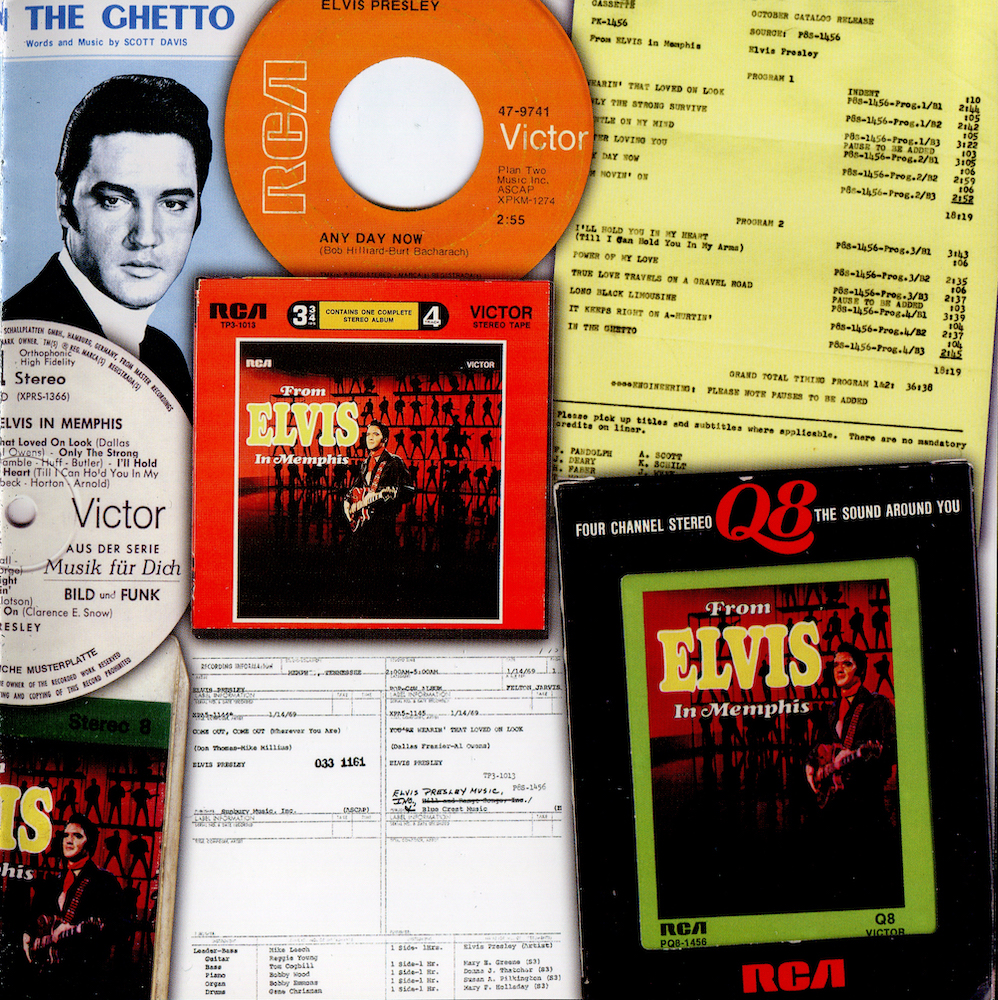
Bacharach and David’s ‘Any Day Now’ was a complex song and not at all easy to deliver. It presented Elvis with some vocal challenges (and those of you who are familiar with the outtakes will be very aware of this) and stretched his range as few other numbers did. But the end result is extremely satisfactory and again offers a rare opportunity to listen to Elvis carefully crafting a number and imposing his stamp on it.
On the Classic Album we get the false start and talking after the long false start only of Take 1, along with the complete Take 2, and it’s clear that Elvis hasn’t got to grips with the song yet.
Takes 3 and 4 actually run for over twelve minutes and consist of nine false starts, two long false starts and a “pickup” between them, but FTD have edited them down to just over five minutes, giving us the long false start of Take 3 and a splice of the long false start and the “pickup” of Take 4.
Finally, in the “Undubbed Masters” section we get Take 6 with Elvis’ vocal repair of the middle part of the song. Incidentally, on the later FTD From Elvis At American Sound Studio we get Takes 5 and 6 with Elvis’ original vocals intact, which is a treat to hear.
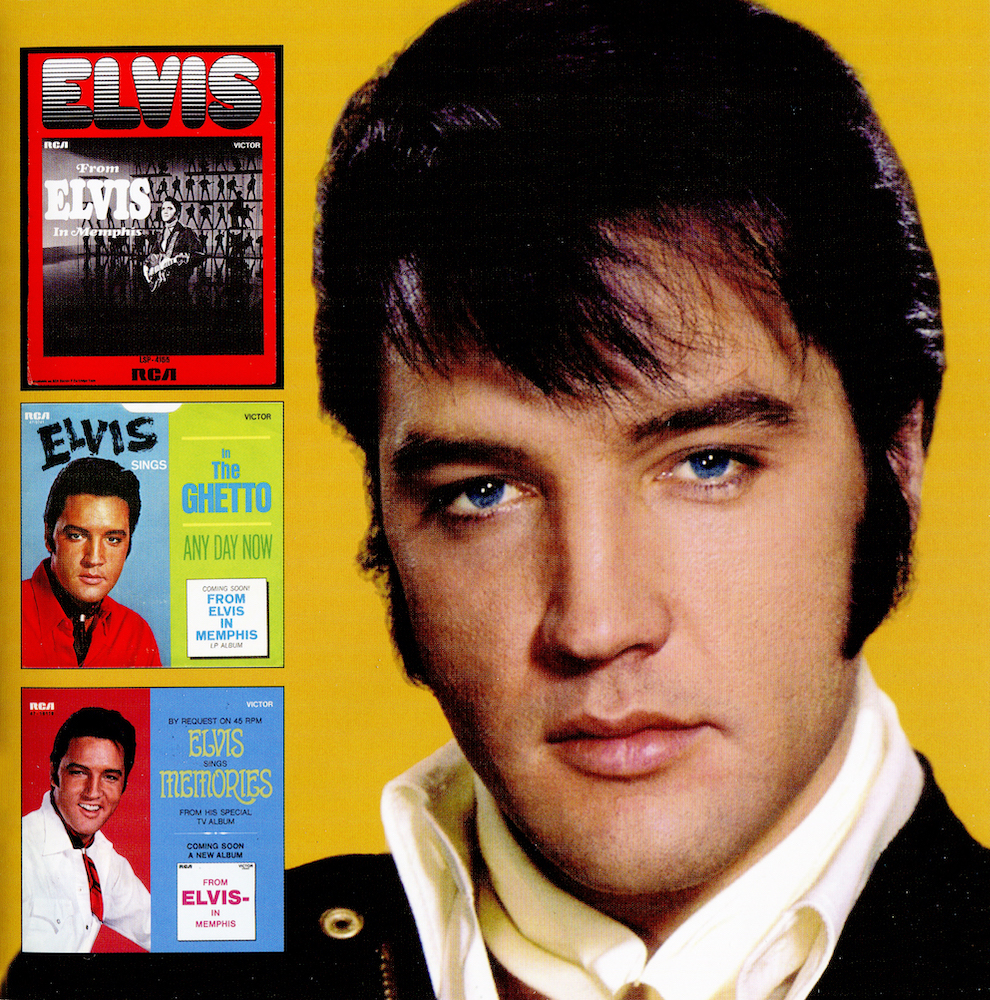
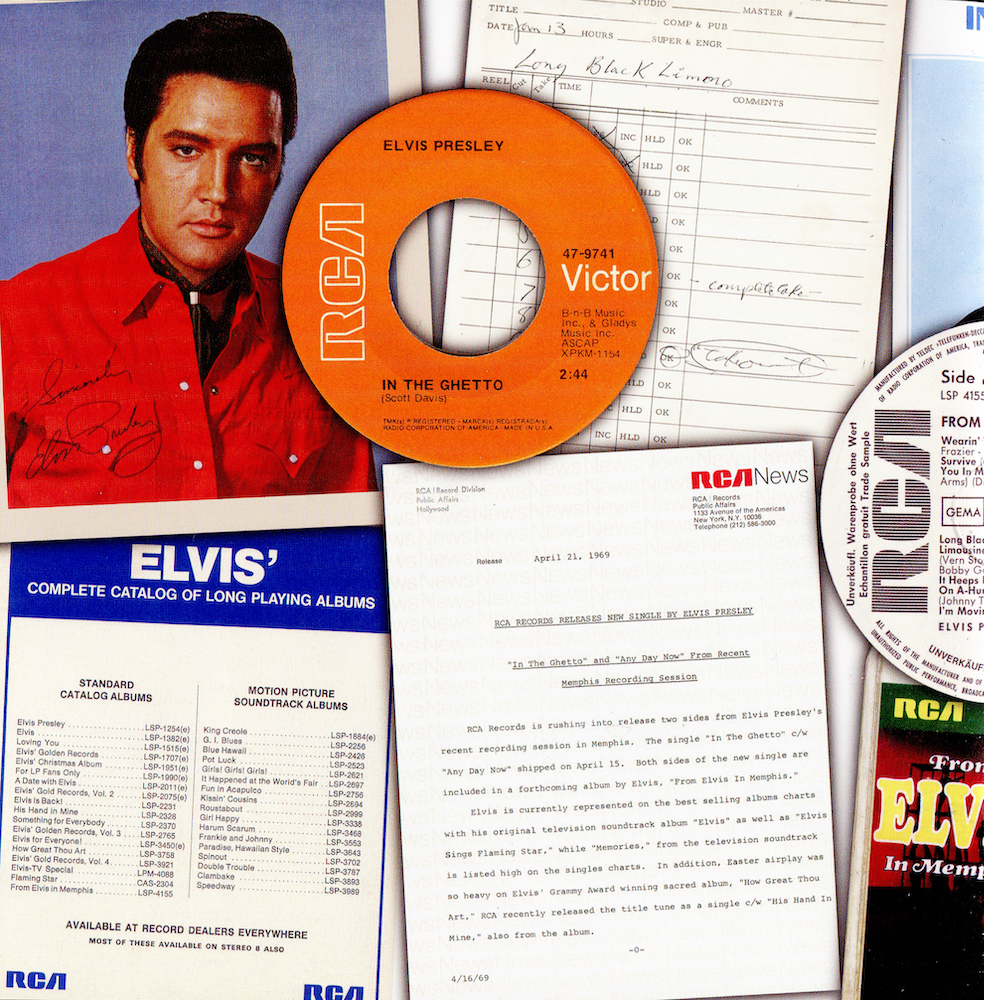
The album closes, fittingly, with a song of rare quality. Having chosen to depart from always taking the easy route where some songs were concerned, and recorded the magnificent and passionate ‘If I Can Dream’ in June 1968 for the TV-Special, Elvis agreed to cut Mac Davis’ highly topical and socially aware song, ‘In The Ghetto’. Its simple narrative - almost a modern day parable - recounted the tale of a disadvantaged young man, trapped in a cycle of deprivation and despair, and beset by social inequality, who made poor choices on how to deal with or escape from his predicament, leading ultimately to his tragic death. It made a powerful statement about this controversial subject and Elvis rose to the challenge and delivered a sensitive but understated reading of the material. And while some may have accused him of making a trite comment about a very serious topic, I believe this view to be incorrect and grossly unfair, as I think the real strength of the song lay in its simplicity. Accompanied almost entirely by Reggie Young’s intricate acoustic guitar backing, augmented by some haunting backing vocals, this song has stood the test of time. Marvellous stuff!
The first four takes are sung in a lower key and we get them all here on the Classic Album, along with Takes 11, 13 and 20 which are sung in a higher key. In the “Undubbed Masters” section we get Take 22, with Elvis’ replaced vocals.
In conclusion, this album, while differing markedly in style and content from the mighty Elvis Is Back! (significantly, his first studio album of the 1960s, while From Elvis In Memphis was his last) it shared many of its key virtues: it was passionate, inspired, committed, varied, supremely well recorded and it made a statement that Elvis was back - again! And while Elvis was to be congratulated for having the courage to break with what had gone before (just as he done when he recorded the NBC-TV Special in 1968 - and let’s not forget that both were brave and risky decisions), great credit has to go to the wonderfully funky and inventive house band at American Sound who crafted their instrumental support in a wonderful way but, crucially, to the highly individualistic producing credentials of Chips Moman. Yes, he may have seemed a little abrasive but he presented as being honest and dedicated to getting the best out of his artists and house band and, in doing so, making some damned fine records, too!
More importantly though, Elvis responded manfully and rose to the challenge. Sadly, he was never pushed or challenged to anything like the same extent in subsequent years, and I firmly believe that his body of work was poorer in quality as a result. The moment had come unexpectedly and yet, tragically, it disappeared just as quickly, once Elvis got underway with his new found interest in live performances.
However, if anyone ever casts doubt on Elvis’ greatness as a recording artist after the giddy heights achieved in the early days, then play them this album - preferably back-to-back with Elvis Is Back! - and see what they have to say then. This is a beautiful album, beautifully performed, and the FTD Classic Album, with additional outtakes and giving us an insight into how it was recorded. File under “Absolutely Essential”!