Review by Piers Beagley - Elvis Information Network
Jailhouse Rock is the nineteenth FTD extended movie soundtrack release.
Surely every Elvis fan must own at least one copy of Jailhouse Rock - and the soundtrack only had six songs in any case! So this FTD extended movie soundtrack release better be the definitive version to make it worth buying again.
Jailhouse Rock
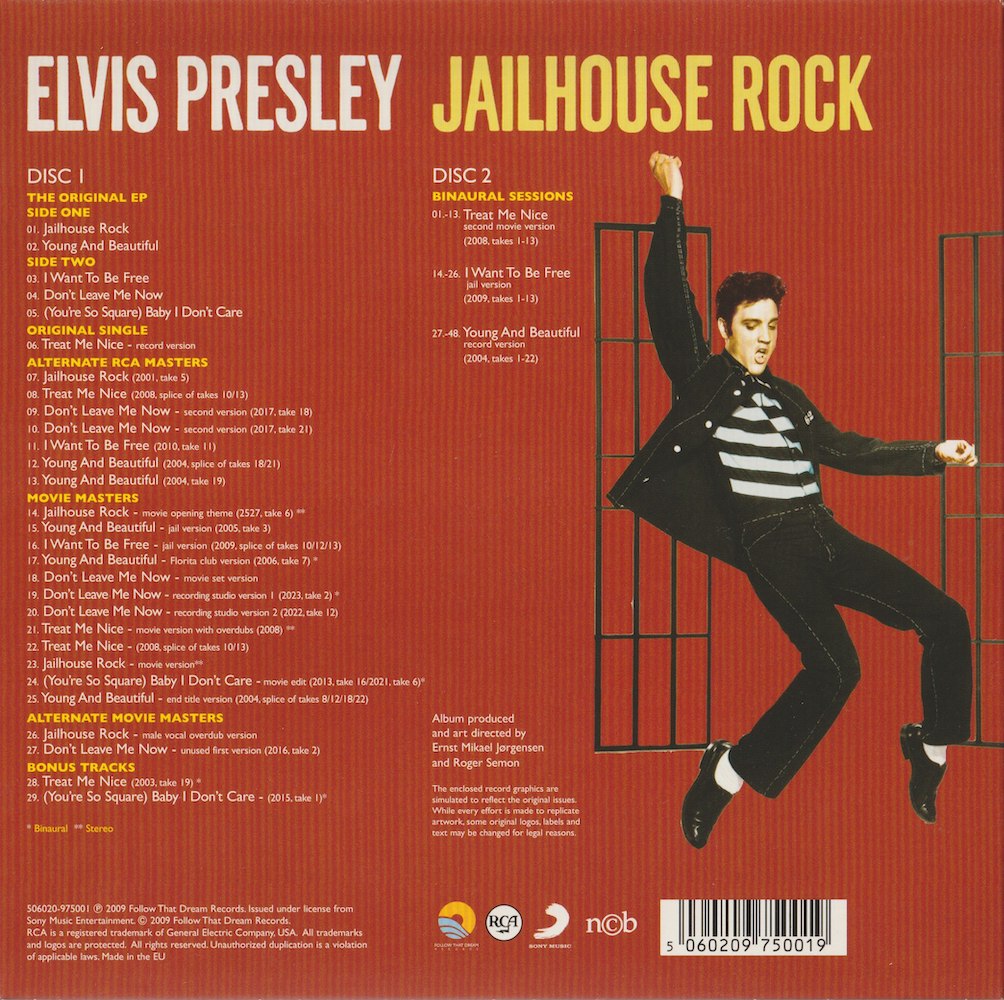
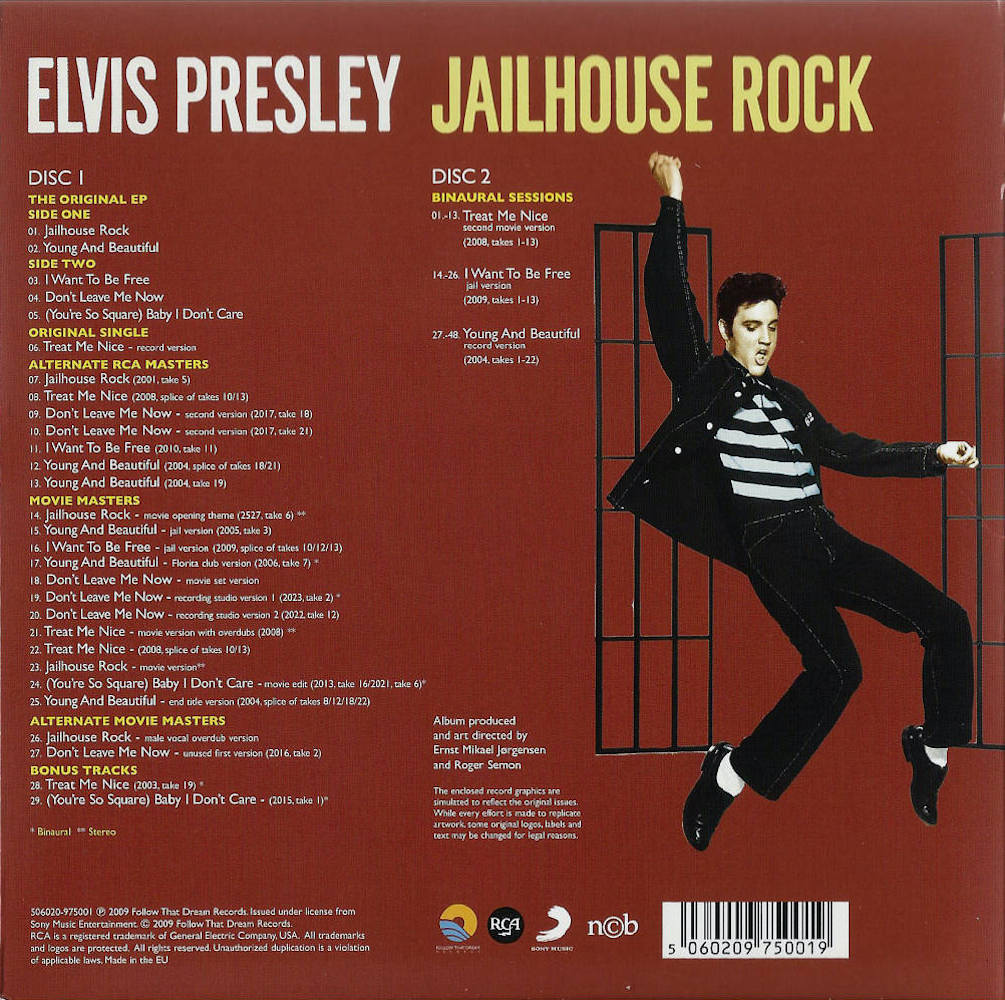
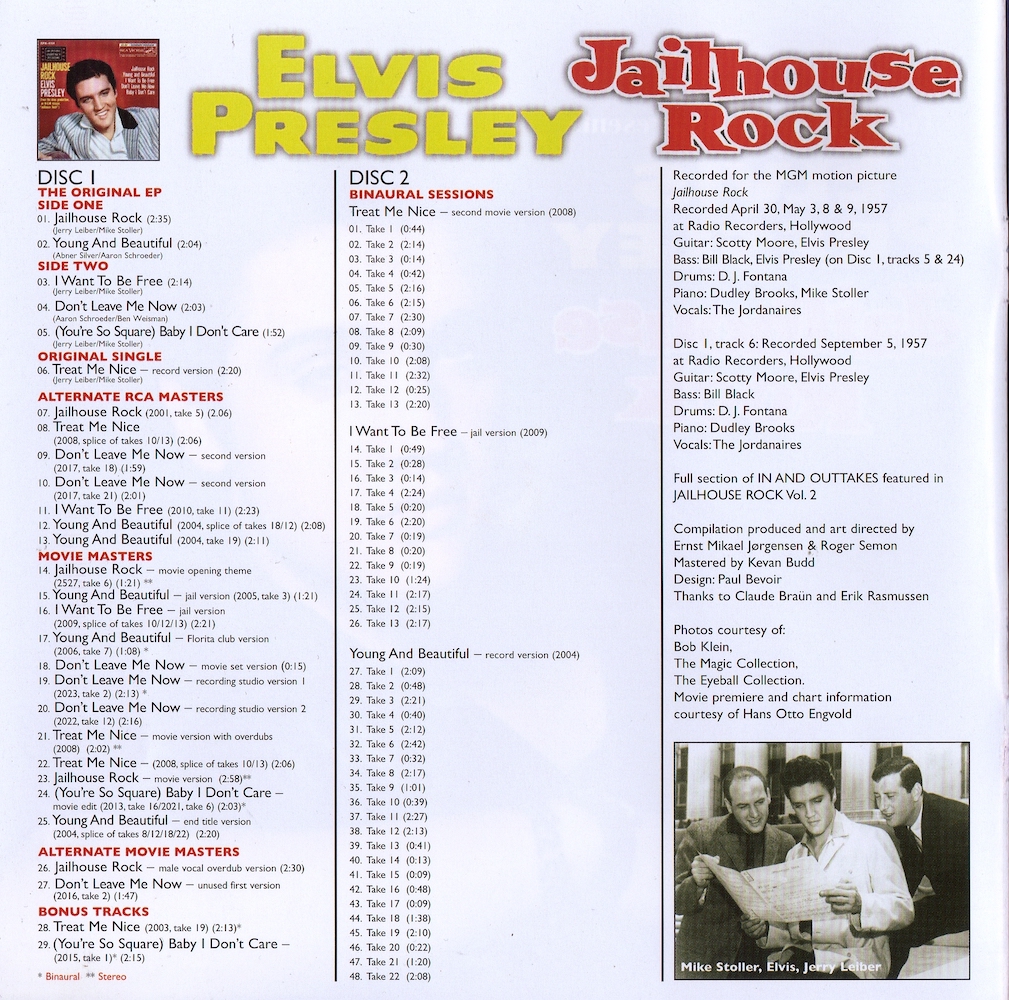
CD1 - 29 tracks, 60 minutes
CD2 - 48 tracks, 68 minutes
Jailhouse Rock was Elvis’ third film and after the initial drama of Love Me Tender and the lightweight fluffy-bio of Loving You, this was a serious musical for the famous MGM studios. Director Richard Thorpe was known for being a thorough and solid director who went on to a long career of over 180 films. He later directed Elvis in Fun In Acapulco. Pandro S. Berman produced the classic rock 'n' roll film Blackboard Jungle and six of his movies were nominated for Best Picture Oscars, including Father of the Bride 1950, and Ivanhoe in 1952.
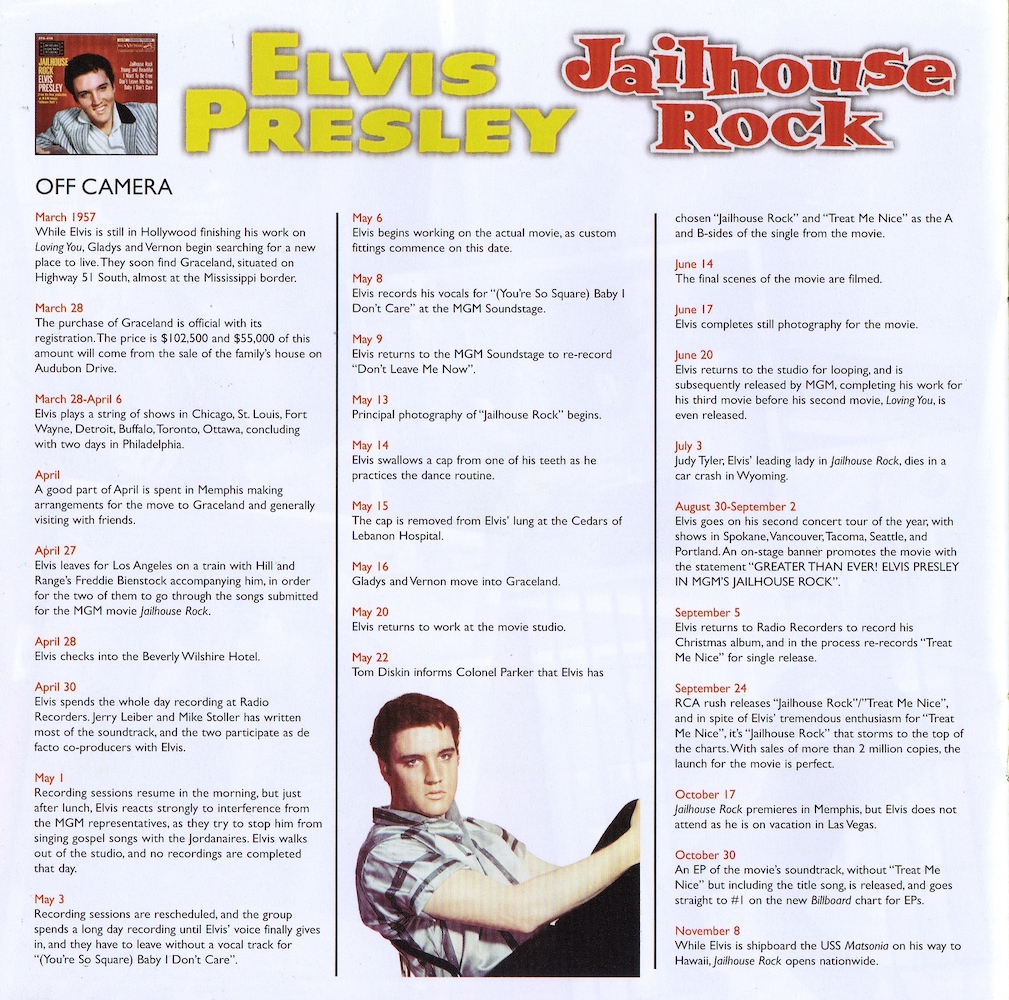
In 1957, Elvis' life was a whirlwind. In March he had been filming Loving You, while in April he was on tour in Canada and the USA. The tour finished in Philidelphia on April 6 and on April 15 Elvis visited his recently purchased new home Graceland. Boarding a train for Los Angeles on April 27, Elvis was back in the Radio Recorders studio on April 30 to start recording the soundtrack to his new film titled Jailhouse Rock (previously titled The Hard Way).
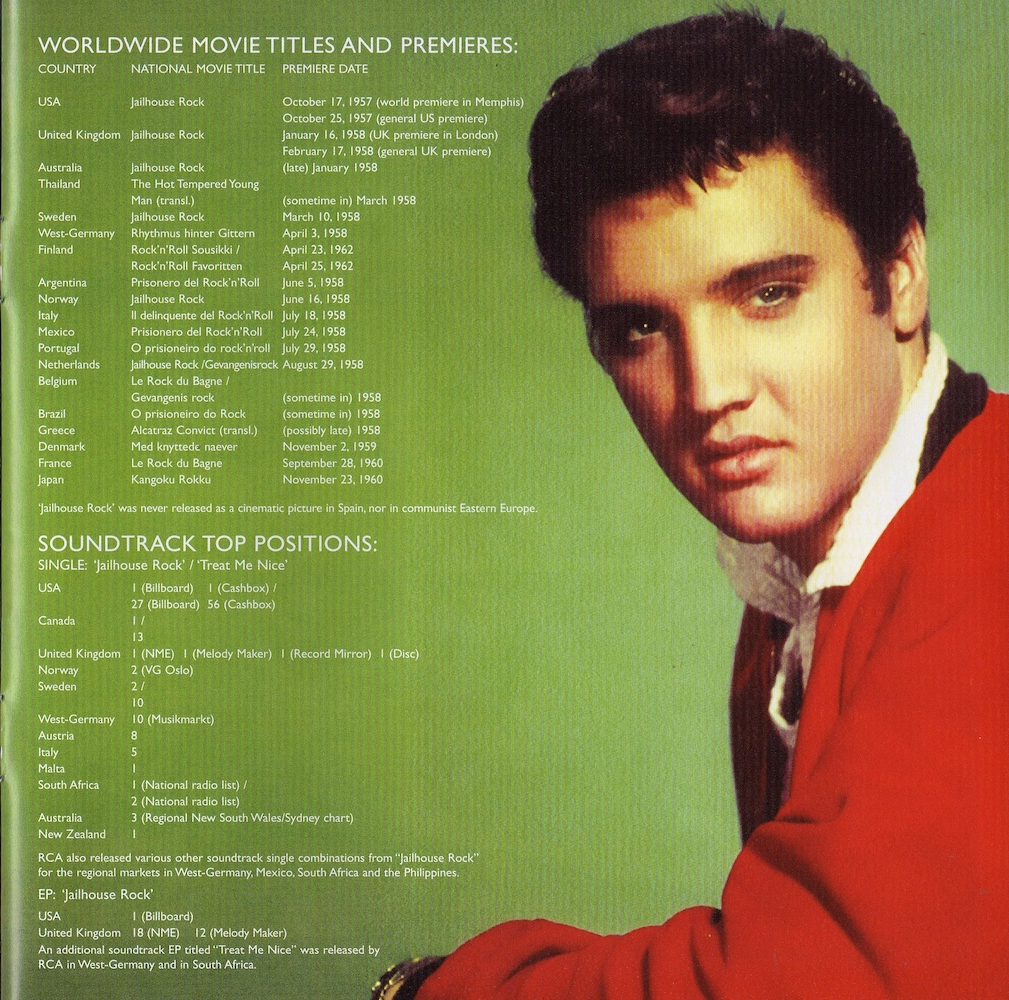
Chart releases
'Jailhouse Rock‘/’Treat me Nice’ - #1/27 USA, October 1957.
Jailhouse Rock Extended Play - #1 USA, November 1957.
In Europe 'Jailhouse Rock’/‘Treat me Nice’ was released in January 1958.
Director Richard Thorpe was there at just the right time to capture Elvis in all his knee quivering, lip-snarling, screen-charisma glory. While Elvis' acting would improve by his next dramatic film, King Creole, he still comes across like a musical snarling James Dean playing Vince Everett a "surly good ol' boy" who accidentally kills a man while defending a lady's honour.
In 2004 Jailhouse Rock was rightly selected for preservation in the US National Film Registry being deemed "culturally, historically, or aesthetically significant".
Producer Pandro S. Berman admitted some years ago that when he was assigned to do the film, he was informed by the studio that the sole priority was profit - there were no real artistic considerations. So it is with real credit that Elvis’ great performance in the film challenged this typical studio attitude. Interestingly, this is one of the Elvis' films without any input from Hal Wallis.
As a side note, to keep Elvis' female fans happy, there were several dramatic reasons written into the plot for Elvis to go shirtless! The food fight for instance doesn't advance the plot at all, but does however create another reason to see Elvis getting whipped - and shirtless again!
The soundtrack of Jailhouse Rock was very different from any Elvis musical before or after. Although featuring only six songs, the script gave plenty of opportunity for the songs to appear in different arrangements. From the acoustic prison setting to the “Hit Record” version, to the final RCA productions, the arrangements varied a great deal and are all interesting to listen to.
Cover and Design
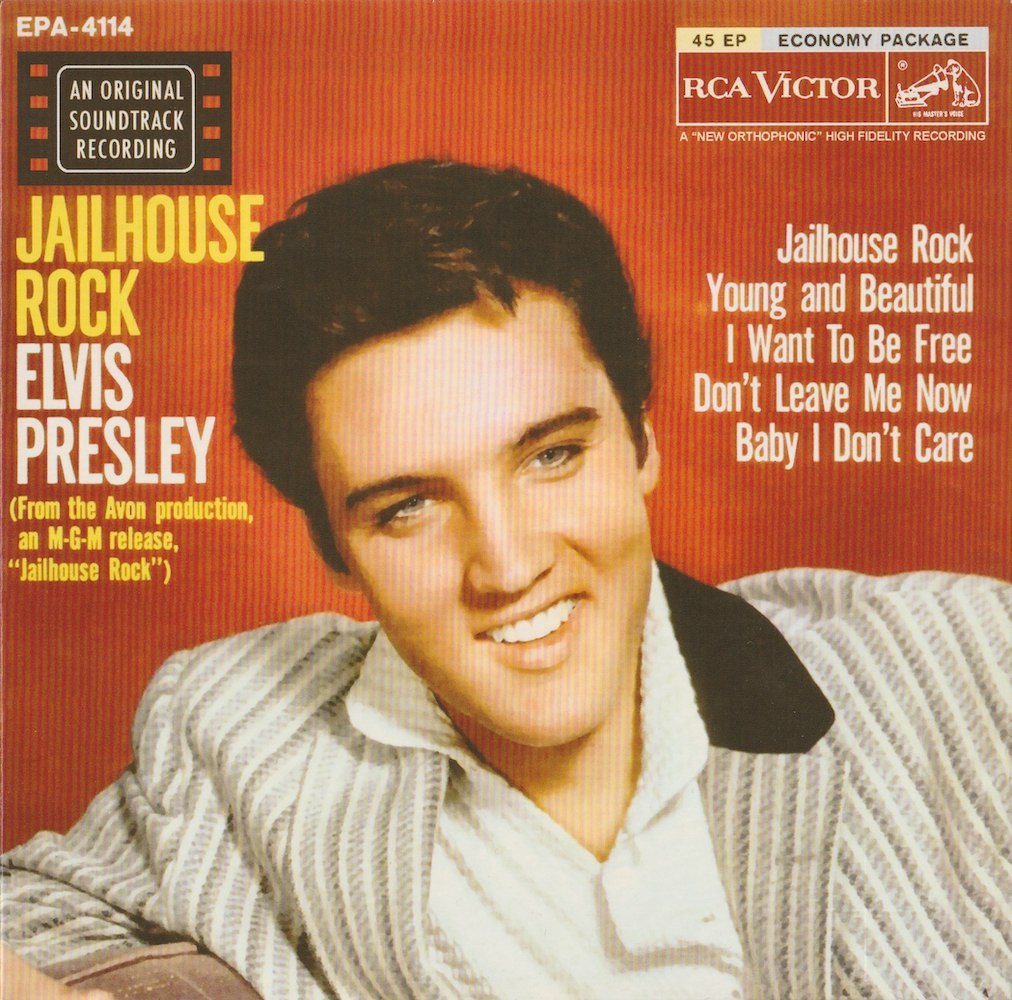
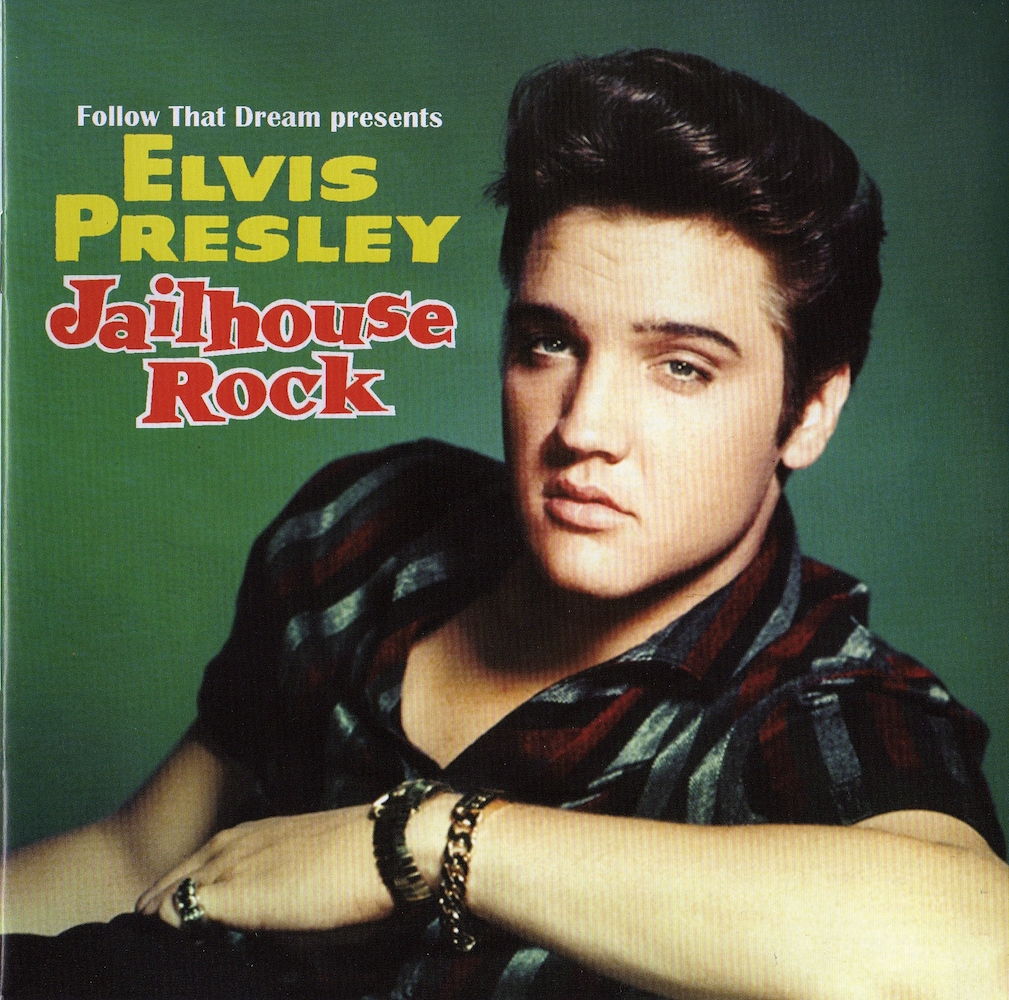
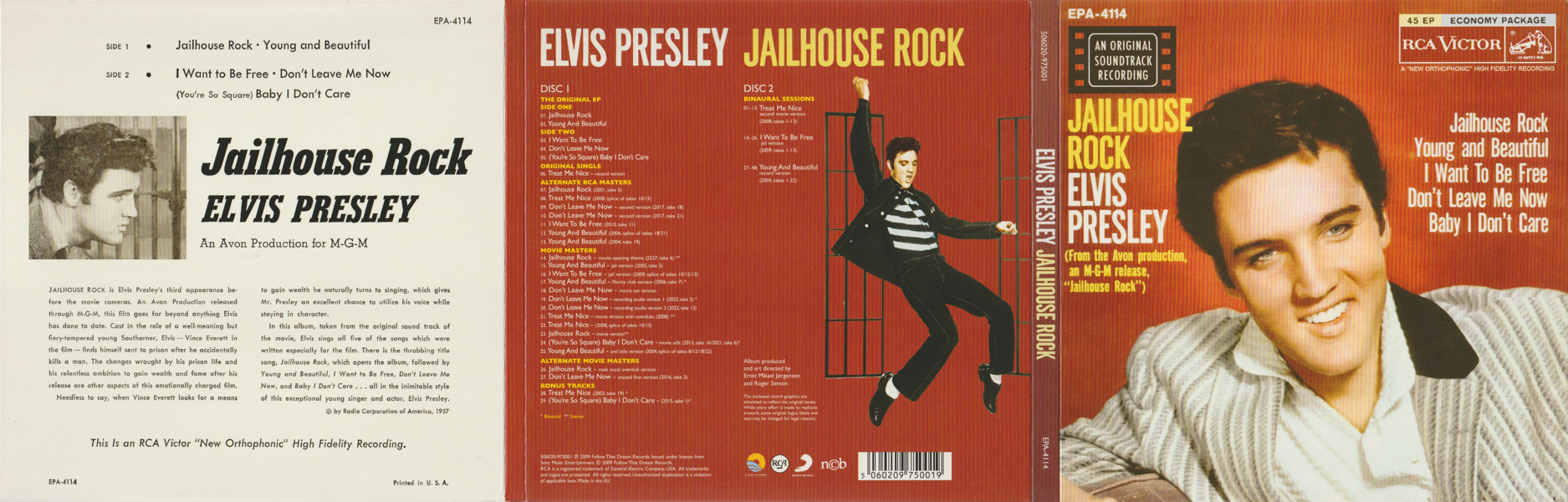
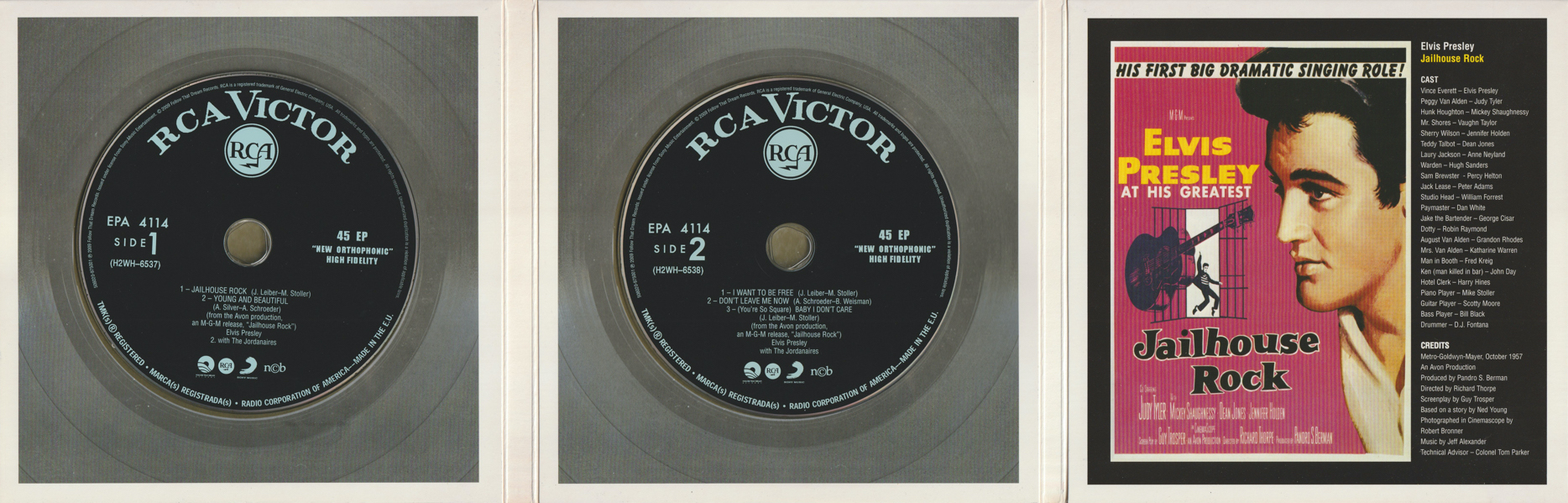
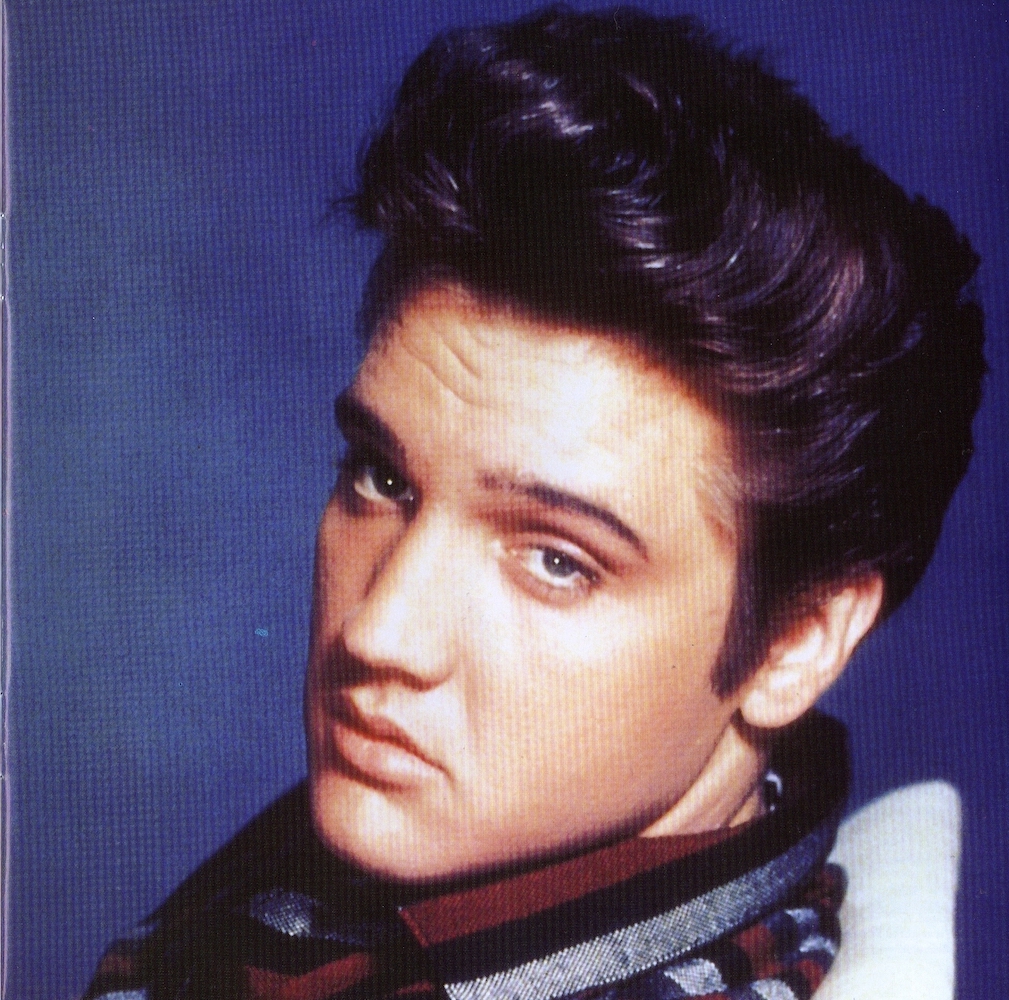
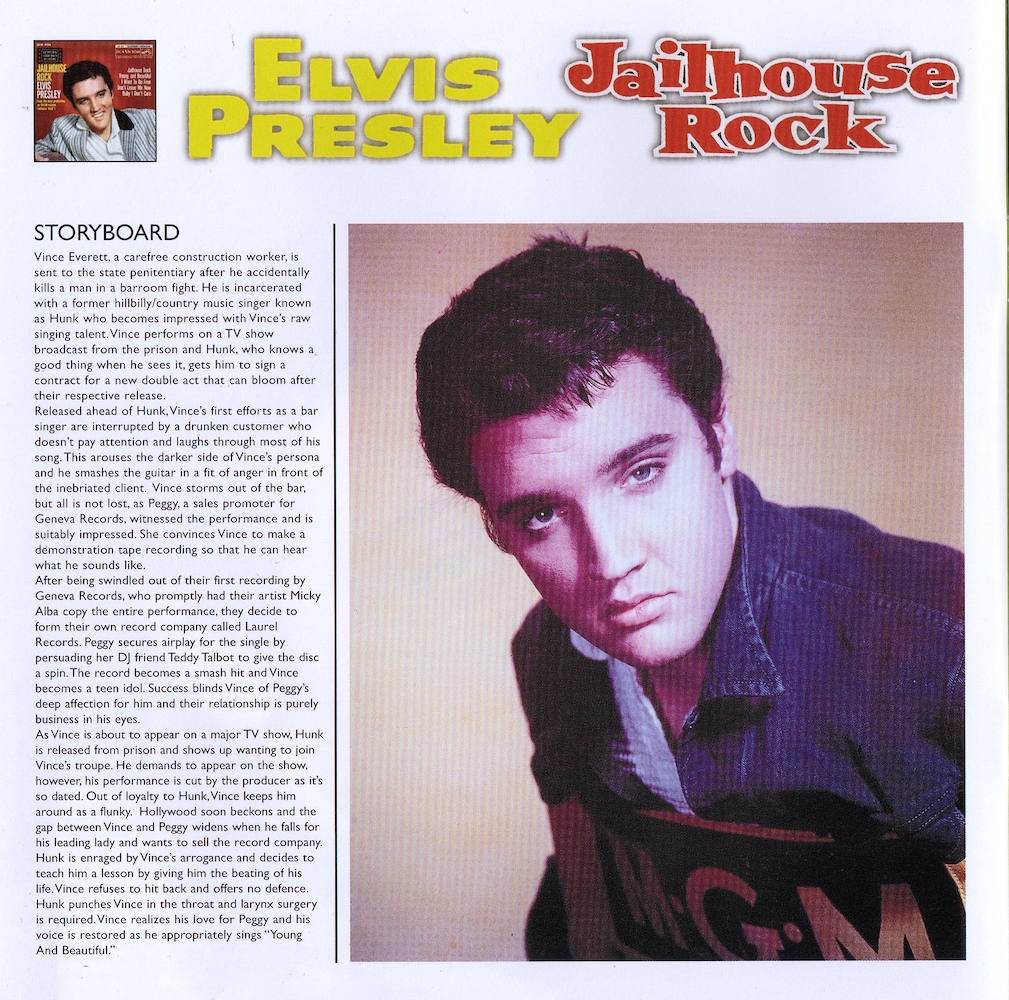
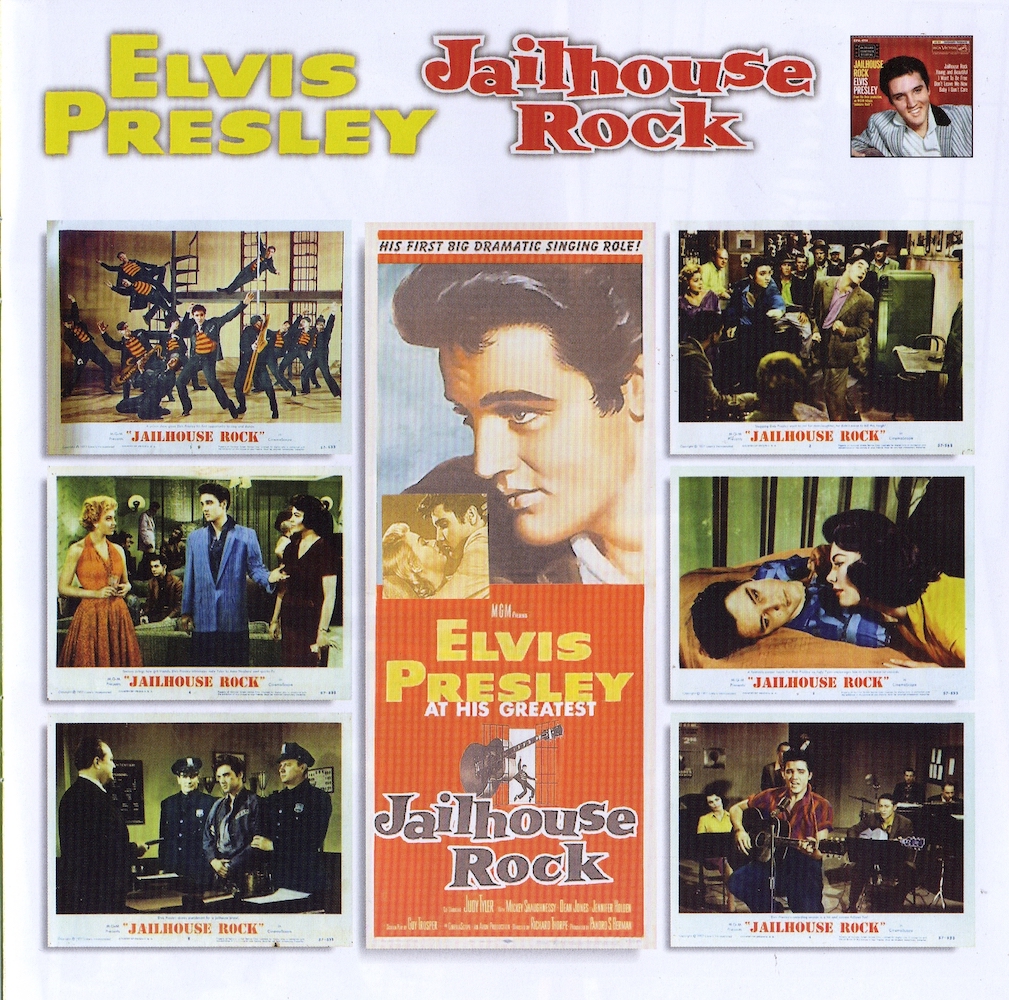
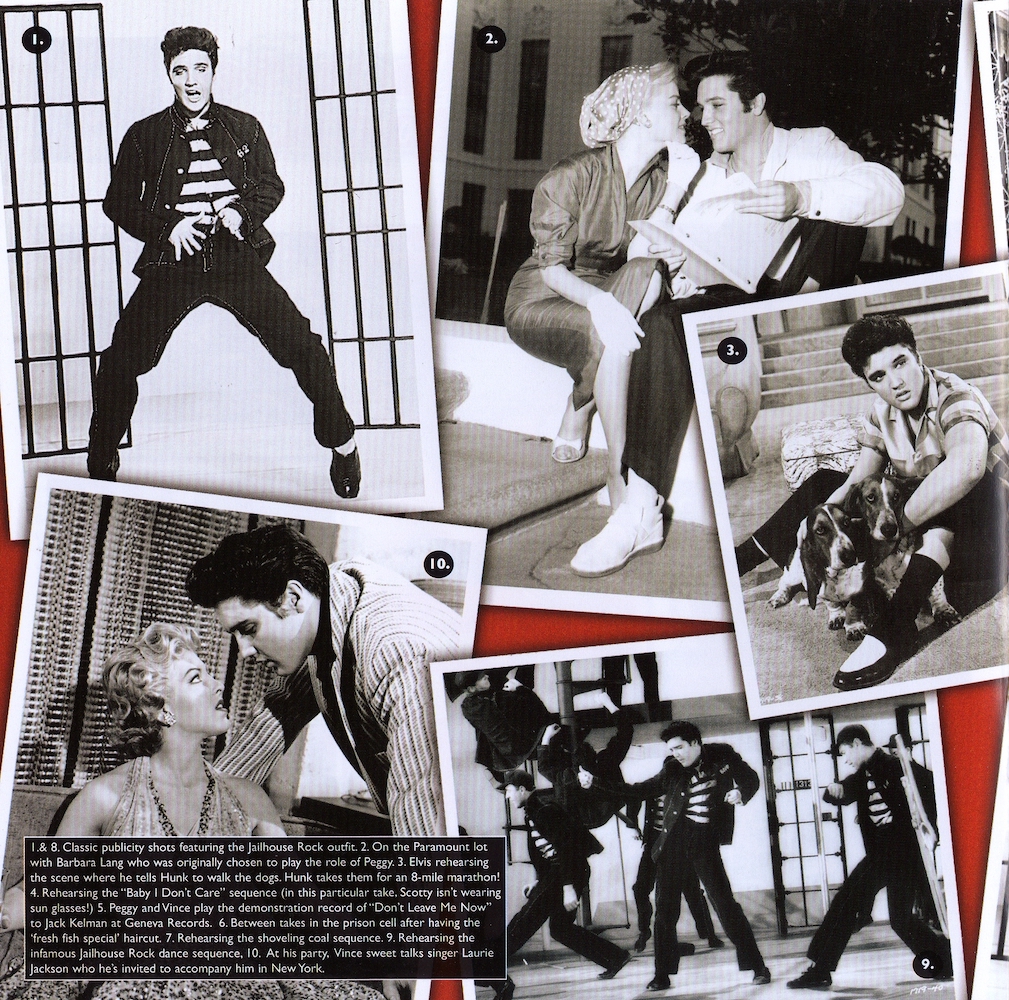
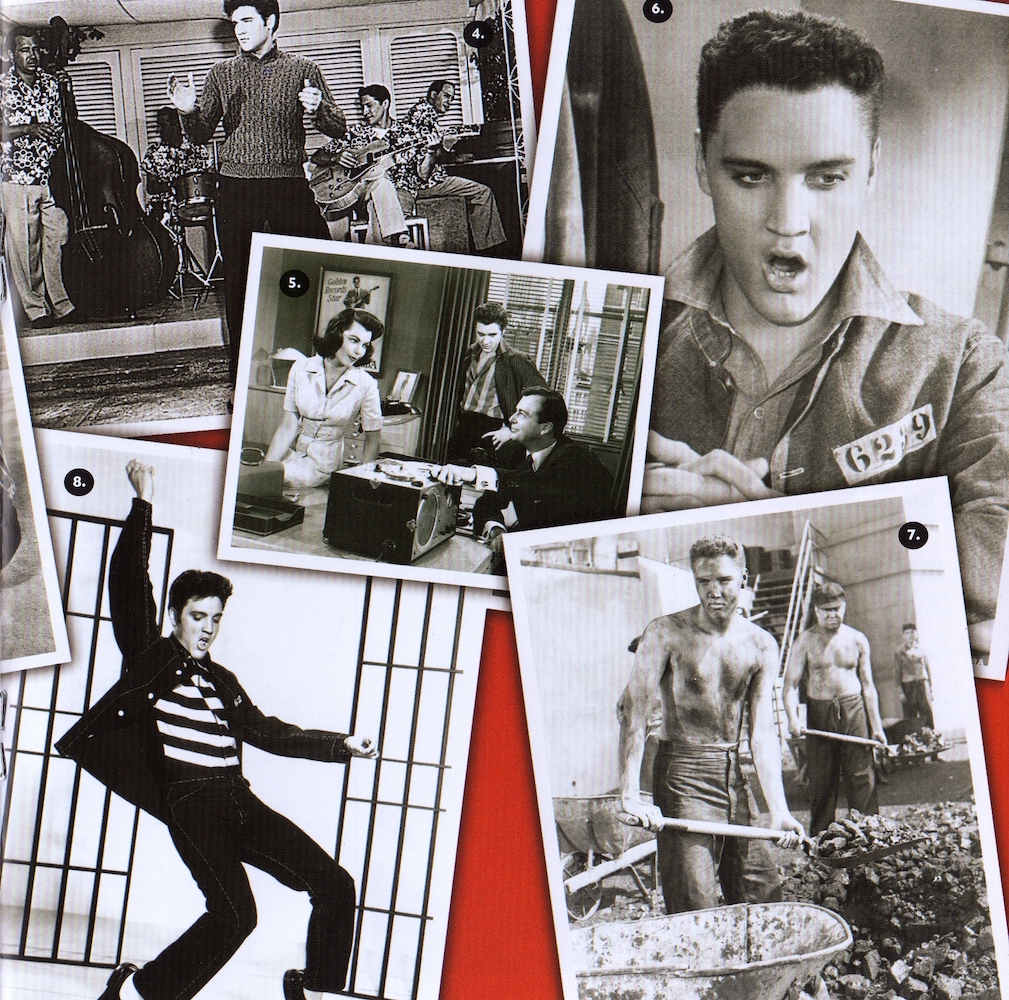
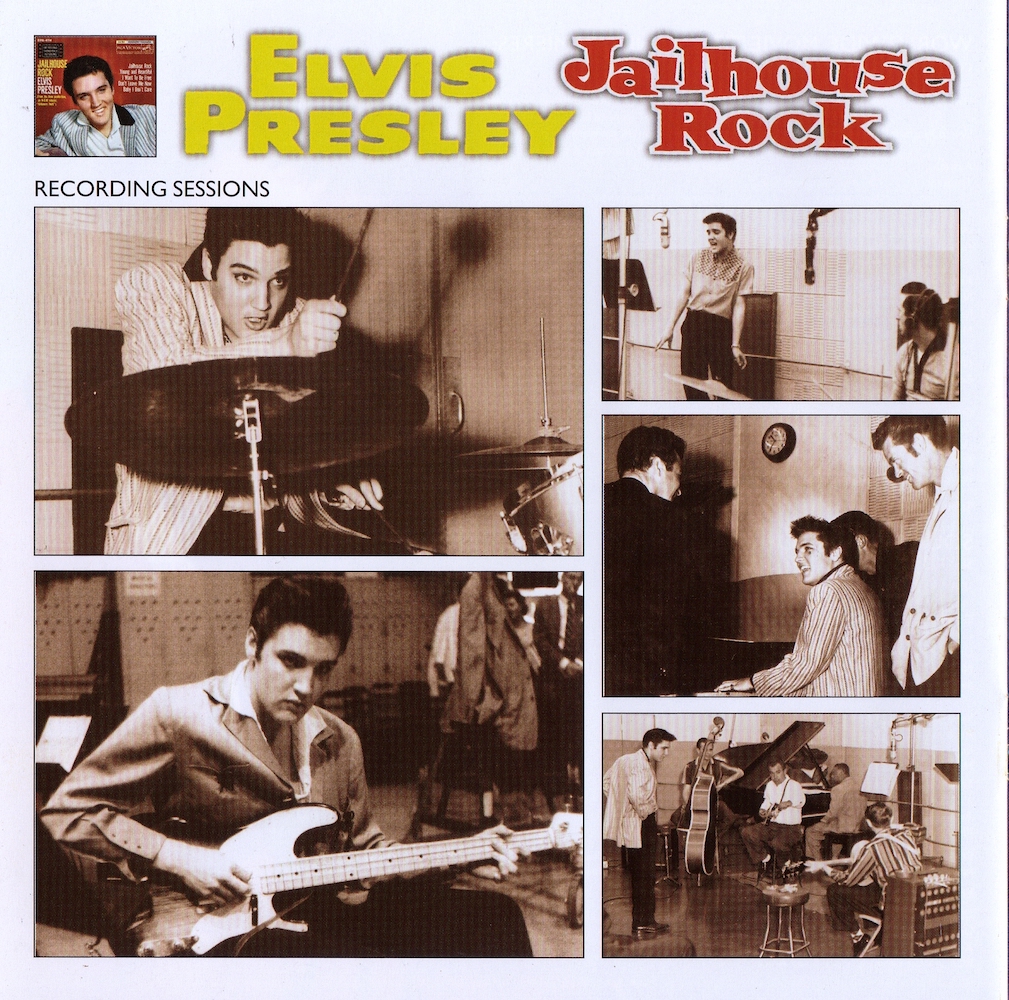
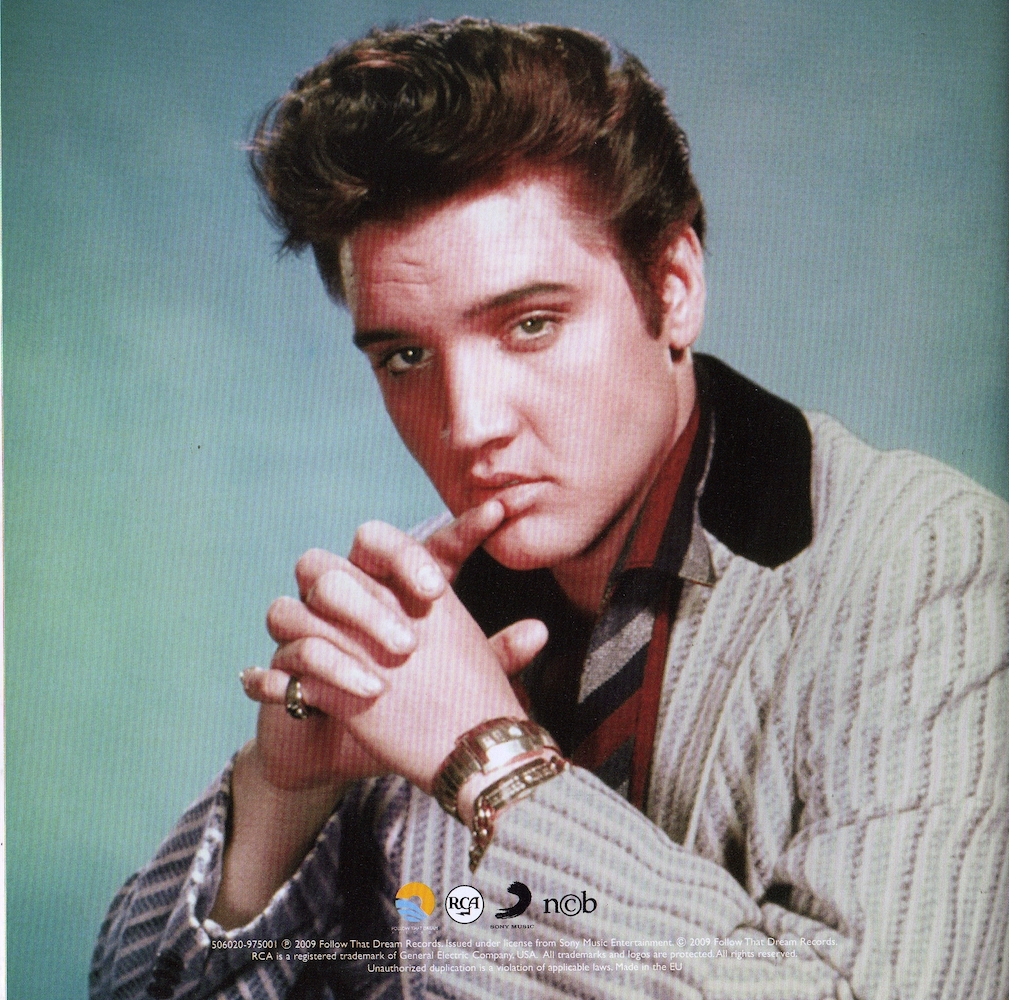
Elvis in 1957 - how could you go wrong? The twelve-page booklet features plenty of great photos, including some nice rehearsal images, as well as some interesting shots from the recording sessions. Perhaps there could have been more care with the back-cover image photo-shopping and to me the front cover scan looks a little soft, but perhaps I'm being picky. How can Elvis not look good? GREAT hair!!!
The Storyboard, Off Camera time-line, and Tracklisting is presented, however there is not the usual detailed session “In And Outtakes” section to the booklet since FTD will be releasing Jailhouse Rock Volume 2 next year. As they say, it will make more sense to have this section when the entire intended repertoire content is released.
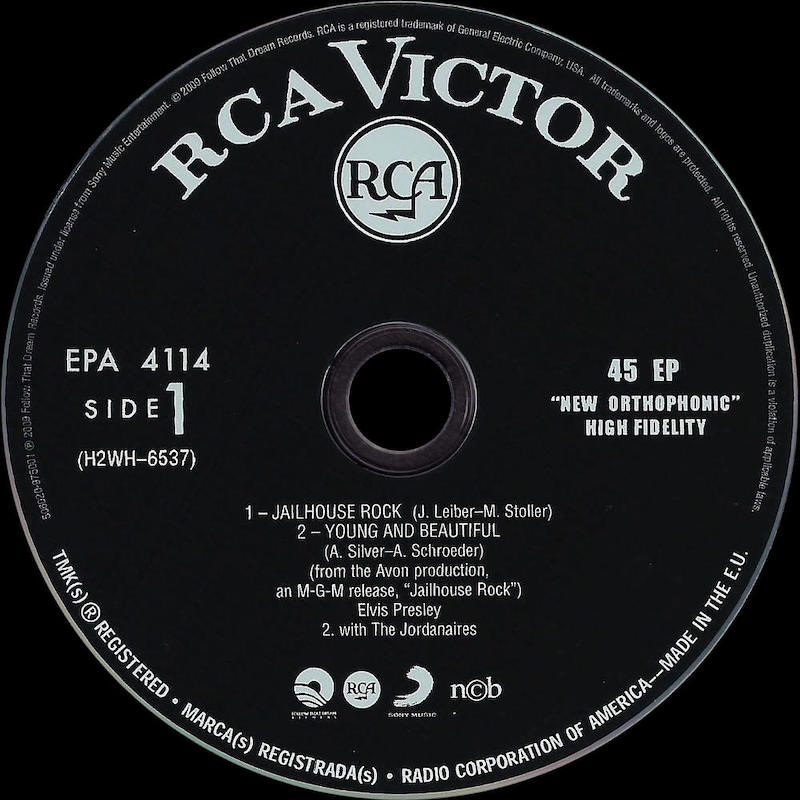
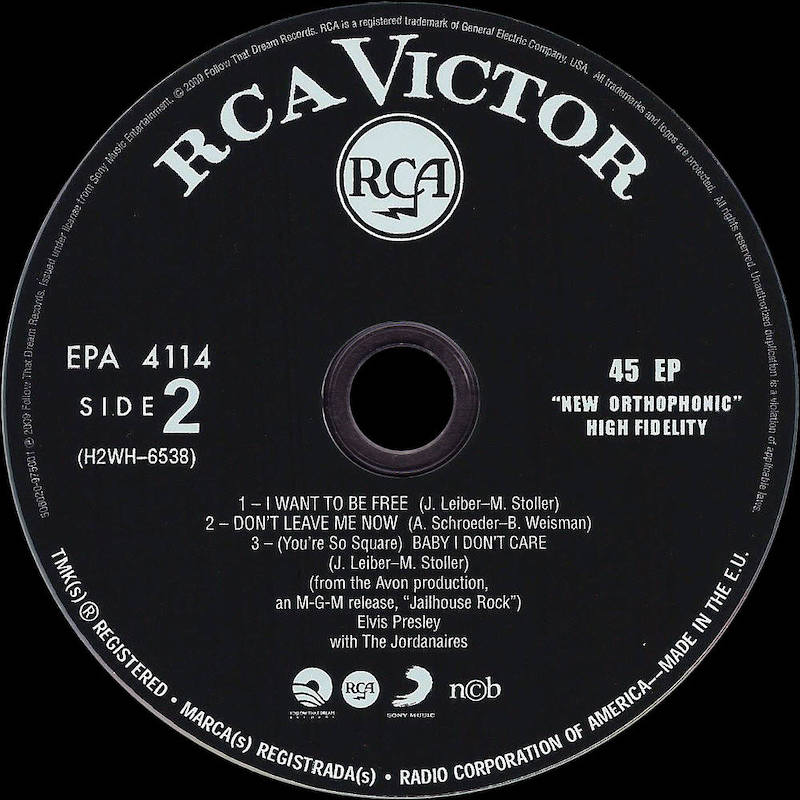
The first CD presents a perfect compilation of twenty-nine highlights divided into “The Originals”, “RCA Alternate Masters”, “Movie Masters” plus “Bonus” treats. Even though only the six songs are featured, the clever sequencing creates a masterful Jailhouse Rock CD.
The second CD, as a sort of collectors’ bonus, presents complete recording sessions of three songs, ‘Treat me Nice’, ‘I Want To Be Free’ and ‘Young And Beautiful’
The audio quality mastered by Kevan Budd (Elvis At Sun, Loving You, The Complete Million Dollar Quartet, etc.) is excellent compared to previous releases that have featured the same tracks. Several of the previous song releases (like ‘(You’re So Square) Baby I Don’t Care’ on Close Up) featured bad audio hum which has now been cleaned up, or perhaps new generation tapes were found. And despite there being several previous releases of Jailhouse Rock there are still a surprising number of brand new takes to enjoy.
Short Verdict: A quality Classic Album FTD release with a lovely presentation and an absolute cracker compilation for the first disc of the set. If you like Jailhouse Rock, you will be playing this one again and again.
Looking closely at the various song takes on sensational Disc 1:
Jailhouse Rock
CD1, Track 1, The Original:
Elvis’ described this sensational song as the hardest he had ever had to record. It is a demanding vocal line as well as being full-on for the band! The final release was Take 6 with a splice of a Take 2 ending on the end.
Track 7, Take 5:
This version has been edited to sound like a 45rpm single release. Previously featured on Silver Screen Stereo (in binaural audio) it had the count-in and did not fade out as it does here. It is, however, a dynamite sound and an outstanding alternate take. Here Scotty Moore plays a different guitar break and Bill Black’s bass wanders off at points, while Elvis doesn’t quite punch out the words as on the classic single. However, you can hear why Elvis found it such a hard song to sing. The master was next.
Track 14, Movie Opening Theme:
This is something new for FTD as, for the first time, they feature the movie’s orchestral opening theme. Although in “stereo”, it is only the actual MGM lion’s roar that is in stereo. A quirky nice addition.
Track 23, Movie Version:
The full movie version that you know so well. In fine quality and in stereo since the MGM orchestral overdubs were in stereo.
Track 26, Movie Version - Male Vocal Overdubs:
This is the early May 9 initial overdub with male chorus, but no orchestra. This is a nice new addition since, unlike the previous release on Essential Elvis Volume 1, there is no fade-out and the song continues until the abrupt ending. Great listening.
Young And Beautiful
Elvis worked through twenty-two takes of this song before he was happy. The arrangements varied along the way and as a “Florita Club” version was also recorded, it is one of the highlights of the six songs.
CD1, Track 2, The Original:
The original EP version was Take 22, by which time the intro to the song had again been simplified. Almost a capella to begin with, but then with The Jordanaires "doo doo" backing vocals starting at one minute in and tending to overpower the beauty of the song. In fact, two ‘alternate masters’ were also created from earlier takes with a lighter, more suitable feel.
Track 12, Alternate Master #1 (spliced from takes 18 and 12):
At a similar tempo and with smoother backing vocals (the “Doo, Doos” edited out), this version is a real favourite. Listen out for Elvis’ classic gasp for air at 00:17.
On CD2 you can investigate how the splice was created, since Take 18 falls apart soon after Hugh Jarrett’s bass-line starts.
Track 13, Alternate Master #2 (Take 19):
This is interesting for being chosen as an alternate master yet Elvis gets the lyrics wrong, singing "and kiss me tenderly" @ 01:47 when the lyrics should be "and never set me free". Here The Jordanaires’ backing comes in at 01:10 which creates a different sounding second part to the song.
Track 15, Jail Version - Take 3:
Elvis sings a “Jailhouse” version solo with minimal acoustic guitar. Sounding delicate and insecure to match the movie's plot, this is a delight. This was previously on the '50s box-set' The King Of Rock ‘N’ Roll but sounds better in this context and also features the count-In.
Track 17, Florita Club Version - Take 7):
Scotty Moore's guitar pushes this to a different "country" sounding number. With Dudley Brooks on piano, the arrangement becomes very cool. A classic version.
Track 25, End Title Version (spliced from takes 8, 12, 18 and 2):
This demonstrates what new delights can be created from clever splicing. Starting at a slower tempo than the record release, there is a gentler feel to the song, and with The Jordanaires‘ simpler arrangement coming in much later, this is a fabulous version. Possibly the best version of this classic song - a real highlight.
I Want To Be Free
The 1957 original record release was a splice of Take 11 and the drum ending of Take 5. However,, since the ‘50s box-set BMG has been using the complete Take 11 as the master.
CD1, Track 3, The Original:
So this FTD release is the first official CD release of the true original master of the song.
Track 11, Alternate RCA Master - Take 11:
While this basically is the same take as the record master, this version has extra echo added across the whole track. The master has a much ‘drier’ studio-sound with no echo. Elvis notes at the start, “That was a good opening, men” - and this version includes the count-in.
Track 16, Jail Version;
An interesting early rough version, as required by the movie’s script. The feel is very different with the drum anvil snaps of D.J. Fontana and a full band arrangement and backing vocals. Elvis provides a faltering vocal and unsure ending.
Don’t Leave Me Now
An interesting song, as RCA decided to go with the “Movie Version” rather than the expected “Hit Record” version. There is also a variety of arrangements that make it one of Elvis’ most interesting fifties’ soundtrack songs.
Elvis had tried recording ‘Don’t Leave Me Now’ three months before during the Loving You album sessions. Then they had tried twenty-nine takes before deciding on an unsatisfactory master. Now Elvis would reintroduce the song for Jailhouse Rock. Once again, Elvis would try over twenty takes to get a satisfactory “Hit Record” version, which eventually would not be used at all, and twelve to complete the “Movie Version”.
With a total of over sixty takes in total, this has to be the Elvis song that he worked at the most in his whole career.
CD1, Track 4, The Original:
The final record release starts with that cool piano intro and it is interesting that RCA decided to release this “MGM Movie version” rather than the movie’s “Hit Record” version on which Elvis had worked so hard. This has a slightly faster tempo than the “Hit Record” version and has that big Jordanaires’ ending.
Track 9, Alternate RCA Master #1 “Hit Record” Version - Take 18:
The audio quality of this is lovely and clear compared to the EP version. With no piano intro, this has a lovely cool swing to it nicely driven by Bill Black’s double bass. Elvis uses lots of playful vocal infection here - listen to his moans on “What good is dreaming” @00:52 and cool “Elvis” mannerisms. The ending has a lovely cool and jazzy ending. The classic version.
Track 10, Alternate RCA Master #2 “Hit Record” Version - Take 21:
Another attempt with the similar arrangement. This time Elvis possibly over emphasises his vocal mannerisms - check out “Come to these arms” @01:20 but it still retains the cool feel. Elvis must have decided that he couldn’t improve as this was the last attempt, but earlier Take 18 is the better version.
Track 18, Movie Set Version:
There’s a very short glimpse of Elvis playing the song on the movie set, alone and accompanying himself on guitar. Sadly, it is only twelve seconds long before it fades.
Track 19, Movie “Recording Studio” Version 1 (Take 2):
Very different, with only a rolling piano and bass accompaniment. This early film version has Elvis filling in for his own backing vocals “like a book on a shelf.”
Track 20, Movie “Recording Studio” Version 2 (Take 12):
This is the original EP record release, but this time the MGM master. This version features the movie tape count-in and the audio is more compressed compared to the RCA version. Otherwise, of course, it’s the same.
Track 27, Unused First Version - Take 2:
This is a very slow tempo version, presumably recorded for use early in the movie. Without the piano intro, this version features some cool guitar breaks from Scotty Moore giving it a very country and western feel. This is very different from the other ‘movie’ piano versions. Elvis drifts off-key at times and you can hear his chair squeak - and overall it sounds very rough. However, as they stopped at this second take they must have got what they were looking for! Sounding like a poor rehearsal, this is actually another highlight.
(You’re So Square) Baby I Don't Care
CD1, Track 5, The Original:
What a classic! With Bill Black unable to get the bubbling bass intro correct, he had stormed out the studio. To everyone’s surprise, Elvis then picked up the electric bass and played it himself with Jerry Leiber providing a scratch vocal. Elvis then overdubbed his own vocal, firstly at Radio Recorders, but then getting the perfect master vocal overdub five days later on the MGM Sound Stage.
Track 24, Movie Edit - Take 16/V.O Take 6:
This is the same as record release - being the final vocal overdub. Here we are presented with it in binaural and there is a minimal movie edit with the final bass play-off being edited down two bars, making the song slightly shorter.
Track 29, First Vocal Overdub - Take 1:
Recorded on May 3 - the same day as the backing track - when Bill Black stormed out, this first version has a very different vocal. I love Elvis’ comment at the start, “Just gonna be wasting tape.. it’s too late in the day for all this shi..”
On this take Elvis sings “I wonder why I love you baby” instead of the correct “I don’t know why I love you baby” and his vocal is pretty rough. You can again hear his chair squeak but the long drawn out “Care, care, care” ending is a classic. Previously released on Close Up but sounding sensational here, Elvis’ exclamation at the end “Phew - pow, pow, pow“ makes the perfect ending to this fantastic disc.
Treat Me Nice
The final single B-Side was recorded four months later in September at the Elvis‘ Christmas Album sessions. Elvis was very keen on this song - he thought it might be a bigger hit than Jailhouse Rock on the A-side.
CD1, Track 6, The Original:
On the final session, Leiber and Stoller re-arranged the song with a much slower tempo giving the lyrics a new understated cool-swagger. Set in a lower key this also gave the song a sexier feel and lines like, ”You know I’ll be your slave” take on possible alternative meanings. It is an all-time Elvis classic song and very different from the versions Elvis actually recorded for the film. As a bonus we also get the Elvis count-in.
Track 8, Alternate RCA Master - spliced from Takes 10 and 13:
This was the spliced version originally considered for release. With a very different arrangement and at a faster tempo, along with jazzy piano, this also has a great feel. However, this sounds a little more basic rock ’n’ roll than the slower released version but a bit spoilt with over-complicated backing vocals. This would have made a great album version had they thought of alternate releases in those days. Previously one of the key tracks on Great Performances, the audio quality is vastly improved here. This RCA master had slight echo added over the entire track, unlike the clean movie master.
Track 21, Movie Master with Overdubs - Take 10/13 different splice:
This version is a different splice of the same two takes, but this time in stereo, with an interesting guitar overdub and more drums beats added to the intro.
Track 22, Movie Master - Take 10/13 spliced):
This is the same spliced version as above, but this time in mono and with no overdubs. The different edit from the RCA splice can be spotted around 01.35 where the handclaps are louder after “You know I’ll be your slave.” The mono and audio compression gives the sound - and Elvis’ vocal - more punch.
Track 28, First Movie Master - Take 19):
From the April 30 session (Elvis had just recorded ‘Jailhouse Rock’) this fascinating early arrangement was never used. Here Elvis is creating a back-beat slapping his guitar (as on ‘All Shook Up’) and a very different 1-2 rhythm is used. Even though they achieved a “master” after nineteen takes, something doesn’t sound quite right. The handclaps don’t fit and Scotty Moore’s guitar sounds “Too damned complicated.” Other earlier takes of this session were released on the brilliant Flashback FTD. In binaural, listen to the left channel alone to hear Elvis’ vocal, plus the slapback beat from his guitar percussion.
Elvis completed the movie versions a few days later, but then changed the arrangement yet again for the single release the following September.
Delving even deeper into the Complete Recordings Sessions on Disc 2 ...
With so many excellent and varied takes on Disc 1, the second CD is for a very different listening experience and more for the real Elvis sessions’ collector. In a similar way to the FTD Loving You release, this Jailhouse Rock FTD presents complete recording sessions but this time featuring three songs, ‘Treat me Nice’, ‘I Want To Be Free’ and ‘Young And Beautiful’
Some of the key takes from this session feature on the first CD, but here you can understand how the session worked while Elvis and the band worked towards the master. All the tracks are also in binaural sound and include more studio banter.
Treat Me Nice - Second Movie Version (Session) - May 3.
Only three of these thirteen takes and false starts have been previously released, and we even get six brand new complete takes, so listening to this session is a treat.
Takes 1 and 2 nicely set the scene with the different Jordanaires‘ arrangement and Elvis creating a cool backbeat on his guitar. While Elvis’ vocal is a little unsure and Scotty Moore’s guitar solo nice and messy, there is a delight in spending time eavesdropping on this classic session.
Take 1 soon breaks down with Elvis annoyed at himself, ”Hold it. Hold it! Get it right, damn.” While the very enjoyable complete Take 2 - fabulous guitar work from Scotty Moore very evident from the binaural mix - has Elvis querying at the end, “What the hell is this?”
On Take 4 Elvis has added the handclaps to the start of the arrangement and there is some interesting studio discussion. By Take 5, the song is developing towards the master with a similar arrangement and feel. At the end you can tell Elvis sounds pleased with the progress.
On the complete Take 6, Elvis has started working on changing the end of the song. A good version let down by Elvis’ unsteady vocal, this version has the fascinating abrupt minor-chord ending that wouldn’t be used again.
By Take 7 Dudley Brooks has added the tinkling piano arrangement to the previous basic piano boogie-riff.
On Take 8 the new “bom, bom, bom” bassline has been added from The Jordanaires’ Hugh Jarrett, but they sound unsure with their new arrangement. While Take 9 comes to nothing, there is some nice studio banter with Elvis sounding in great humour and joking, “Are you in the union?”
Take 10 has a new level of assurance about it, and although the timing take fails slightly towards the end you can understand why this was partly used for the final splice. The end includes some great discussion between Elvis and bass-man Hugh Jarrett, “Right on key like you done it then, that sounds good. I mean try and stay on key, Hugh!” (laughing ) “I mean Big Jim Waits stays on key!”
Here Elvis is referring to “Big Jim Waits”, often called “The Dean of the Bass Singers” who sang with The Stamps Quartet, The LeFevre Trio and The Revelaires Quartet amongst others. He was one of Elvis’ gospel heroes.
Take 11 suddenly features a new guitar arrangement from Scotty Moore. Sounding “too damn complicated” at times, it would be featured less in the final take. The Hugh Jarrett bass-line is faded down on this mix while D.J. Fontana’s drums have an added punch. A fascinating new addition and it sounds great.
Take 13 - This was used for the second half of the spiced master and the “bom bom” bass-line is back more in evidence again.
I Want To be Free - Prison TV Version - (Session) May 3.
Take 1 starts with Elvis singing the line “Day-O” from ‘The Banana Boat’ song, Harry Belefonte’s number 5 chart hit at the time. In good humour Elvis says, “Let’s go before the damn Jordanaires get out of the mood!” but the take never gets past the first intro.
Take 4 - After a few false starts, this faltering first complete take was featured on the Today, Tomorrow And Forever box-set. Elvis is very unsure of his timing, although as a “prison” version this would make sense!
Take 6, previously unreleased, is a treat. Elvis sings very sweetly at the start, while at 02.08 it seems Elvis has walked over towards The Jordanaires in the studio, since the audio placement changes. Then The Jordanaires completely go off-key at the end causing much merriment with everyone laughing, “Ok..., right to the end!” No wonder Elvis jokes “Got the key right?” at the start of the next take!
Take 11, previously on the FTD Flashback is a gem. Elvis’ vocal is very smooth compared to earlier takes and has a delightful understated quality. The ending is better for using the quiet Jordanaires‘ fade, compared to the final drum-roll ending.
Takes 12 and 13 were used for the spliced master and both feature new and louder brush-work from drummer D.J. Fontana which possibly doesn’t suit the song’s gentle lyric quite as well. Take 13 features an even louder drum-roll ending.
Young And Beautiful - Record Version - (Session) April 30.
One of the loveliest Elvis soundtrack songs, hearing this session in full has to be a treat.
Take 1 - Unreleased - and what a delight! It starts with Elvis singing the song to himself before a near complete take. Delicate and delightful, and nearly a capella, it is surprising this hasn’t been released previously. Already close to perfect, Elvis falters at the end, “I’m sorry. Take it again before The Jordanaires get out of the mood”.
Take 3 - With a very slow intro tempo and simple backing vocals, this is a superb version, even if Elvis over emphasises some lyrics. A very nice new addition.
Takes 4 and 5 - These have been released before but in mono on the Today, Tomorrow And Forever box-set. Elvis jokes about “Old Fuddly-Duddly” Dudley Brook on piano. Elvis sounds a little mannered in his vocals by the end of Take 5, but it is still a beauty. Elvis seems to play with the song and the band know it’s not a master.
Take 6 - Close to the master, and previously on Flashback, Elvis knows he can do better, stating at the end, “I can beat that!”
Take 7 is a nice distraction with Elvis joking “Your lips so rare, your curly hair!” as the take fails.
Take 8 at the start is smooth-as-silk and by now the familiar final band arrangement has been added. The beginning of this take was used on the MGM End Title splice.
Take 9 is fun for the studio banter “I thought there was something happening back there?” Elvis asks after he deliberately messes up the lyrics, causing everyone to laugh. Sensational fun.
Both Takes 11 and 12 are very smooth. It is hard to believe that Elvis pushed for so much perfection. “It’s awfully good” says engineer Thorne Nogar. Elvis even notes, “Let’s just make one more and play the last two and decide between them”. They would continue for another ten more takes before he was finally happy! Take 13 starts with more rehearsing between Elvis and Hugh Jarrett as they decide to add the new bass-line “doo, doo, doo, doo” to the song’s arrangement.
Takes 14, 15, 16, 17 and 18 never make it as complete versions. Elvis jokes, “Shit man, no! Get Pat Boone in here quick!” Hugh Jarrett‘s new bass-line throws Elvis off course.
Take 19 is at last near the final master and selected as an RCA “Alternate Master” featured on Disc 1 in mono. Elvis’ vocal still seems a little forced at 01:37 “Take my heart” and even more so in binaural.
Even at Take 21 Elvis breaks up with very genuine laughter, causing the whole studio to collapse. It’s a gem. Elvis laughs, “He was trying so hard” and it’s a great moment of studio eavesdropping. A classic new addition.
Take 22 is the final master and at last the mix of Elvis and the bass-line works, creating a lovely arrangement. So good to have this in binaural.
Overall Verdict
FTD creates the perfect product for collectors with these Classic Albums. Who would have thought that there could be so many hours of entertainment from just six Elvis songs! It is hard to imagine that anyone who loves fifties’ Elvis could be disappointed with this release.
Of course more complete Jailhouse Rock sessions await us with Jailhouse Rock Volume 2, but for now this “two CDs for the-price-of-one” package deserves to be in every fan’s collection.