Review by Piers Beagley - Elvis Information Network
Blue Hawaii is one of Elvis' most successful films. Produced by Hal Wallis and directed by Norman Taurog, it reached #2 of Variety's weekly list of Top Grossing films.
One of Elvis' biggest selling albums, most fans would have previously purchased these songs on the original vinyl and then again via BMG's extended 1997 release. Despite its travelogue style Blue Hawaii has always been an essential album to own.
Here we continue our in-depth look at each one to see if they are worth buying all over again.
Blue Hawaii is the seventeenth FTD extended movie soundtrack release.
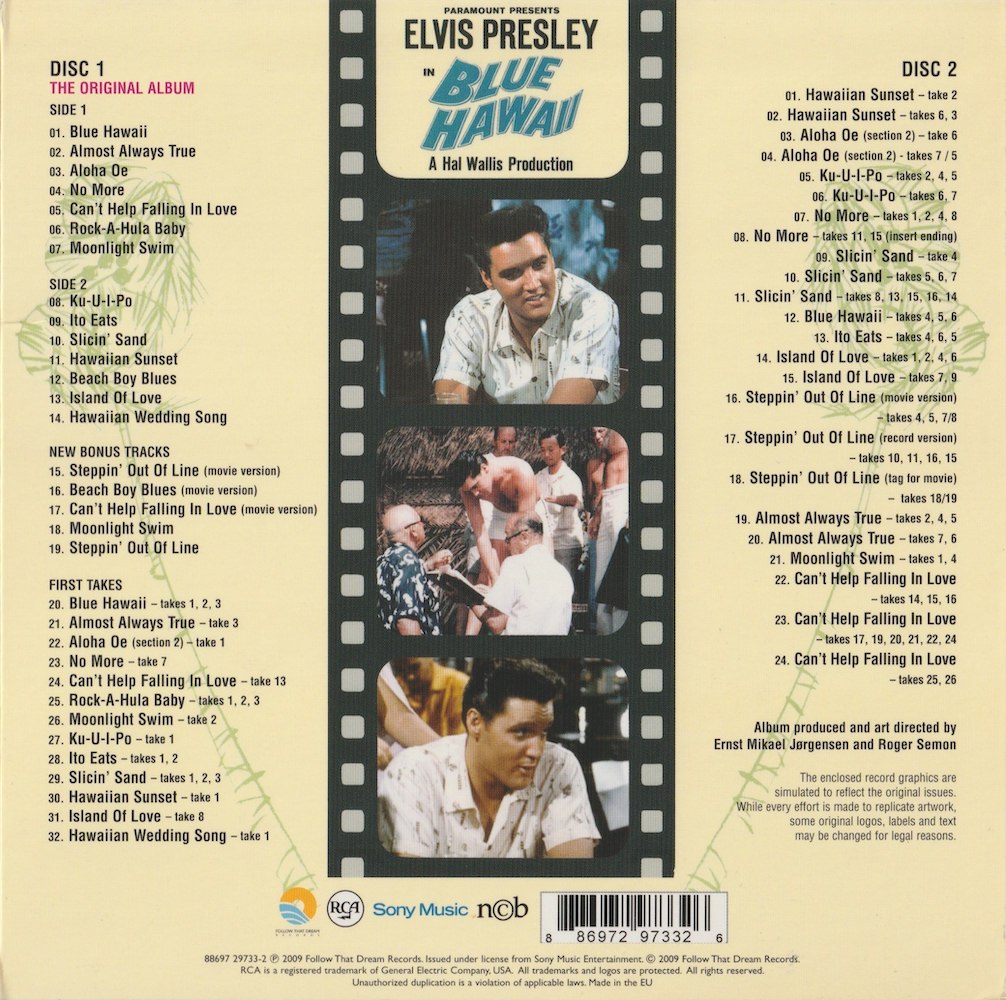
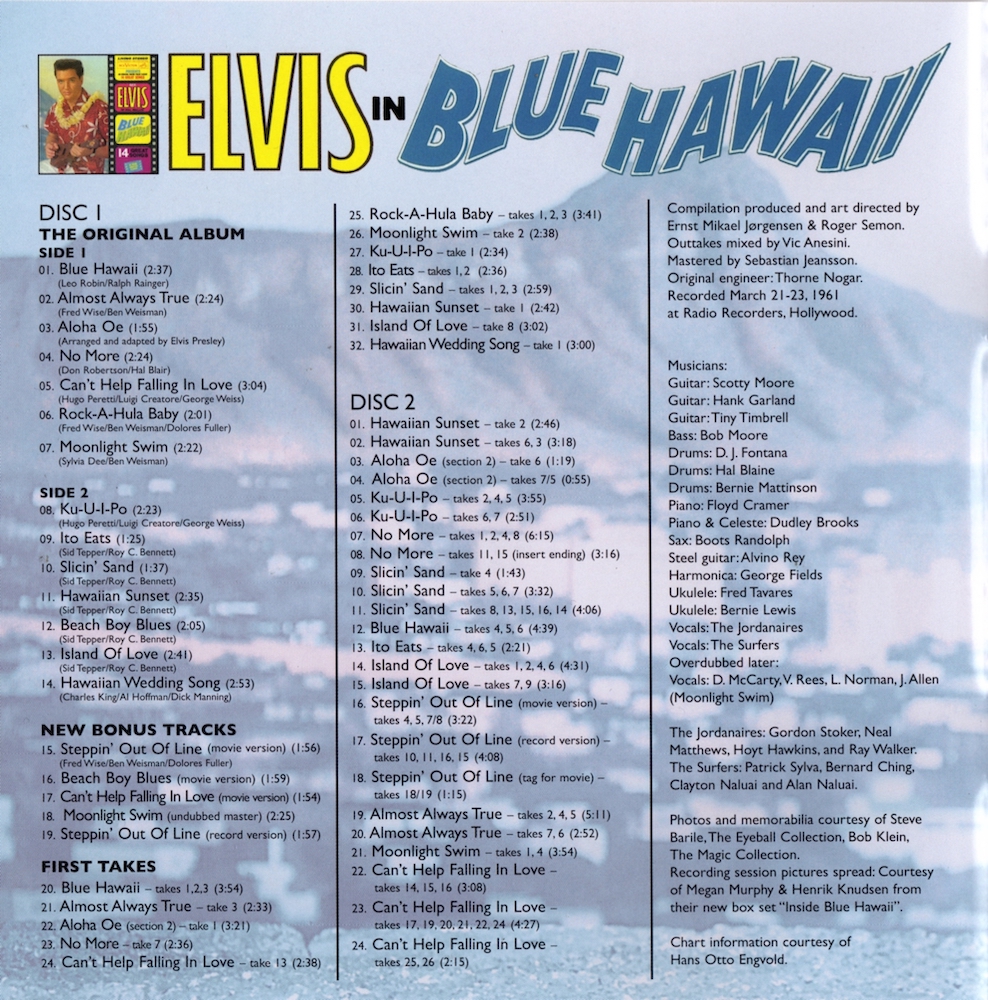
Blue Hawaii (56 tracks, 158 minutes).
Blue Hawaii was Elvis’ eighth film and after the dramas of Flaming Star and Wild In the Country, it was a return to a family fun musical. With fourteen songs in the film, the music was a key feature, although both the Hawaiian scenery and an enjoyable, if lightweight, plot did help make it one of Elvis' most enjoyable films.
It had been only eight days since Elvis had wrapped up the great Something For Everybody sessions in Nashville’s Studio B. On March 20 1961, Elvis reported to Paramount Studios in Hollywood before heading to the Radio Recorders studio for soundtrack rehearsals.
On the girlfriend front, Elvis was still dating Anita Wood as well as Sandy Ferra, while Priscilla was still living in Germany. Joan Blackman was Elvis’ co-star in Blue Hawaii and later in Kid Galahad. In interviews, she has since admitted, somewhat surprisingly, to knowing Elvis from the fifties’ and his time at Paramount for Loving You - and that she had also been dating Elvis on and off since before he went into the army.
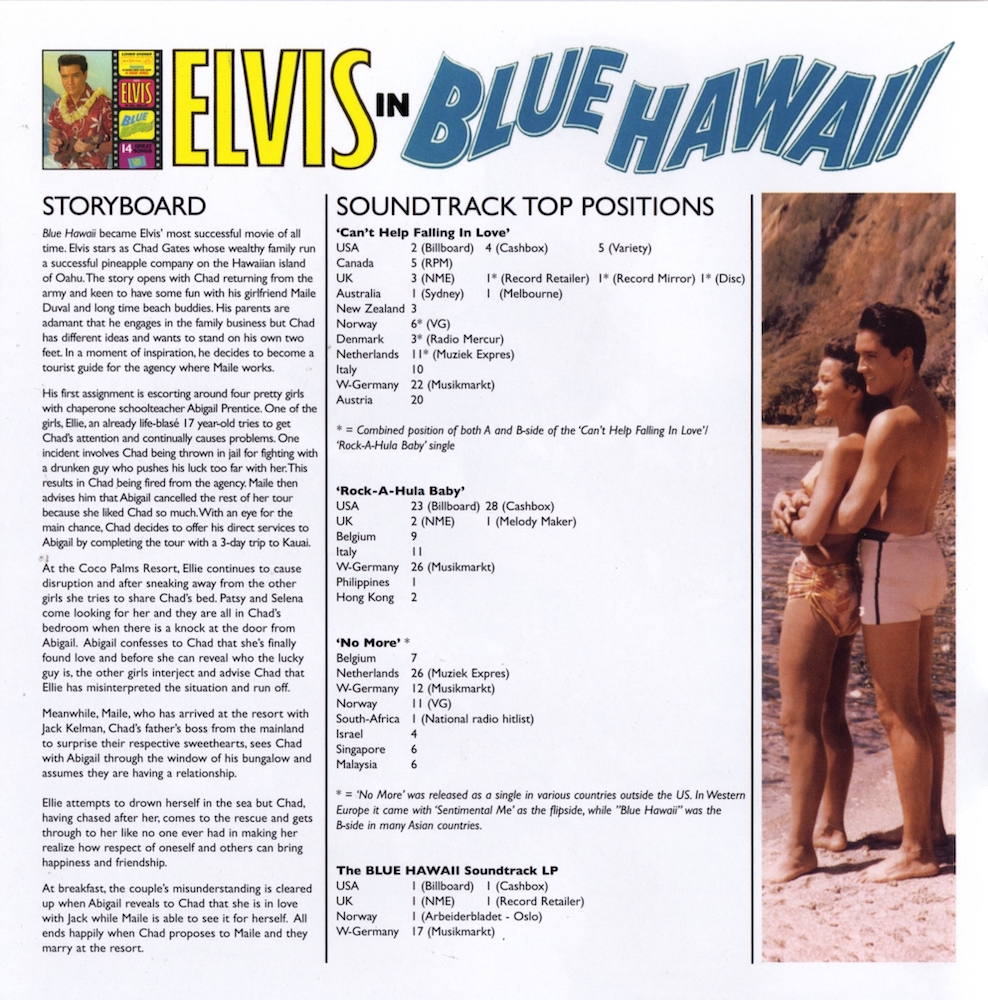
Chart releases
'Can't Help Falling In Love’/‘Rock-A-Hula Baby’ as a double-sided single reached #2/23 in US, December 1961.
In other countries worldwide it made #1.
'No More' was also released as a single outside the US, also making the Top Ten.
Blue Hawaii soundtrack LP reached #1 worldwide.
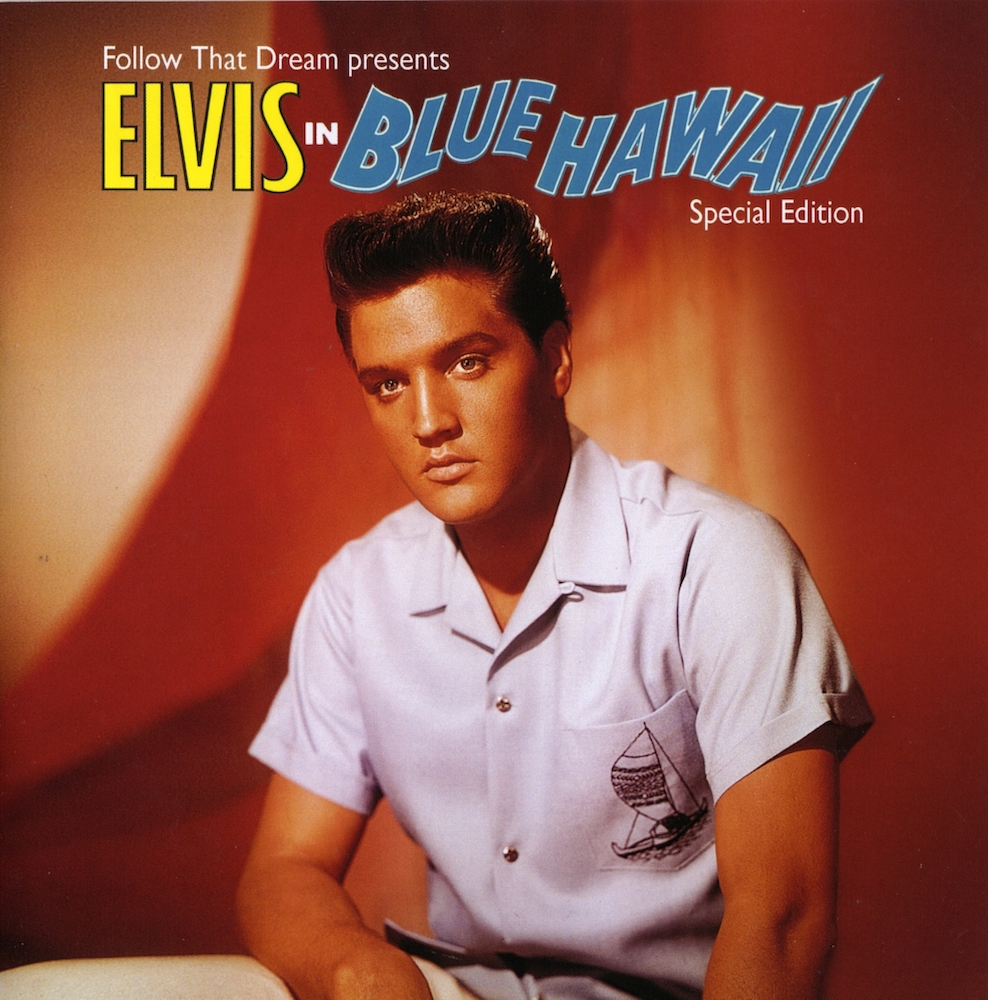
Cover and Design
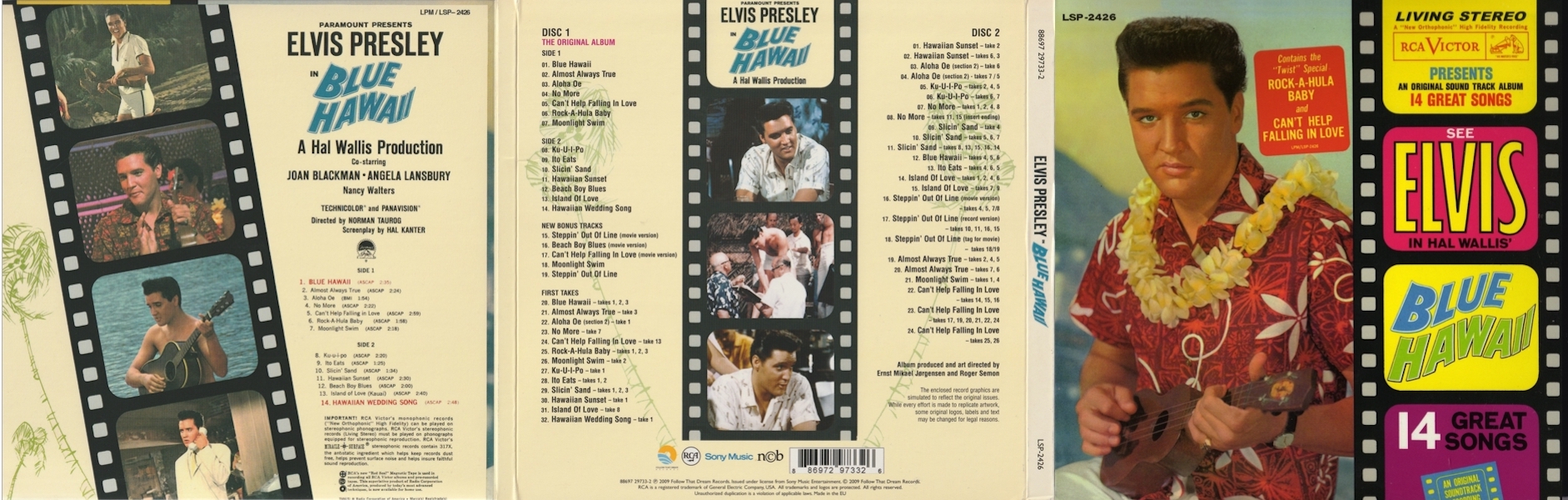
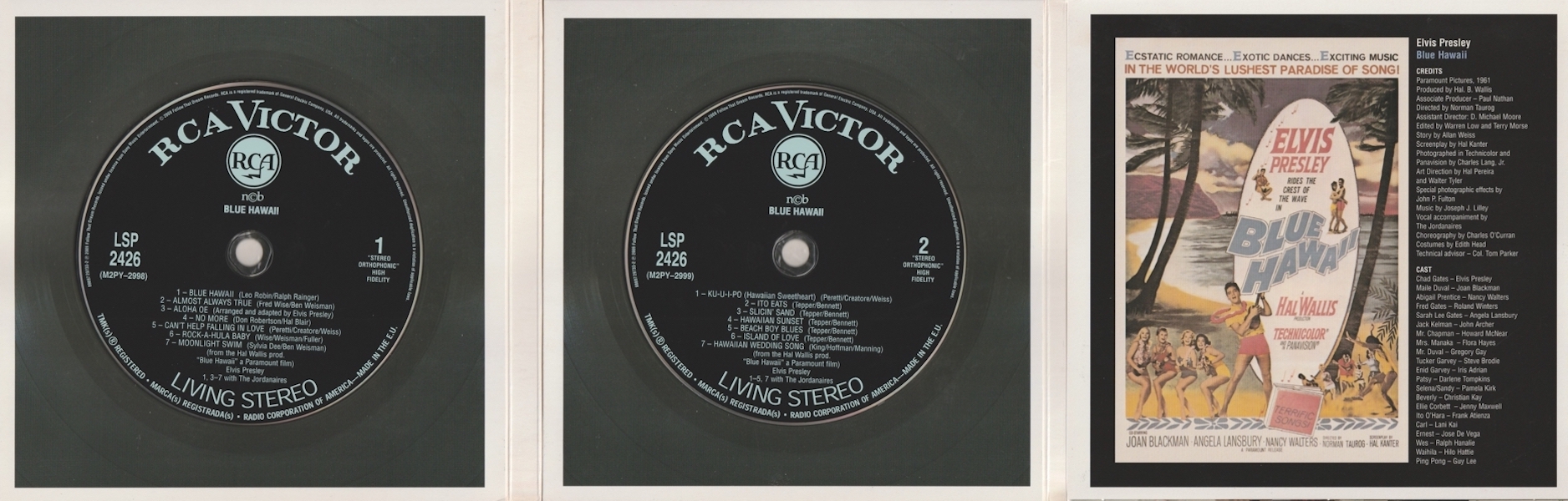
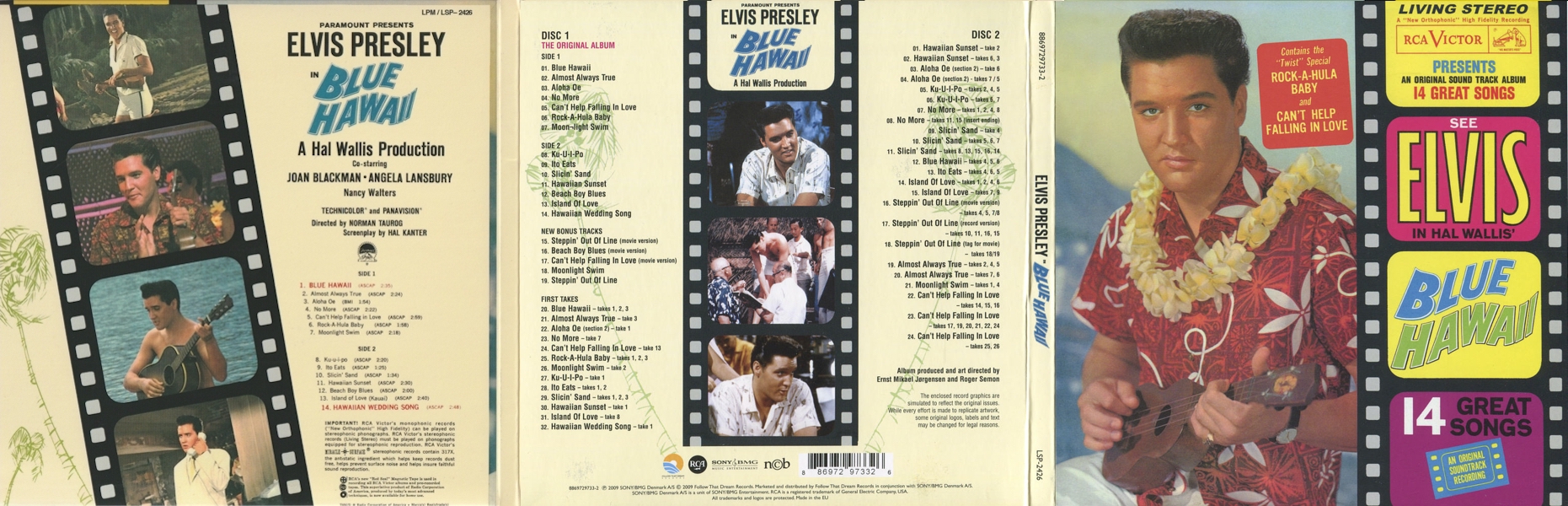
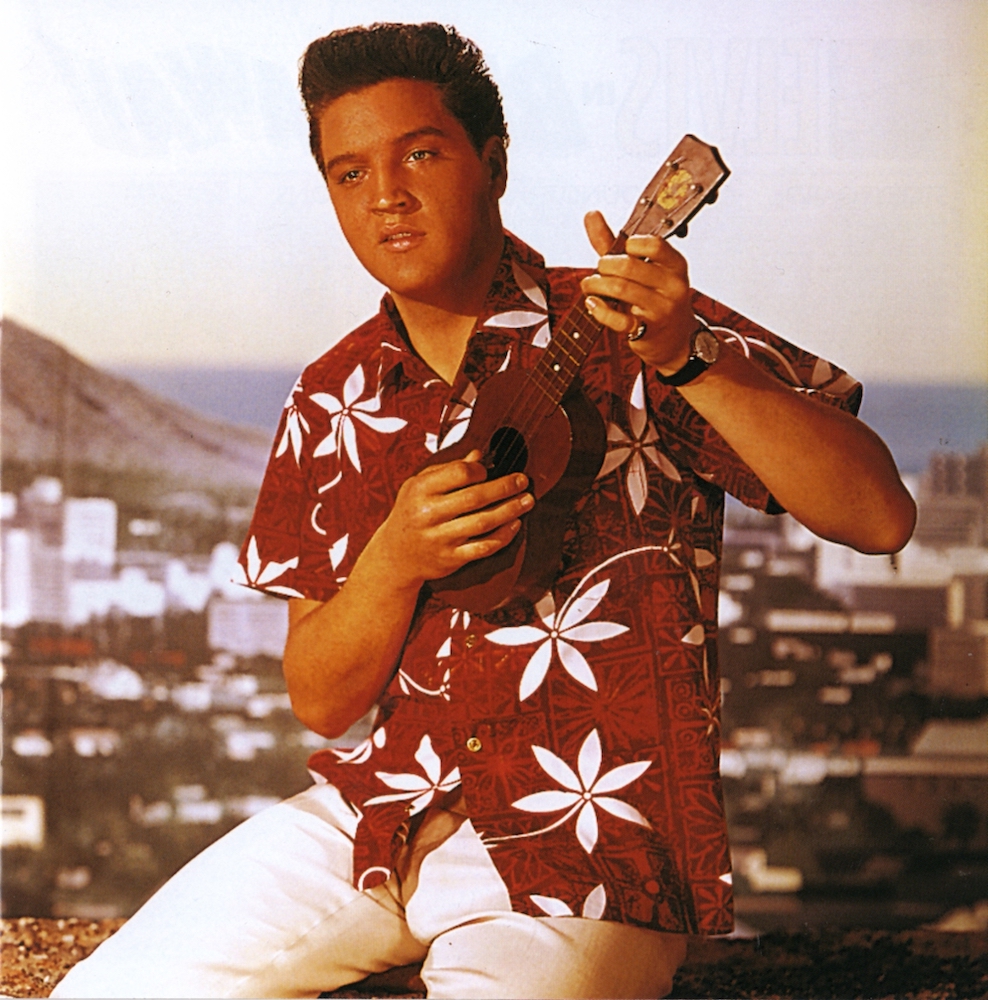
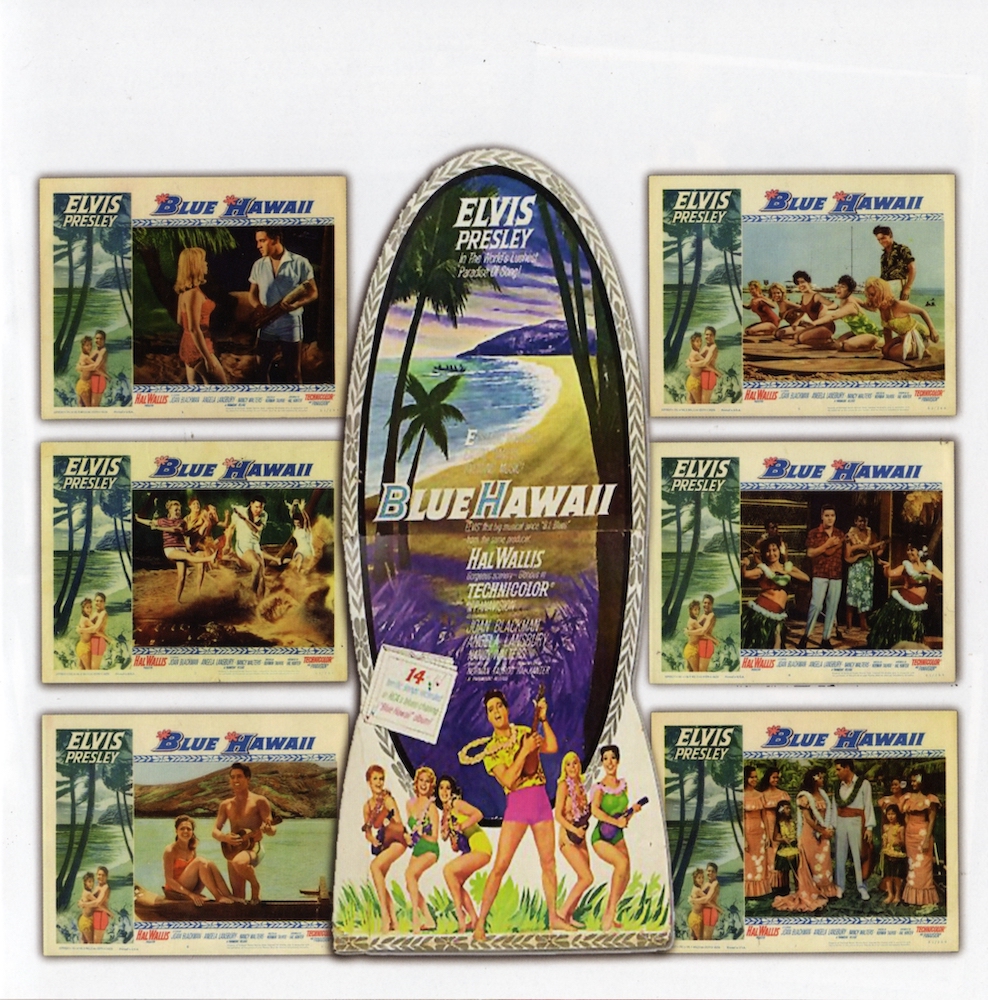
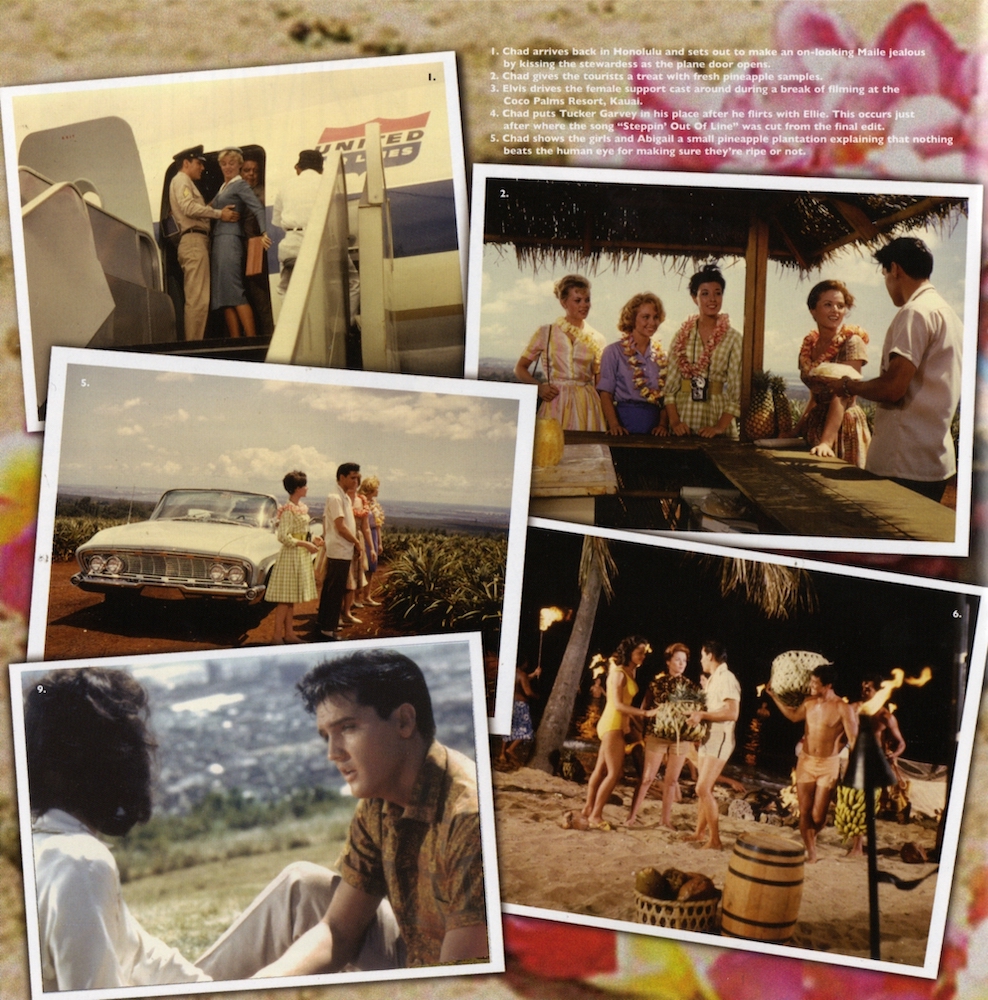
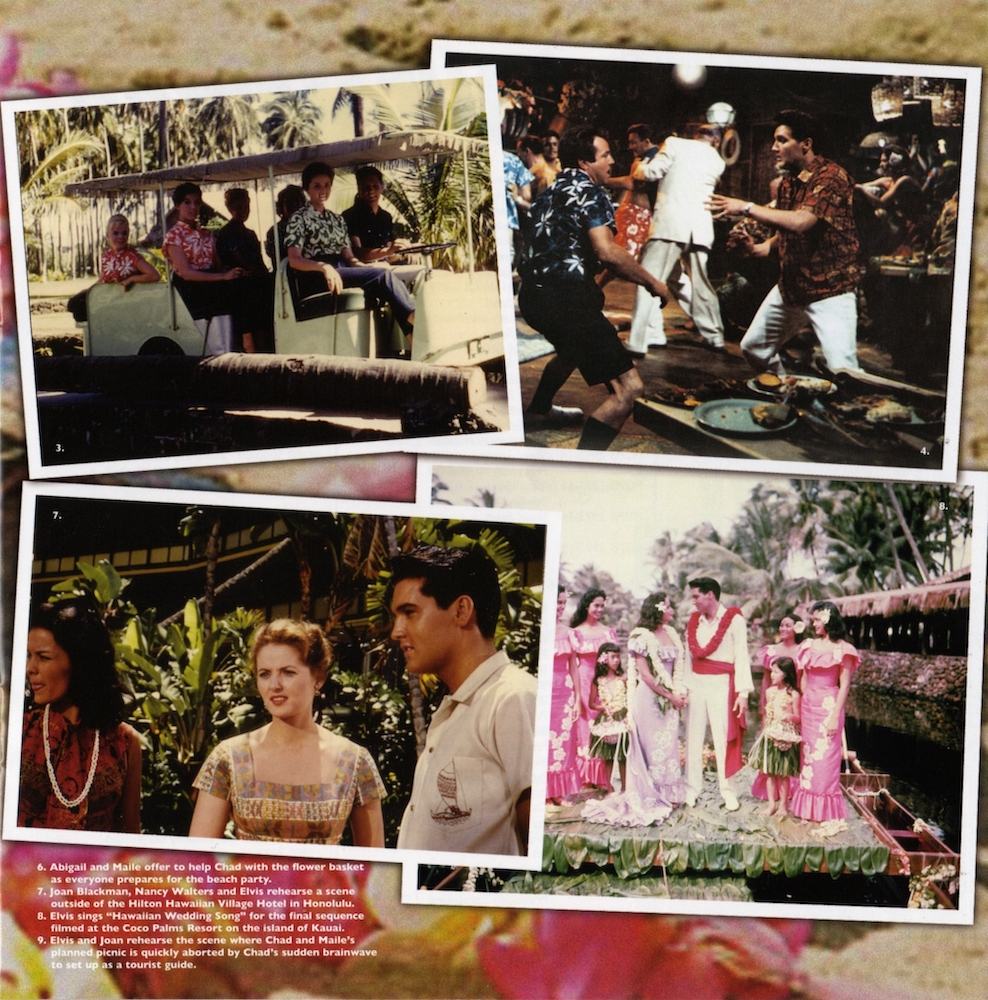
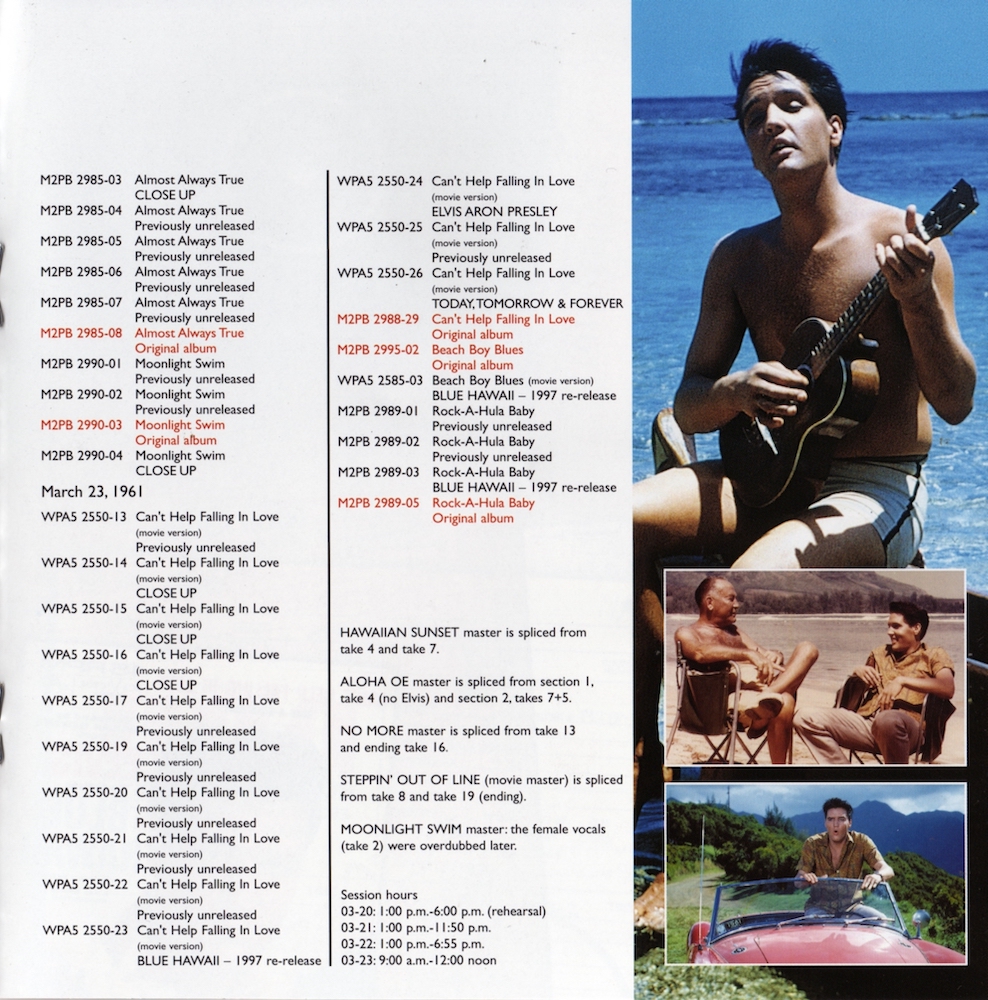
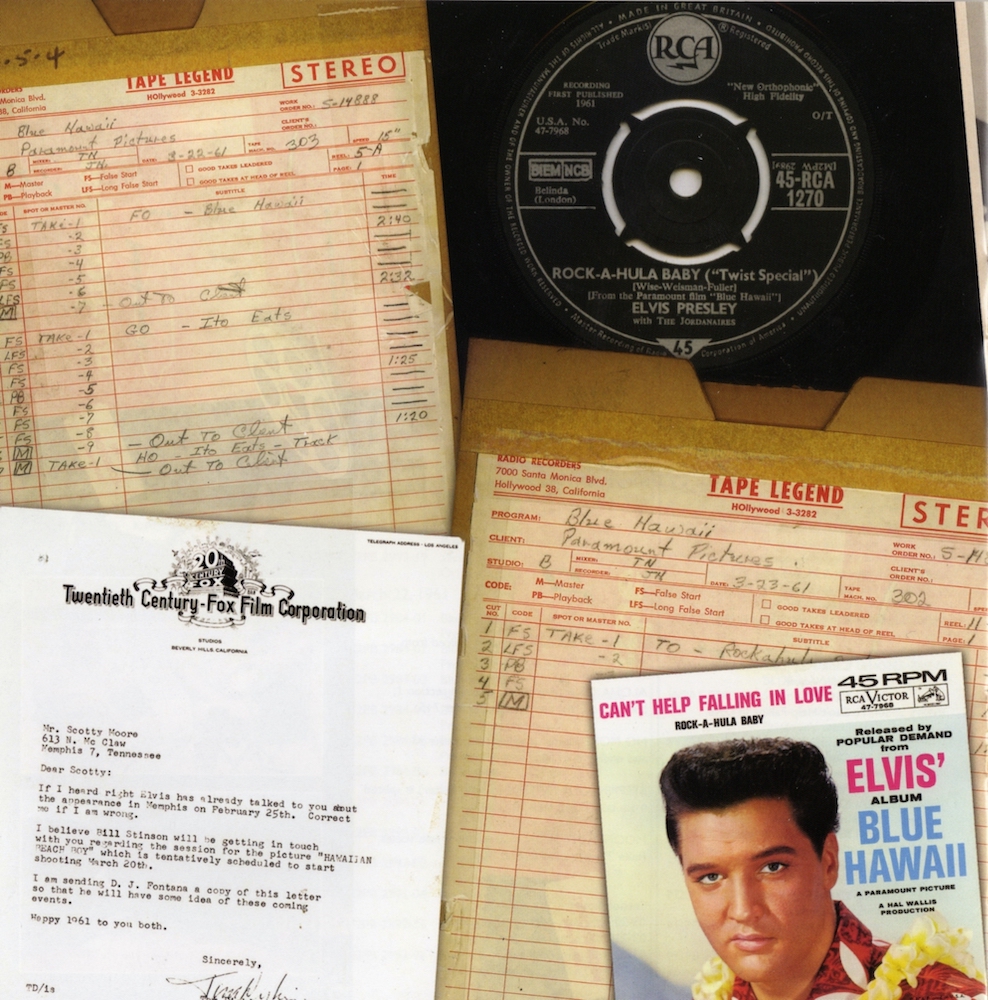
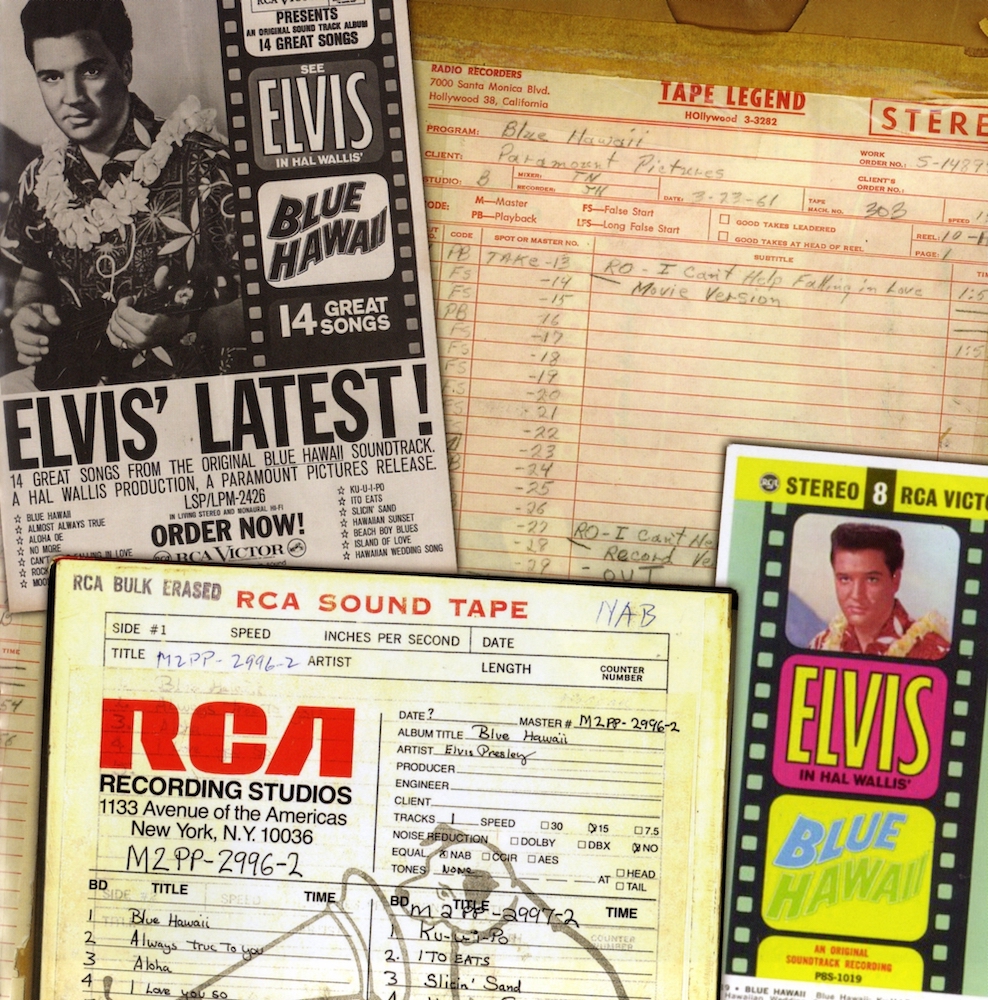
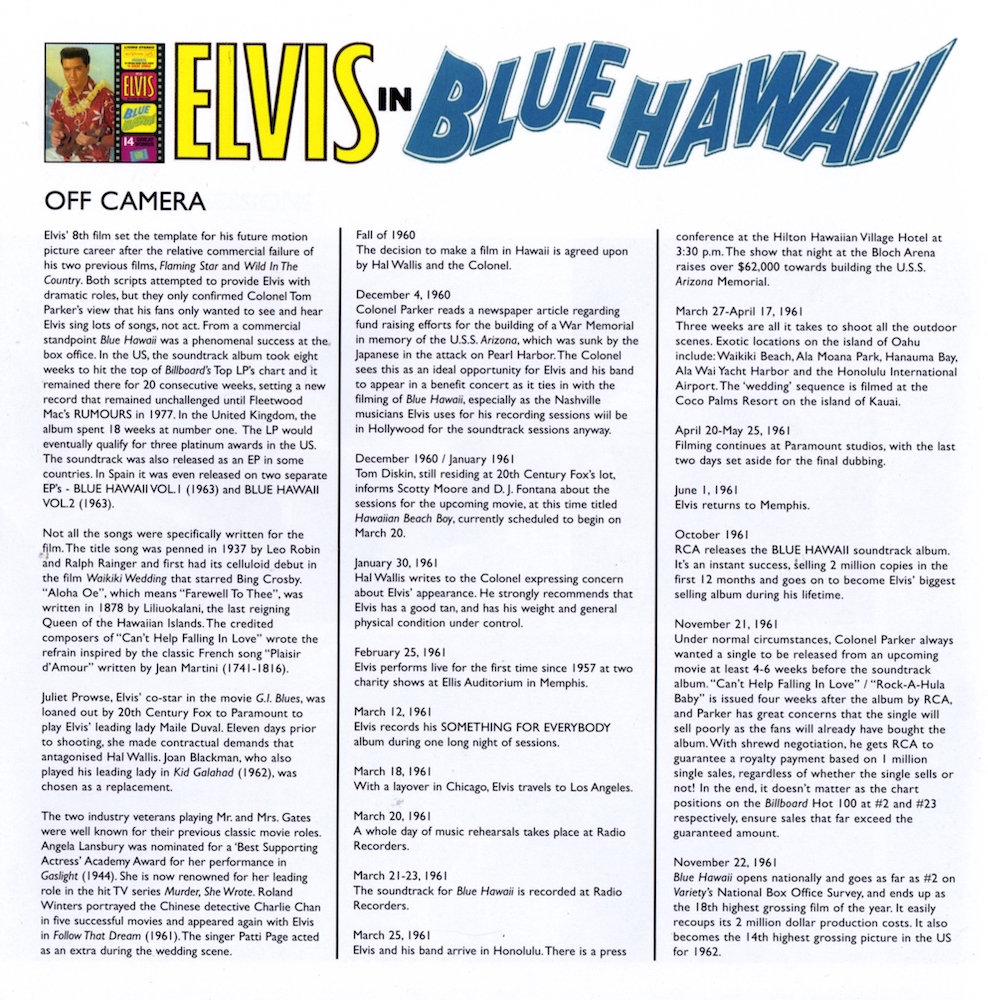
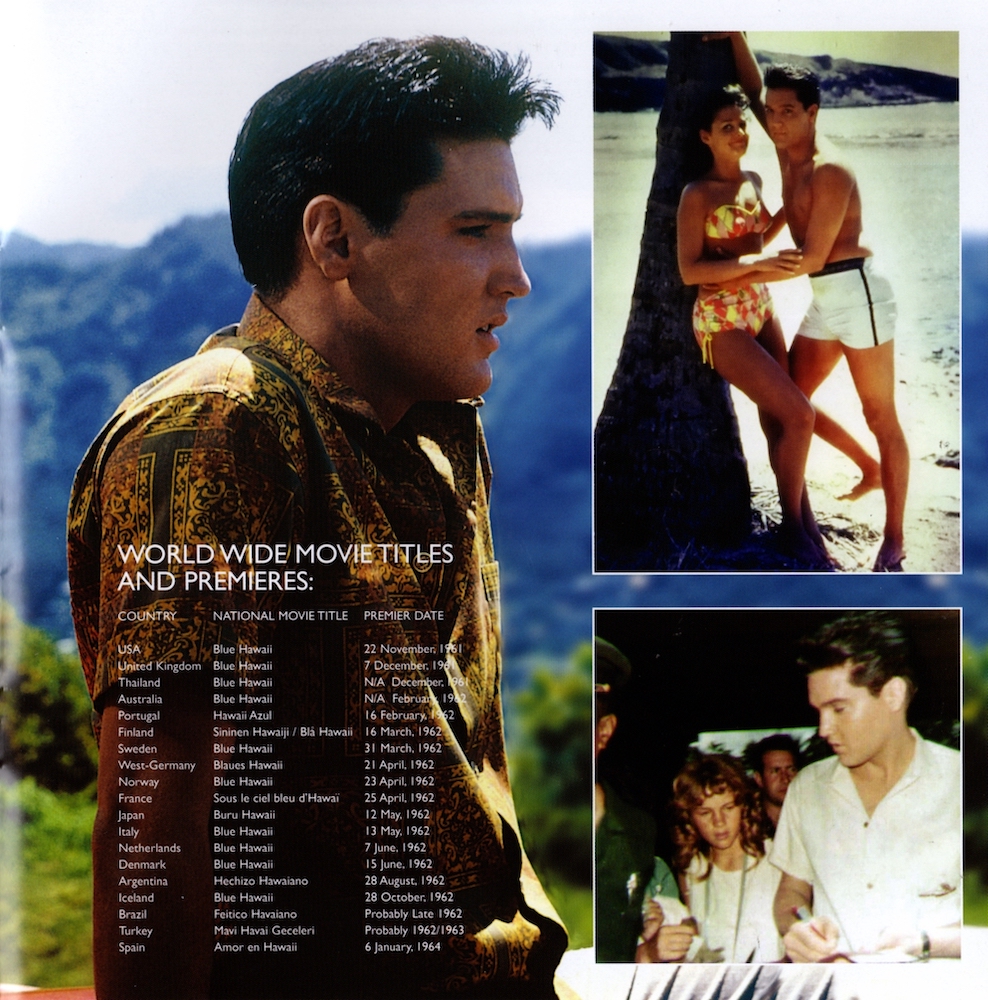
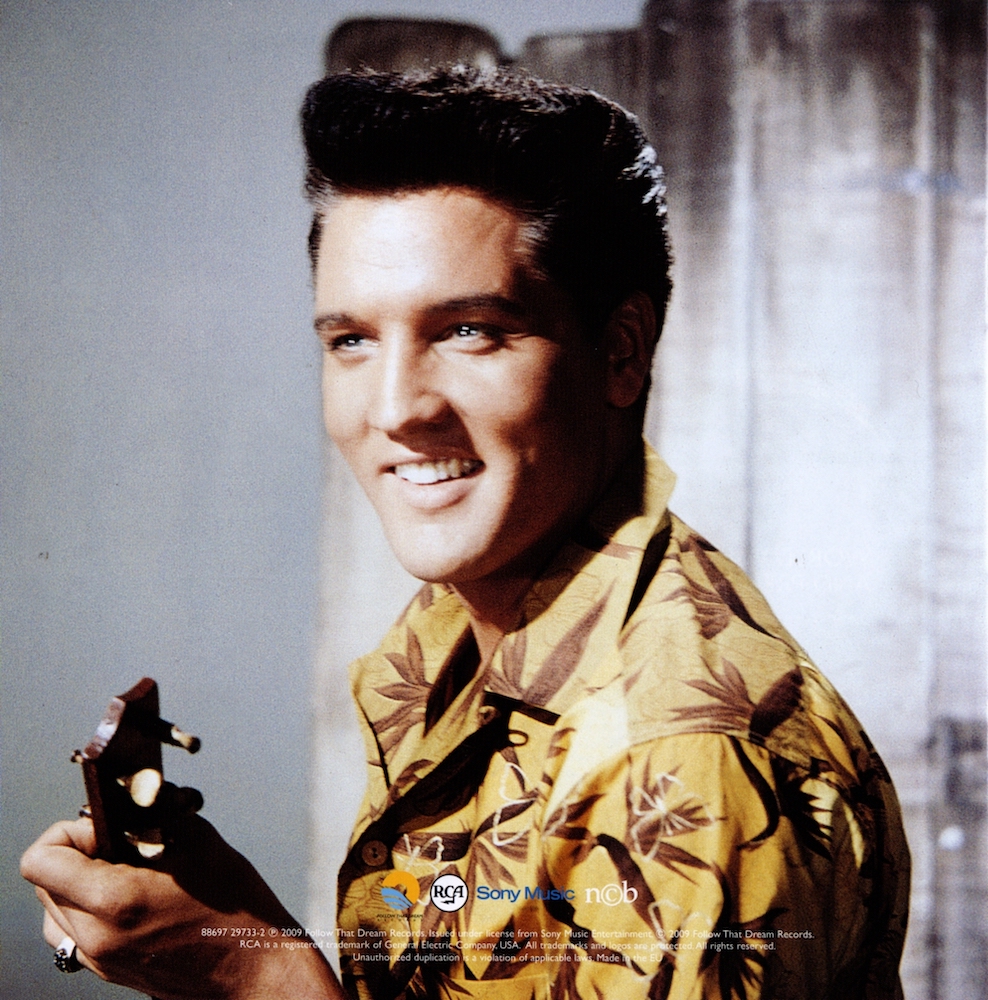
By now, FTD realise what the collectors want and again this booklet of photos and memorabilia, including original reel-to-reel tape boxes, is very nicely laid out. There’s a nice selection of candid photos too.
In the “Behind The Scenes” section there is the interesting comment that….
"Under normal circumstances, Colonel Parker always wanted a single to be released from an upcoming movie at least 4-6 weeks before the soundtrack album. "Can't Help Falling In Love"/"Rock-A-Hula Baby" is issued four weeks after the album by RCA, and Parker had great concerns that the single would sell poorly as the fans will already have bought the album. With shrewd negotiation, he gets RCA to guarantee a royalty payment based on 1 million single sales, regardless of whether the single sells or not! In the end, it doesn't matter, as the chart positions ensure sales that far exceed the guaranteed amount."
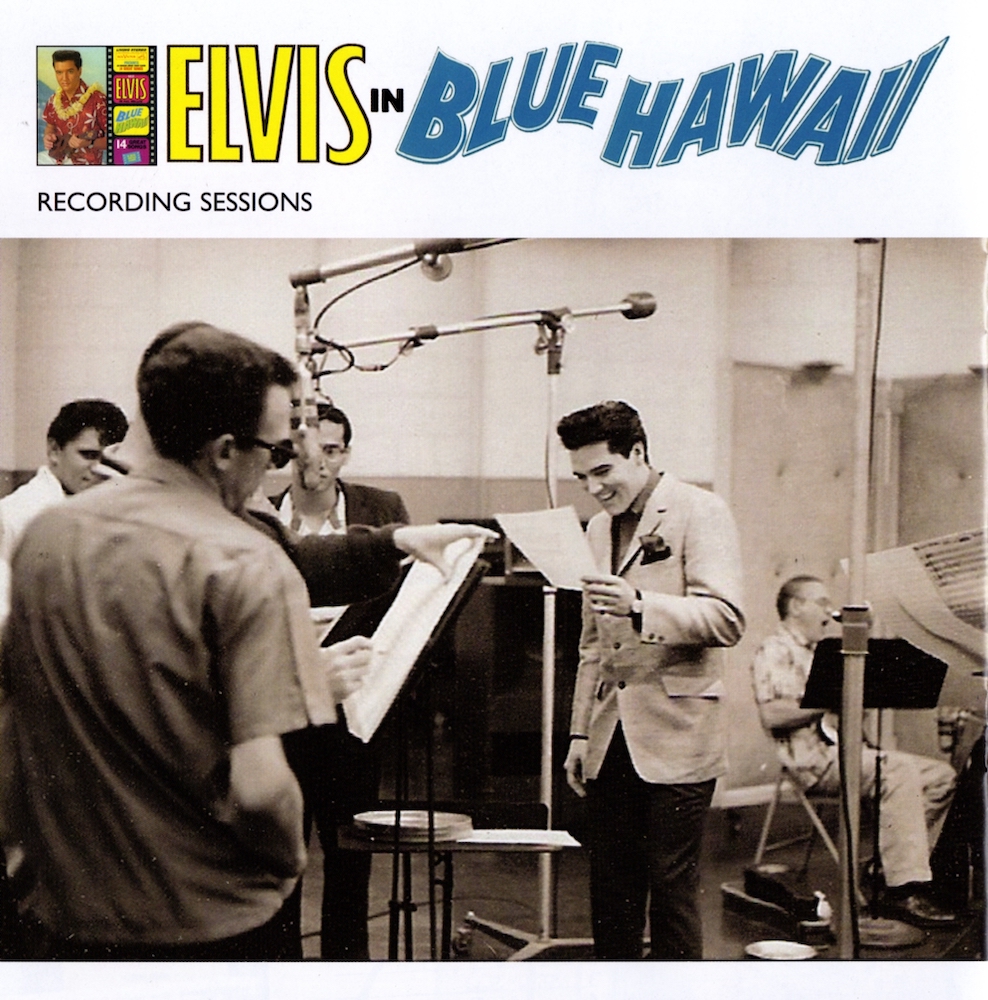
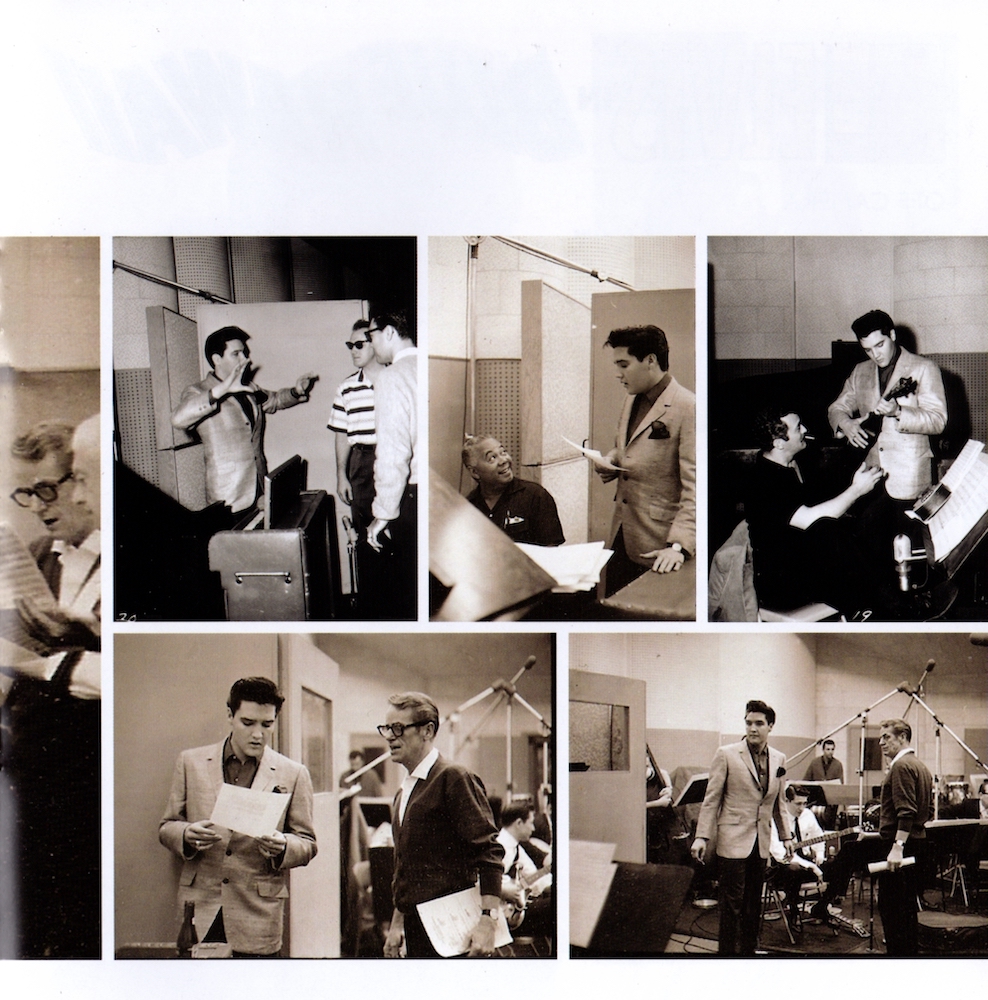
The sleeve also features some fabulous studio shots from the new Elvis Unlimited Inside Blue Hawaii. I always like seeing shots of Elvis in the recording studio as it gives you a better idea of microphone placement and what it must have been like to be there.
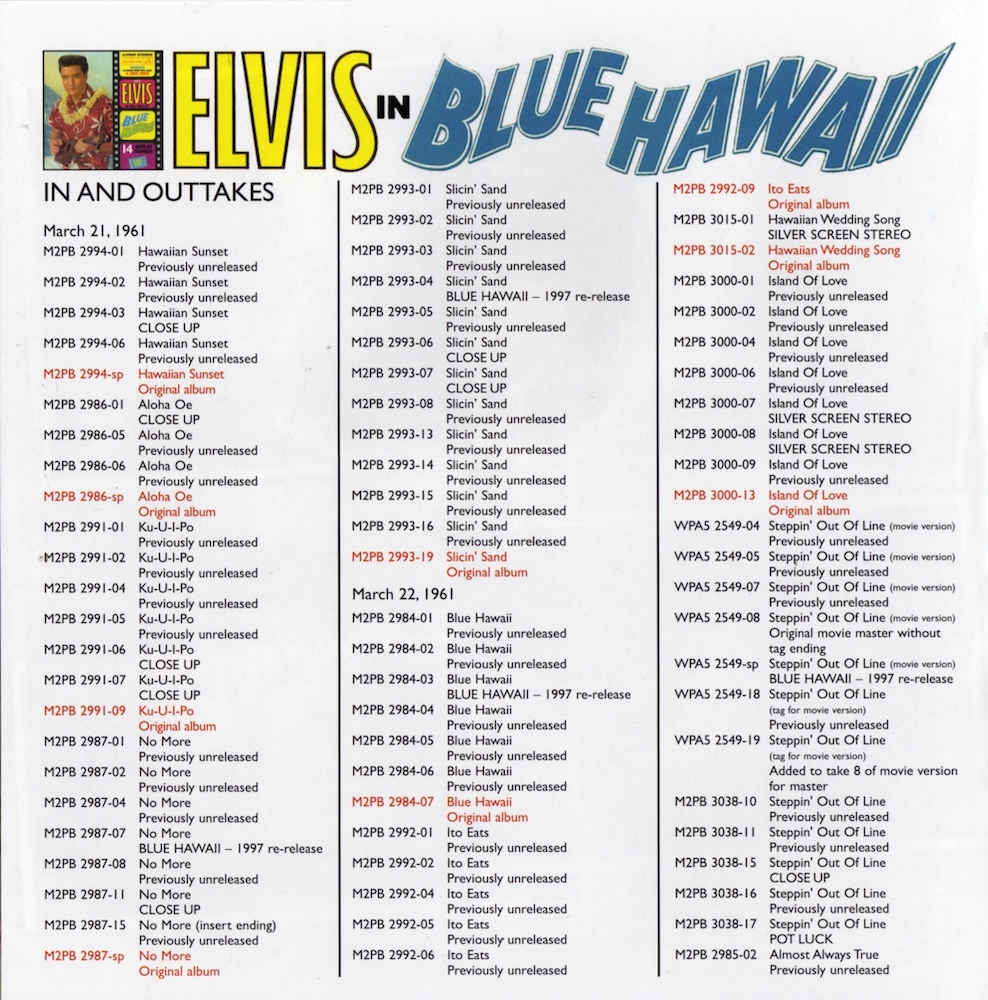
It was a very productive session too, producing more songs than could be fitted into the film or soundtrack album.
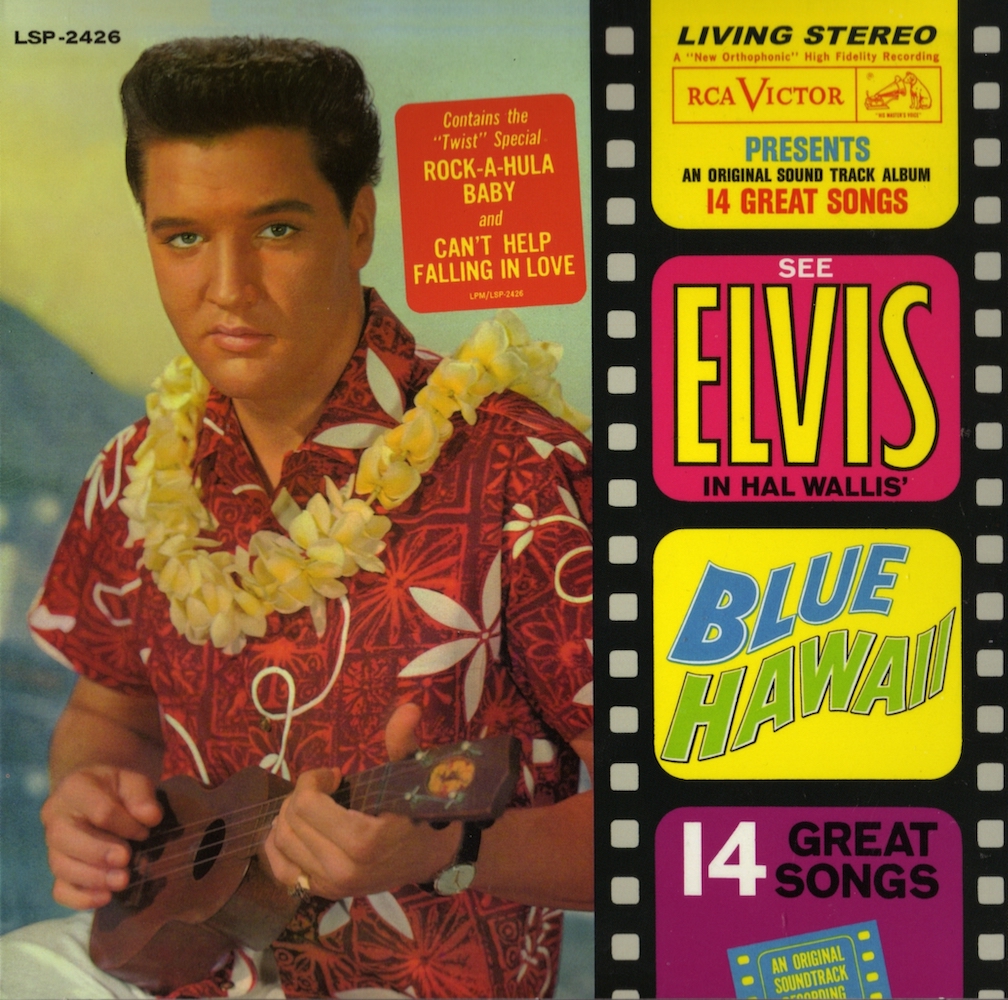
My only complaint about the design is that I would have preferred the album front cover without the original “twist special” sticker.
The Music
There are plenty of unreleased outtakes featured this time around and with new mix and mastering by audio engineers, Vic Anesini and Sebastian Jeansson, they have never sounded better.
The audio upgrade on 'Can't Help Falling In Love' Take 24 for instance, that was previously released on the Elvis Aron Presley box-set, is outstanding. It makes the original BMG release sound like a poor quality, mono bootleg version.
Throughout Elvis' recordings with The Jordanaires, the backing singers would be placed on the right channel. To hear otherwise usually sounds strange. 'Blue Hawaii' was a real anomaly in that the original vinyl recording had the backing-vocals placed on the left channel. Fans who are used to the 1997 BMG expanded release will be surprised as that CD had the channels reversed left to right, to the usual configuration. Here that error is corrected - the backing vocals are back as they should be on the left channel.
On the BMG 1997 release, the high frequencies were over-emphasised causing sometime unnecessary sibilance on Elvis' vocal. Here that fault has gone and the audio has a lovely clear and warm sound with a nice richness. It sounds great.
On the 1997 release they also added some extra echo to the extra "movie version" tracks which did not sound right. Here they are the pure studio recordings.
The movie version of 'Can't Help Falling In Love' sounds fantastic here in comparison, as does the movie version of 'Beach Boy Blues'.
Unfortunately 'Steppin’ Out Of Line' has always had peak distortion on Elvis' vocal on all releases and it must be on the master tape as it is still apparent here.
Every Elvis fan must know this best-selling soundtrack. Elvis’ voice has that lovely smooth, deeper post-army sound.
Veteran Paramount musical producer Joseph Lilley was on hand to supervise the session and to help create an authentic Hawaiian feel. To establish a nice Hawaiian sound for the movie, both steel slide guitar, ukuleles and other percussion was added to the usual set-up. Well-known steel guitarist Alvino Rey also joined Elvis’ regular band. The Jordanaires were also joined by The Surfers for a more authentic Polynesian sound. The harmonies are particularly enjoyable because of this.
While the massive success of Blue Hawaii (the movie and soundtrack) was a definite musically creative negative - pushing the Colonel towards more lightweight soundtracks - at least it had a stronger theme, and a better overall sound, plus Elvis seemed to enjoy recording the songs.
This isn’t Elvis Is Back!, but then again the songs have more of a rationale than G.I. Blues which Elvis is known to have complained about.
The first CD brings us the original album, ‘Bonus Tracks’ and ‘First Takes’ and is 80 minutes of Hawaiian bliss. Although I hadn’t played the album in ages this new upgrade is a good reason to shake your hula all over again.
The second CD features 79 minutes of outtakes. I was surprised for, although the Blue Hawaii soundtrack is so lightweight, that I began to feel that I wouldn’t be returning to the second CD of outtakes too often, but the more I listened to it, the more I started to really enjoy them too.
The eavesdropping on the studio is always intriguing, plus highlights such as 'Steppin' Out Of Line' Take 5, the complete takes of 'Rock-A-Hula Baby', the humour of 'Slicin' Sand', the surprising difficulties of an the seemingly easy song 'Blue Hawaii' as well as the gorgeous and previously unreleased 'Can't Help Falling In Love' Take 13, all help make this a first rate collection.
Short Verdict
If you are a Blue Hawaii fan then this FTD upgrade is the album package for you! Over two and a half hours of fine music with Elvis still at a post-army high. The harmonies are fabulous and the upgraded audio quality and charming booklet makes this an essential purchase.
Looking a little deeper ...
First Takes
Once again FTD presents the first complete takes which really do make a nice comparison against their final released versions. In the same sequence as the original album, this creates an interesting rougher feel of Elvis running through a band rehearsal of the whole album.
I suggest playing the First Takes on their own without hearing the original album first.
Blue Hawaii (Takes 1, 2 and 3)
The first two unreleased takes get nowhere before Elvis notes, "OK, I got it." However, there’s a nice whistle from Elvis before Take 2 starts. Take 3 is nowhere near a master but is a good first rehearsal. Elvis sounds reticent in his vocals, and even the melody at points. The tempo also slows down, as the band isn’t so sure either. Paramount producer Joseph Lilley suggests "Let’s play this back to listen to it anyway" which nicely sets the scene of eavesdropping on these early studio recordings.
Almost Always True (Take 3)
This was previously on the excellent Close Up box-set and is a very early simpler arrangement with less steel guitar. Elvis laughs during a break, which makes it a very sweet early version.
Aloha Oe (section 2) (Take 1)
One more from Close Up and another early classic, featuring delicious vocals and harmonies. Short and sweet, as it is only the second part which featured Elvis. Self deprecatingly Elvis says, "Wait a minute. Better not have me up too loud as I’m not sure I know this well enough!"
No More (Take 7)
A fine version of this latino song. With a very different arrangement you notice the slower feel with the rhythm - not as staccato and missing the extra percussion of the master.
Can't Help Falling In Love (Take 13)
Previously unreleased, this is a fabulous new addition to our collection. Elvis worked through 29 takes of this song to get it to perfection. Here Elvis explains that he’s running out of puff, "I get breathy!" Here at Take 13 he jokes, "Ok Take 40!" while still a long, long way from the final master. This is a delicious take, sounding all the more precious for Elvis trying to be very precise with the lyrics.
Rock-A-Hula Baby (Takes 1, 2 and 3)
This is sensational for having the complete parts between Takes 1 and 3 that were edited out on previous releases. Take 1 starts with Elvis teasing, "I went to your wedding" before failing delightfully, "Hold It! At ease" laughs Elvis.
Unreleased Take 2 has a nice punchy start but fails as soon as Elvis gets halfway through the first verse. It is, however, a gem as they are all having so much fun that the band continues until Elvis shouts, "Hold it!"
This is followed by the well-known Take 3 which was noted as Take 1 when previously released on 1997’s expanded Blue Hawaii. This is a true gem for being rough and wilder than the final release. Elvis misses his timing slightly but who cares! A classic.
Moonlight Swim (Take 2)
Close to the master already, although Elvis does change the melody of the lyric during the break. Listen out for Elvis’ nice deep-bass vocal at the end of the fade out.
Ku-U-I-Po (Take 1)
Unreleased, and being an earlier take this sounds more intimate than the final master. A sweet soundtrack song with delightful harmonies, and with that delicious Hawaiian slide guitar.
Ito Eats (Takes 1 and 2)
Unlike the silly ‘Big Boots’ in G.I. Blues, at least this had a calypso sound to give it a reason for being on the soundtrack. Elvis has trouble with the melody and maybe the awkwardness of these takes makes this silly song more listenable. (Maybe not!)
Slicin' Sand (Takes 1, 2 and 3)
More unreleased takes. The band really rocks on the first take with Hal Blaine attacking the drums. However, it soon falls apart with Elvis saying, "Hold it. Down with the brake."
Take 2 is funny with Elvis messing up saying, "Take off your shoes and get somewhere … Oh hell!"
Take 3 is a highlight of this FTD. Previously unreleased, this version is at a faster tempo and with more punch than the master. The Scotty Moore guitar solo is a mess but far more rock ’n’ roll than on the master. The ending is also fantastic as The Jordanaires miss their parts and with Elvis joking in a southern drawl, "You boys forgot your parts over there just a little bit!"
Hawaiian Sunset (Take 1)
In a lower key and at a slower tempo, this sounds very different from the final version. Elvis is deliberately careful with the lyric, though slips up mid-song. A great first version and another favourite. Elvis also misses the scale at the end but engineer Thorne Nogar notes, "That’s given you a rough idea."
Island Of Love (Take 8)
Previously on Silver Screen Stereo, this is at a slower tempo than the master but the band and Elvis sound great.
Hawaiian Wedding Song (Take 1)
This is very similar to the master, Take 2. They must have practised hard beforehand and only a slight unsureness of the Hawaiian lyrics would have stopped this version from becoming the final release.
CD 2 - Outtakes (previously unreleased*)
Of course the majority of these outtakes have been out on bootleg before, but not in stereo and never in this sensational quality. Several of the complete outtakes have been officially released before but there are still forty-five brand new outtakes on this disc - albeit most of them false starts.
Elvis and the band had spent the previous day trying out the songs before the tapes started rolling so it is not surprising that the songs in general seem well-rehearsed. On the whole, there is little variation in the arrangements with most of the outtakes here instead showing Elvis trying for perfection. Of course the in-studio banter is what makes these sessions so interesting.
Vic Anesini has recently mixed the outtakes from the original studio tapes, so they sound fabulous.
Hawaiian Sunset (Takes 2*, 6* and 3)
The first song of the session. With its cool swing and Polynesian swaying rhythms and instruments, Elvis must have felt happy that he really was recording a musically themed
soundtrack album and not watered down rock‘n’roll.
Take 2 - Unreleased, this version is in a slightly slower tempo than the master. There’s an electronic background hum on the recording that obviously needed fixing.
Take 6 has a nice touch of Elvis singing to himself beforehand, but soon breaks down. Take 3 is close to perfection.
Aloha Oe (Take 6* and splice of takes 7/5)
Elvis only participated in the second section of this song, so it was recorded in two parts. Eavesdropping on the session there is some interesting discussion here between Elvis and the musical director Joseph Lilley about his phrasing.
Ku-U-I-Po (Takes 2*, 4*, 5*, 6 and 7)
On Take 2 the arrangement and harmonies have matured since the early first take. Elvis stops halfway though. By unreleased Take 4, they are pretty close to the master.
On Take 7 the slide guitar is much higher in the mix and it is hard to believe that Elvis would push on for another take, as this is so close to perfect.
No More (Takes 1*, 2*, 4*, 8*, 11 and 15*)
Joseph Lilley notes that it should be "A new tempo or a little slower" but Take 1 soon breaks down. The early takes are at a far slower tempo than the master.
Elvis notes, "Give me a sign Dudley. I can’t tell what’s going on in here."
It is interesting as we listen to Elvis and the band’s progress with the tricky song's phrasing, Italian feel and demanding ending.
By Take 11 Elvis appears to be trying too hard. A spliced ending is decided on and it is curious to hear how the band worked towards recording this ending.
Somewhat disappointingly, on this FTD we do not get the delightful Take 5 where Elvis stops mid-song saying, "I got carried away and forgot to look at the lyrics!" This comment appeared edited onto the 1997 Blue Hawaii BMG CD Take 7.
Slicin' Sand (Takes 4, 5*, 6, 7, 8*, 13*, 15*, 16* and 14*)
It's hard to believe that they worked so long on this beach/rock song with Take 19 as the master! This is where the early takes like Take 4 (previously on the 1997 CD) are a little “rougher” which has to benefit a song of this kind.
Several of these takes are silly and fun and there is fabulous humour in Elvis’ voice.
On Take 6 Elvis kicks off by saying, "Hit it, hop to it!" and includes an extra verse with the lyric “Sand in my sandwich!” It all breaks down with Elvis laughing "Oh shit! Sand in my sandwich? What the hell?!"
Take 7 includes a delicious Scotty Moore guitar solo reminiscent of his 1950s work and both these takes were a highlight of the great Close Up box-set.
Take 8 stops when Scotty Moore’s guitar drops out, "It became unplugged!"
Take 13 is fun as it falls apart immediately with great mirth and laughter from Elvis.
Before Take 15 Elvis sings an altered line from 'There's Always Me' "When the evening shadows fall and you're wondering who to ball" - a nice touch of silliness. This was supposedly a word-up from Elvis to composer Don Robertson (who happened to be in the studio that day) to show how he had recorded his song for Something For Everybody the previous week.
On the actual take, The Jordanaires mess up, "Too many wops in there" jokes Elvis. By now the band you can sense the band tiring of the song and it ended up being the last recording of the day’s session
Blue Hawaii (Takes 4*, 5* and 6*)
The song that started their second day of recording and these unreleased takes are fun eavesdropping as everyone, including Elvis, has trouble with the 'shuffle’ and mixed tempo of the song.
"I’m getting confused between these tempos" Elvis notes on Take 4, while on Take 5 he correctly berates the musicians saying, "Fellas, we’re going in to a damn shuffle there when we’re not supposed to."
These are nice new additions for fans, as who would have thought that such an easy-going song would actually be that complicated to record.
Ito Eats (Takes 4*, 6* and 5*)
Along with 'Big Boots' from G.I. Blues this is the start towards the more child- orientated soundtrack routine. At least the calypso style has an island flavour. I wonder if Elvis ever thought that this song would actually make it on to the album.
Island of Love (Takes 1*, 2*, 4*, 6*, 7 and 9*)
There’s more studio fun as Elvis falls off his chair and along the way gets "A frog and a tadpole" in his throat. This was another great track with a superb Hawaiian feel and the earlier takes are at a much slower tempo.
On Take 4, listen at 2.08 to Elvis singing the break "her palm trees gently do the hula, as her slaves the waves" as he has difficulty with the phrasing and words. Although messed up, the band and Elvis continue until Elvis mistakenly carries on over the instrumental break.
On Take 7 there is a cute joke when Joseph Lilley explains to Elvis that it is "Cow"-ee. "Fine, Cow are you" Elvis laughingly replies.
By Take 9 they have speeded up the tempo to match the released version and Elvis makes the lovely quote "A wise men changes his mind, a fool never does."
Steppin' Out Of Line (Movie version Takes 4*, 5*, splice of takes 7/8*. Record version Takes 10*, 11*, 16*, 15. “Tag for movie” splice of takes 18/19*)
One of the better punchier songs on the soundtrack, but sadly dropped from the movie and the album, and here we have lots of unreleased takes.
Take 4 gets an extended start .. "We’ve got some crazy intros" laughs Thorne Nogar.
Take 5 is another great addition for collectors. The band’s timing messes up and Elvis is running rough but there is a great rehearsal feel. The take breaks up halfway through with Elvis commenting, "Supposed to be a break there fellows!"
The splice of Takes 7 and 8 is very fine with Joseph Lilley noting “Sensational!"
The earlier takes have a better sound than the master for some reason, as the later recordings have audio peak-clipping on Elvis’ vocal track.
Take 15 was on Close Up but for obvious reasons, as this is so damn good. Elvis sounds like he is really enjoying himself, probably because this is more like the rock ’n’ roll spirit of Elvis Is Back!. This is raw and rough with a roaring saxophone solo by Boots Randolph. Listen @3.04 for Elvis’ "Yah" as he eggs along Boots on the solo. The ending is a true classic with Elvis growling and the drums falling apart delightfully. "I liked it" comments Elvis.
The following ‘movie tag’ is fabulous for being able to eavesdrop on the band working in the studio and listening to their own playback before syncing up the movie ending tag as a splice.
Always Almost True (Takes 2*, 4*, 5*, 7* & 6*)
The album version had obvious echo added to this track. Here the outtakes are very clean sounding.
The earlier takes are at a much faster tempo and there’s some delicious studio banter here as Elvis tries to work out the phrasing.
Elvis has trouble working out how the lyrics will fit, as he has to leave gaps for the extra dialogue in the film itself. They start a little fast and it falls apart with everyone laughing - "Fellas, that's not so easy to do with a rhythm song" comments Elvis. Fun stuff.
Although it is such lightweight number, there is still the enjoyment of it featuring Boots Randolph’s "Yakety Sax".
By Take 5 they have slowed the tempo down after Elvis complains to Joseph Lilley, "It’s hard to get all these words out at this fast tempo."
Take 7 is worth listening to on headphones as it has a lovely stereo spacial feel of being in the studio. Boots Randolph lets rip at the start, however Elvis gets the melody wrong and is obviously annoyed that the take gets stopped.
Moonlight Swim (Takes 1* and 4)
On Take 1 Elvis has trouble working out where the future female girl overdubs will be added and misses his intro into the second verse.
On Take 4 Elvis throws in some of his notable vocal mannerisms - listen out at 3.04 as it sounds very like Elvis imitating Dean Martin.
Elvis deliberately messes up the fade out too, which is fun.
Can't Help Falling In Love (Takes 14, 15, 16, 17*, 19*, 20*, 21*, 22*, 24, 25* and 26)
Starting the third and final day of recording here we have eleven takes - including false starts - of Elvis working hard towards the final “movie version” of this classic. This includes some lovely moments showing Elvis nearly a cappella while also sounding delightfully fragile and asking for reassurance about his vocals. There’s some great eavesdropping here as the band and Elvis work towards the majestic master.
Elvis notes that he has an issue - "Damn pants too tight!" and also adds that, "If they say bad things, they don’t tell me."
Takes 14,15 and 16 were on Close Up but it is great to have them here in the context of the whole session.
By unreleased Take 19 Elvis is getting frustrated with the lack of progress and laughs, "Damn it to hell."
Take 20 is a delight as Elvis sings within the first verse, "I don’t believe we were in tempo then"
There are some classic Elvis quotes and some good discussions as our favourite singer comments; "I can’t hold a note worth a damn." And also, "I might be able to struggle through this song."
Little did Elvis know that this ballad would become one of his greatest hits and the very last song he would sing live on stage.
Take 24 has a lovely staccato intro and is a marvellous alternate version. One of everyone’s all-time favourites. While it was previously featured on the Elvis Aron Presley box-set, that version was a very low-fi mono version. This version is in a totally different league being taken from the original stereo studio tape.
On Take 25, Elvis is still struggling with the timing "Wise men say … shit!" and on a charming Take 26 the arrangement is somewhere between the movie and single version. This is close to the master. Elvis’ phrasing is a little deliberate at points but not as smooth as the final single. It’s still a great version and a very nice way to end this collection of outtakes.
Having finished at the studio Elvis and the band then flew to Hawaii to perform at Pearl Harbor two days later. The fabulous live show was released on the Elvis Aron Presley Silver box-set and ended Elvis' intense month of work - thirty songs recorded - multiple gold records and possibly his best concert of all time and all completed in just one month.
Overall Verdict
This is another fabulous soundtrack release from FTD If you like the Blue Hawaii soundtrack then this is a dream come true. The alternate album of First Takes works extremely well and the packaging is very stylish. While we have had plenty of the outtakes previously on poor quality bootlegs, there are still some surprises here and the newly remixed audio quality is astounding - especially on the outtakes. Of course the lightweight soundtrack songs can't compete with the studio albums such as Something For Everybody - but with plenty of interesting highlights and fascinating eavesdropping along the way, this is what this collectors’ label is all about.